
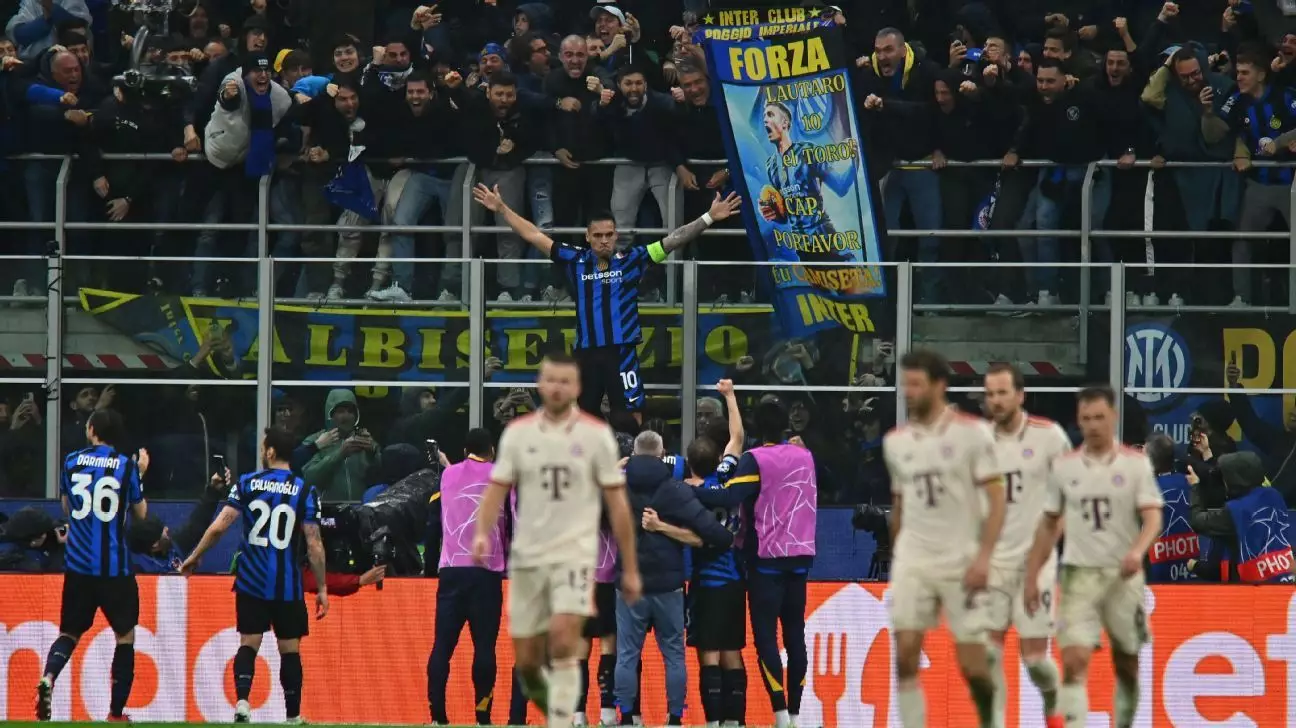
Inter Milan’s recent battle against Bayern Munich in the UEFA Champions League showcased the team’s resilient spirit, sealing a 2-2 draw at home that granted them a 4-3 aggregate victory. On the surface, securing a spot in the semifinals speaks volumes about Inter’s capabilities and determination. Yet, beneath this veneer lies a complex narrative that raises pertinent questions about their gameplay strategy and mental fortitude. Were they merely content with advancing, or does a competitive mindset demand more than just surviving the pressure?
Manager Simone Inzaghi, like many of us reflecting post-experience, may find the need to dissect not just the highlights of the match but also the missed opportunities that linger like an aching wound. The gritty performance that pushed Inter through could easily turn into a double-edged sword if they fall victim to complacency. While some fans take solace in their team’s progress, the lingering sense of vulnerability can hinder long-term success against more formidable opponents.
Game Management: A Tactical Misstep
When Benjamin Pavard netted a second goal for Inter, the aggregate score tilted in their favor, presenting a prime opportunity to dictate the pace of the match. The plan should have revolved around maintaining possession and applying pressure when necessary, but instead, they opted to drop deep. The statistics speak volumes: Bayern dominated the shot count and expected goals (xG) during the final stages of the match, a clear indication of a lack of proactive engagement by Inter. A team of Inter’s caliber shouldn’t let the momentum swing so drastically in favor of their opponent, especially in a home setting.
The weather conditions—cold, windy, and rainy—compounded the challenges. Yet, it’s essential for professionals at this level not to use it as an excuse. Conditions are uniform for both teams, and any perceived disadvantage should lead to increased aggression rather than passive defensiveness. When a team begins to retreat into their half, allowing the opposing side to throw everything at them, the result inevitably opens up pathways for mistakes—evident in Eric Dier’s equalizing goal.
Respecting Opponents: A Double-Edged Sword
Inter’s performance brought to light an unfortunate truth: they appeared to grant Bayern excessive respect. This shift in approach transformed a confident, attacking unit into a shell of its former self, adopting a defensive stance that breeds anxiety rather than control. It’s an understandable reaction when facing a storied club like Bayern, but the players needed to remind themselves of their strength and prowess. Showing too much deference leads to missed opportunities for asserting dominance, especially when playing at home.
Critically, this behavior hints at a broader issue about team psychology. While the emotional weight of past encounters versus established giants can be burdensome, Inter must find ways to channel that energy into a performance that befits their status—as a club that is not just competing but capable of winning. Being in the semifinals should instill a sense of pride, encouraging rather than dousing the fire of ambition.
Injury Impact and Tactical Adjustments
Injuries played a considerable role in shaping Inter’s late-game tactics. Mehdi Taremi’s introduction aimed at providing relief, although his match fitness was in question due to recent injury struggles. Similarly, Alessandro Bastoni’s evident discomfort limited Inter’s effectiveness in defense. These factors underline the importance of squad depth and adaptability, particularly when facing an opponent like Bayern. While the team’s veteran nature may have suggested a more prudent approach, it shouldn’t compromise attacking instincts or spirits.
Perhaps what frustrated supporters the most was knowing that, aside from one lapse leading to Harry Kane’s goal, Inter had significantly curbed Bayern’s threats. They successfully subdued the might of a transitional Bayern side teetering on the edge yet failed to capitalize on this leverage when it mattered most. This goes to show that confidence can wane amidst panic, but for a side that has shown defensively resilient qualities all season, this shouldn’t have been necessary.
Looking Ahead: The Challenge of Self-Belief
With a semifinal clash against Barcelona looming, Inter must harness the lessons learned from their encounter with Bayern. Should they take an early lead against Barcelona, they must not revert to conservative play but should instead capitalize on their opponent’s high defensive line. Only by attacking with numbers and purpose can they counteract the threats posed by players like Lamine Yamal and Robert Lewandowski.
Every game against a significant opponent is an opportunity for growth—for both players and the coach. Inter should reflect on the triumph of securing advancement while also understanding that a deeper level of performance is required to maintain their position among Europe’s elite. This is more than just about winning matches; it’s about building a legacy characterized by grit, ambition, and an unyielding desire to dominate, regardless of circumstances.