
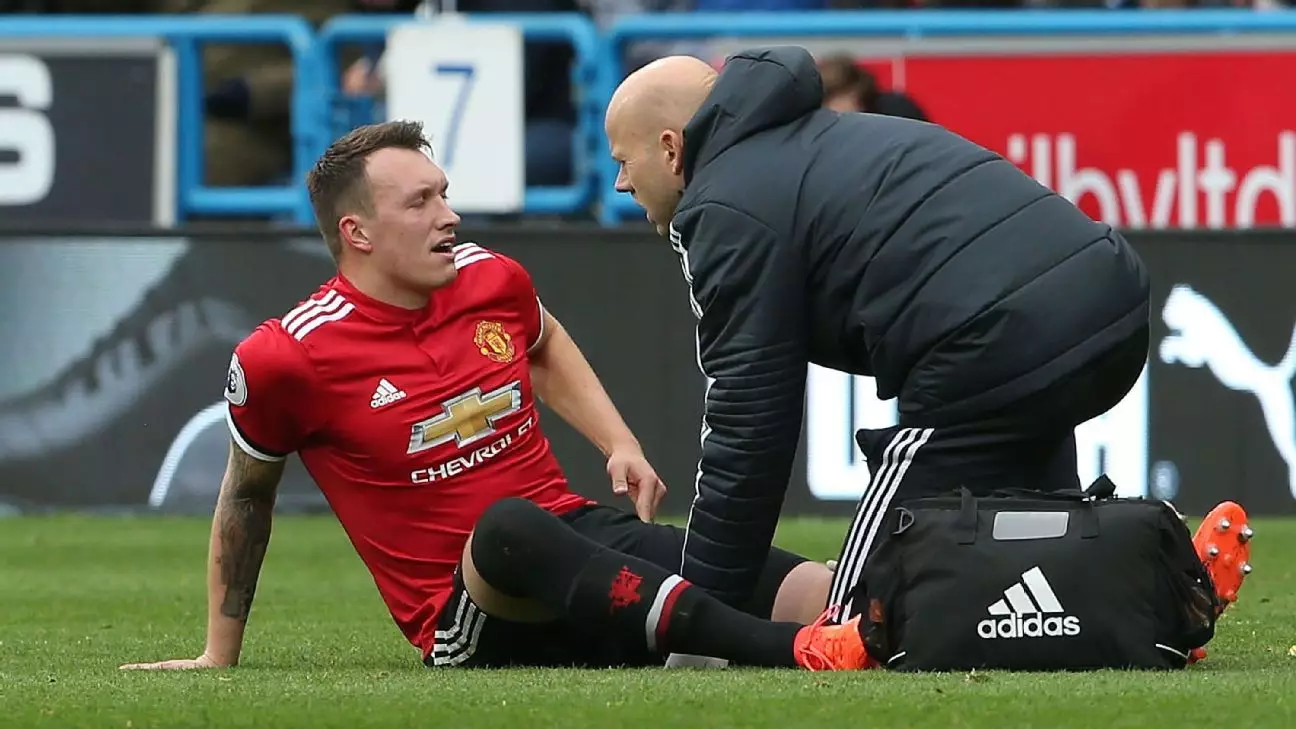
In the high-stakes world of professional sports, few challenges are as daunting as the relentless pressure to perform. Former Manchester United defender Phil Jones has recently shed light on this subject as he reflects on the catastrophic impact of injuries that overshadowed his career. His empathic words regarding fellow players Mason Mount and Luke Shaw reveal a harsh reality that often goes unnoticed by fans—living under the constant scrutiny of performance expectations while battling physical limitations is an untenable position for any athlete.
Jones articulated feelings of embarrassment stemming from his inability to contribute on the pitch, which resonate with many athletes who face similar adversities. The weight of representing a club like Manchester United, coupled with personal aspirations of excellence, can create an overwhelming psychological burden. Mount and Shaw currently find themselves wrestling with similar issues as they contend with their respective injuries. Mount, whose hefty transfer fee from Chelsea announced him as a key addition, has missed a staggering 51 matches since his arrival. For Shaw, the irony of struggling with injuries despite having played for England shines a spotlight on the paradox athletes often encounter: the drive to compete leads them to risk their long-term health for short-term glory.
The Double-Edged Sword of Social Media
In an era where social media reigns supreme, the criticism directed towards athletes can amplify their struggles exponentially. Jones astutely points out that being unable to satisfy fan expectations can breed anxiety and feelings of inadequacy. He emphasized the importance of recognizing that the narrative surrounding an athlete’s performance often overlooks their human experience. The constant comparison and immediate feedback from fans can make a player’s journey more treacherous, reducing complex injuries into mere statistics on a social media timeline.
Athletes are routinely labeled based on their availability, and when they fail to meet expectations, the backlash can be biting. The public discourse can overshadow the very real, physical battles these players face behind the scenes. Jones’s words serve as a crucial reminder that these are not just players; they are individuals striving to reclaim their health and passion for the game.
Recovery from injury is a nuanced journey that transcends mere physical healing. Jones advocates for a measured approach, emphasizing the need for players to feel mentally and physically prepared to return to the pitch. In a culture that often prioritizes immediate performance over well-being, the importance of rehabilitation can easily become sidelined. Often, medical staff may push for quicker returns, but true recovery necessitates a personal commitment to readiness.
This perspective is invaluable for Mount and Shaw, who face significant public pressure to quickly return to competitive play. But as they navigate their respective comebacks, it is vital that they prioritize their health, understanding that rushing back could lead to further complications.
In the world of elite sports, the interplay of expectations, public perception, and personal health creates a labyrinth that athletes must learn to navigate. Through empathy and understanding of their struggles, supporters can foster a more compassionate environment for recovering athletes, ultimately allowing them to regain not just their fitness, but their joy in the game.