
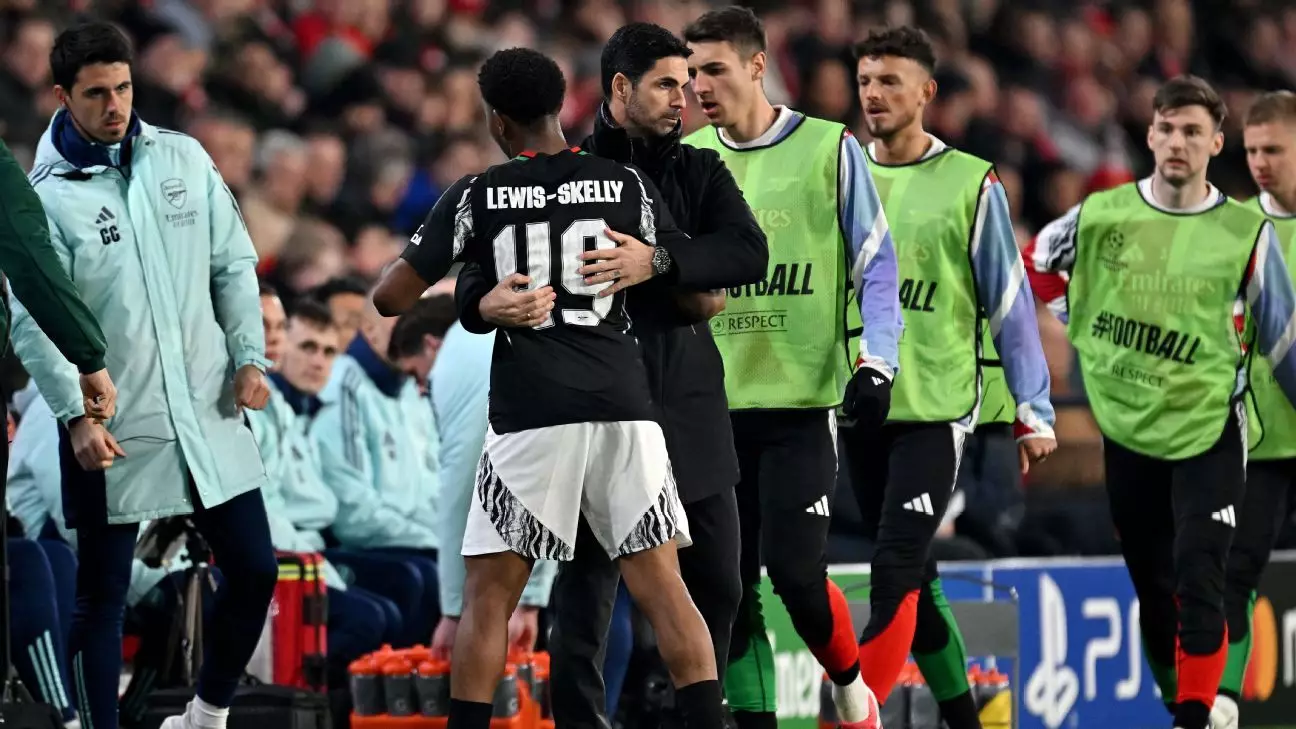
In the fast-paced and high-stakes world of football, the ability to adapt and learn from one’s mistakes is absolutely crucial. This was underscored in a recent match where Arsenal’s young left-back, Myles Lewis-Skelly, found himself at the center of attention—not for the right reasons. After an impressive start to the match and a 3-0 lead against PSV Eindhoven, Mikel Arteta made a bold decision to substitute the 18-year-old just 35 minutes in. This action not only marks a pivotal learning moment for Lewis-Skelly but also highlights the critical importance of discipline in the game.
Youthful Brilliance and Growing Pains
At just 18 years old, Myles Lewis-Skelly has enjoyed a breakout season with Arsenal, generating buzz not only for his skills on the field but also for his imperfections, which are typical of any young athlete. The fact that he has been considered for the England national team under Thomas Tuchel speaks volumes of his promise. However, this talent must be tempered with a level of discipline that can help him navigate the pressure cooker that is elite football. His first-half exit against PSV serves as a potent reminder that raw talent alone is insufficient for sustained success in such a tempestuous environment.
Critically, Arteta’s response to this situation does not merely shed light on Lewis-Skelly’s shortcomings; it draws attention to the looming question of how young players adapt under pressure. It’s crucial for emerging talents to assimilate the nuances of the game while also learning to manage the emotional and psychological aspects. Arteta’s unwavering support and commitment to guiding Lewis-Skelly hint at a broader philosophy grounded in nurturing talent, which is foundational for the future of any football team.
Understanding the Consequences: A Coach’s Insight
Arteta’s quote about the “liability” posed by Lewis-Skelly underscores a significant issue in contemporary football: the razor-thin line separating aggression and recklessness. The yellow card picked up by Lewis-Skelly was a testament to the defensive frailties that young players often exhibit—a lack of control in high-pressure moments. Arteta’s insistence on “dominating the situation” highlights a fundamental principle that transcends mere defensive tactics. Control over one’s emotions and decisions is critical, especially when the stakes are high, as they incessantly are in the Premier League and Champions League.
Arteta’s approach towards educating his players goes beyond simply teaching them how to tackle or mark an opponent. He emphasizes understanding the dynamics of space—knowing when to challenge an opponent and when to maintain defensive positioning. This understanding is pivotal, not just for Lewis-Skelly but for many budding footballers who struggle with managing their desires for flashy play while maintaining structure in a team setting.
Big Matches on the Horizon
As Arsenal prepares to face off against Manchester United, pressure will inexorably mount. The fact that Manchester United lay 14th in the table, having garnered only three victories in their past 11 games, does not diminish the threat they present. History shows that clubs of such stature can always pull off surprising performances. The narrative is woven into the fabric of Manchester United. Arteta’s tactical foresight will be tested—not only in strategizing against a struggling rival but also in ensuring players like Lewis-Skelly channel their talents in constructive manners.
This upcoming match offers an opportunity for Lewis-Skelly to re-enter the field with more self-awareness and discipline. Such experiences, while chastening, can catalyze transformation. Football is rarely linear; players often oscillate between moments of brilliance and learning phases that force them to reevaluate their play and mentality.
A Coach’s Artistry: The Balance of Support and Discipline
In the world of high-pressure sports, where the spotlight can swiftly shift from applause to scrutiny, a coach’s role becomes multifaceted. Arteta’s commitment to cultivating a supportive environment is commendable but must be balanced with realistic expectations of accountability. The delicate dance between fostering talent and demanding discipline is where true coaching mastery lies.
As for Lewis-Skelly, the journey is just beginning. The lessons learned from hiccups like the early substitution against PSV could well carve the path toward a resilient and disciplined player. Arteta’s words hint at a long-term vision for Lewis-Skelly: to evolve into a player who not only excels in skills but also embodies the mental fortitude necessary to compete at the highest levels of the beautiful game. This balance of nurturing and demanding excellence may well form the backbone of the Gunners’ aspirations moving forward.