
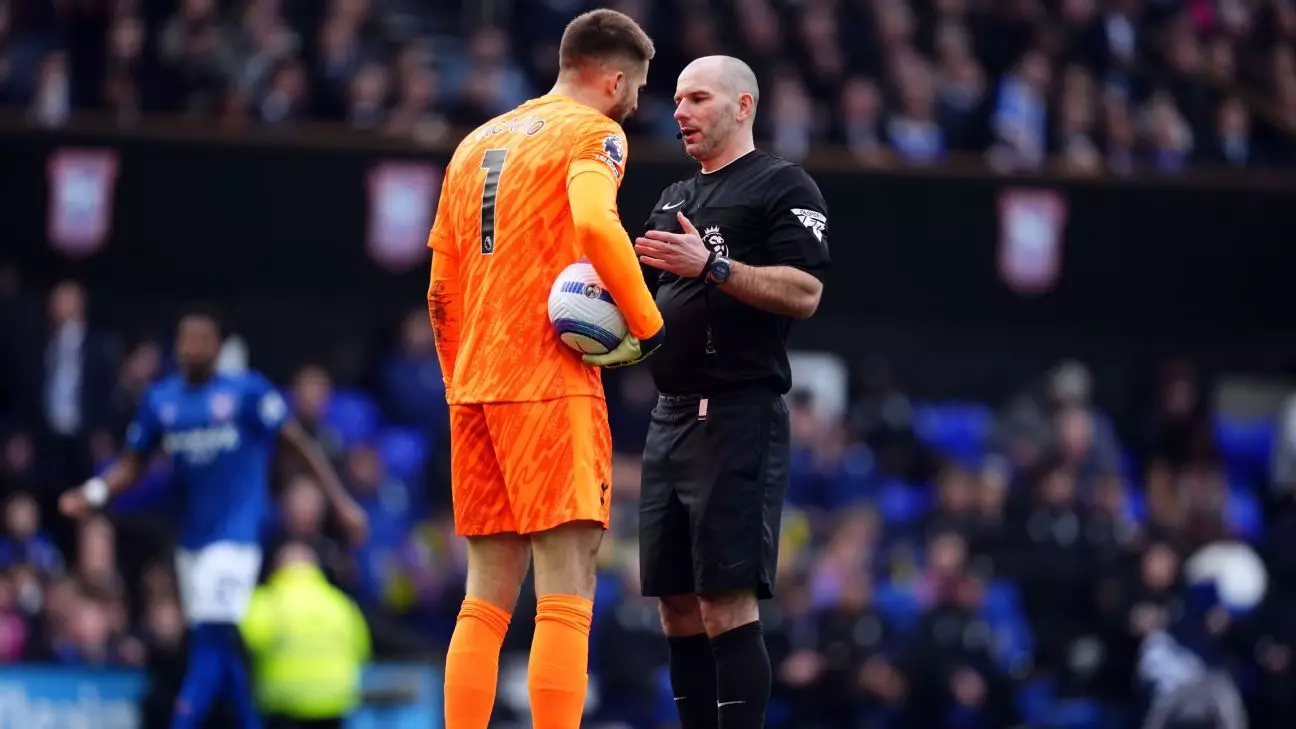
In a significant move that highlights the evolving nature of football, the International Football Association Board (IFAB) has approved a pivotal change in the laws concerning goalkeeper ball handling. Traditionally, goalkeepers have been allowed to hold onto the ball for a maximum of six seconds. If they exceed this threshold, an indirect free kick is awarded to the opposing team. However, in a bid to address concerns about time-wasting tactics commonly used by goalkeepers, the IFAB has decided to replace the indirect free kick with the more punitive penalty of awarding a corner kick. This change is set to come into effect in the 2025-26 season and could dramatically impact goalkeeping strategies.
The decision by the IFAB wasn’t hasty; it was born out of comprehensive testing throughout the 2024-25 season. Trials across various leagues and levels, particularly in Premier League 2 academies and select European competitions, provided invaluable insights into the implications of this rule. Remarkably, across more than 400 matches, goalkeepers were sanctioned with only three corners in England for excessive ball-holding, while Malta recorded no incidents, and Italy had similar findings with alternative punishments being issued. The figures raised critical questions about the enforcement of the original six-second rule and whether it truly served its intended purpose.
The trials demonstrated a willingness to experiment with the rules in order to enhance the game. Increasing the time limit to eight seconds, as implemented in the trials, has led to discussions about fine-tuning the enforcement process. The IFAB’s implementation of a visual countdown was a creative solution aimed at fostering transparent officiating while mitigating ambiguity around a goalkeeper’s behavior.
The IFAB explained that, historically, referees have been hesitant to enforce the six-second rule due to the significant advantage provided by indirect free kicks, especially given the high likelihood of scoring opportunities. The board argued that awarding a corner kick—where the defending team not only risks conceding a goal but must also deal with a potential aerial threat—strikes a better balance between punishment and fairness. This perspective recognizes that by allowing a goalkeeper to run down the clock, the game is disrupted, and the opposing team is denied the chance to challenge for possession. Establishing a clear procedure for the new rule hopes to minimize opportunities for goalkeepers to exploit their position to disrupt the flow of play.
Analysis from the IFAB indicates that the average duration for goalkeepers to release the ball during a quick counterattack is typically less than six seconds. However, when they deliberately waste time—often by delaying their movements—this time can extend significantly, sometimes exceeding twenty seconds. This tendency not only frustrates opposing players but also sets a poor precedent regarding the spirit of fair play. From coaching to the tactical application of this rule, teams will need to adapt their game plans. Goalkeepers will be challenged to balance their need for composure with the necessity of timely ball distribution.
In this new climate, clubs may reconsider their goalkeeper training regimens, emphasizing quicker decision-making and swifter ball releases. This could lead to a noticeable shift in the overarching tactical frameworks within teams as they adapt to the revised laws.
This law amendment signifies more than just a technical alteration; it underscores a broader trend towards optimizing the integrity and excitement of football. Football as we know it is continually evolving, necessitating the regulation of player behavior and tactics to reflect contemporary standards of gameplay. With the IFAB committed to ongoing assessments and trials, the future may likely see more innovations aimed at refining the gaming experience for players and fans alike. While this change may face initial challenges in uniform enforcement across leagues, the overarching aspiration is a more dynamic and engaging football experience that keeps the game fair without compromising on excitement.