
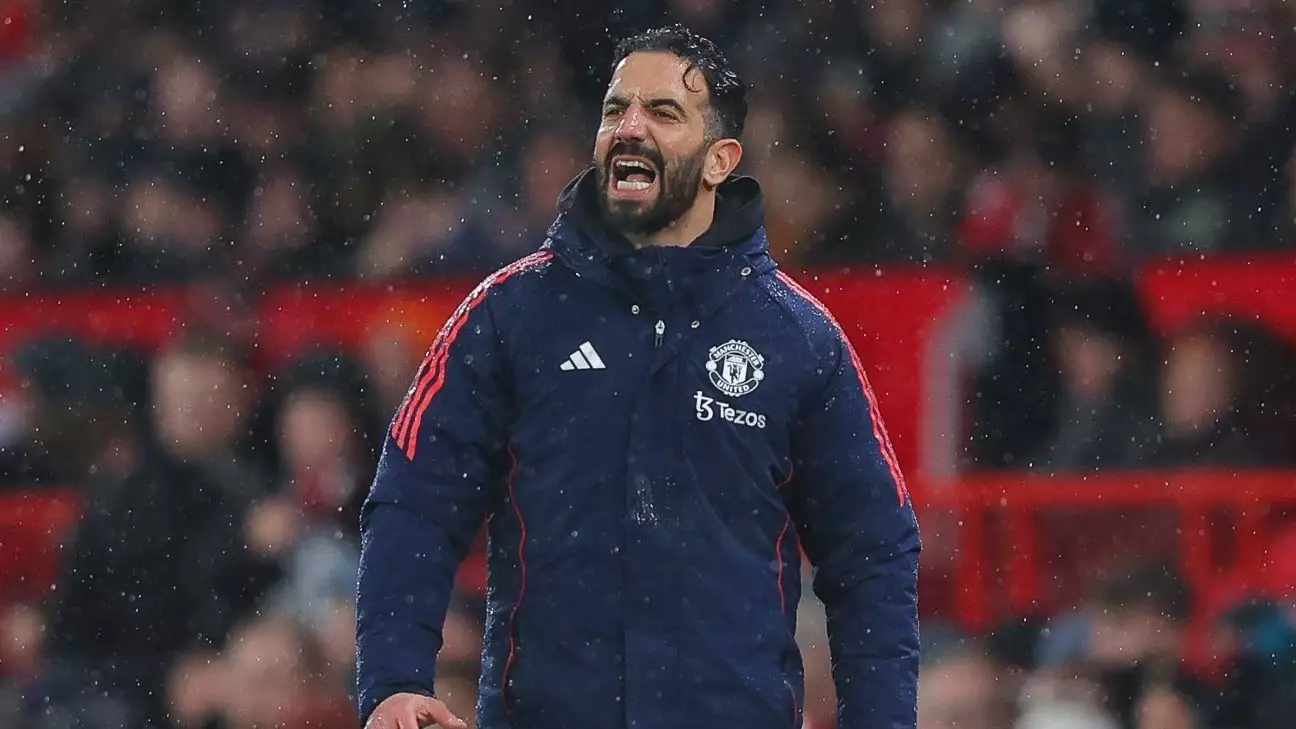
The ongoing narrative surrounding Manchester United has once again resurfaced with Ruben Amorim’s recent defense of Bruno Fernandes in response to Roy Keane’s biting commentary. Keane, a Manchester United legend, has not shied away from expressing his strong opinions about the current team dynamics, labeling Fernandes as talented yet lacking in the fighting spirit essential for success. Furthermore, during a heated exchange with Ian Wright on the Overlap podcast, Keane criticized the entire squad, branding them as “imposters”—a statement that sparked widespread debate among fans and analysts alike.
Amorim’s counter to Keane’s sentiments came during a press conference, asserting that as the head coach, his assessment of Fernandes holds more weight than that of a former player. By stating, “I have a different opinion,” Amorim made it clear that his judgment is firmly rooted in the day-to-day realities of team management and player performance. He praised Fernandes for his commitment and performance amid challenging circumstances, emphasizing the creative spark he brings to the squad. Understanding the pressures of leadership, Amorim pointed out that frustrations often manifest in visible ways during matches, especially when ambitions clash with results.
Defending the Goalkeeper
In addition to discussing Fernandes, Amorim also addressed the criticisms aimed at goalkeeper André Onana, who has faced scrutiny due to recent mistakes that have led to goals against teams like Everton and Ipswich Town. Amorim’s balanced approach highlighted Onana’s contributions, noting the “great saves” that have proven pivotal for the team this season. He acknowledged that while Onana has encountered difficulties, this is a common issue among players, suggesting that consistency is an ongoing challenge for any team aiming for excellence.
Ruben Amorim’s comments reflect a broader theme within sports: the dichotomy between external opinions and the reality within a team ecosystem. Coaches and managers recognize that players often face intense scrutiny, and a single misstep can overshadow an otherwise impressive performance. By defending his players publicly, Amorim stands as a pillar of support, fostering an environment where criticism is met with resilience rather than despair. It suggests a strategy that prioritizes mental fortitude as much as technical ability—a critical aspect for any team striving for success in high-stakes competitions.
Ultimately, the dialogue initiated by Roy Keane’s critiques and the subsequent defense by Amorim serves as an important reminder of the pressures inherent in professional sports. As Manchester United navigates its season, the ability of players like Bruno Fernandes and André Onana to respond positively to pressure will be pivotal. Amorim’s leadership will be tested not only in managing the visible tension among his squad but also in fostering a united front against external criticism. As the season progresses, one can only hope that the players rise to meet the challenge, strengthening their resolve and aiming for the success that both fans and critics desire.