
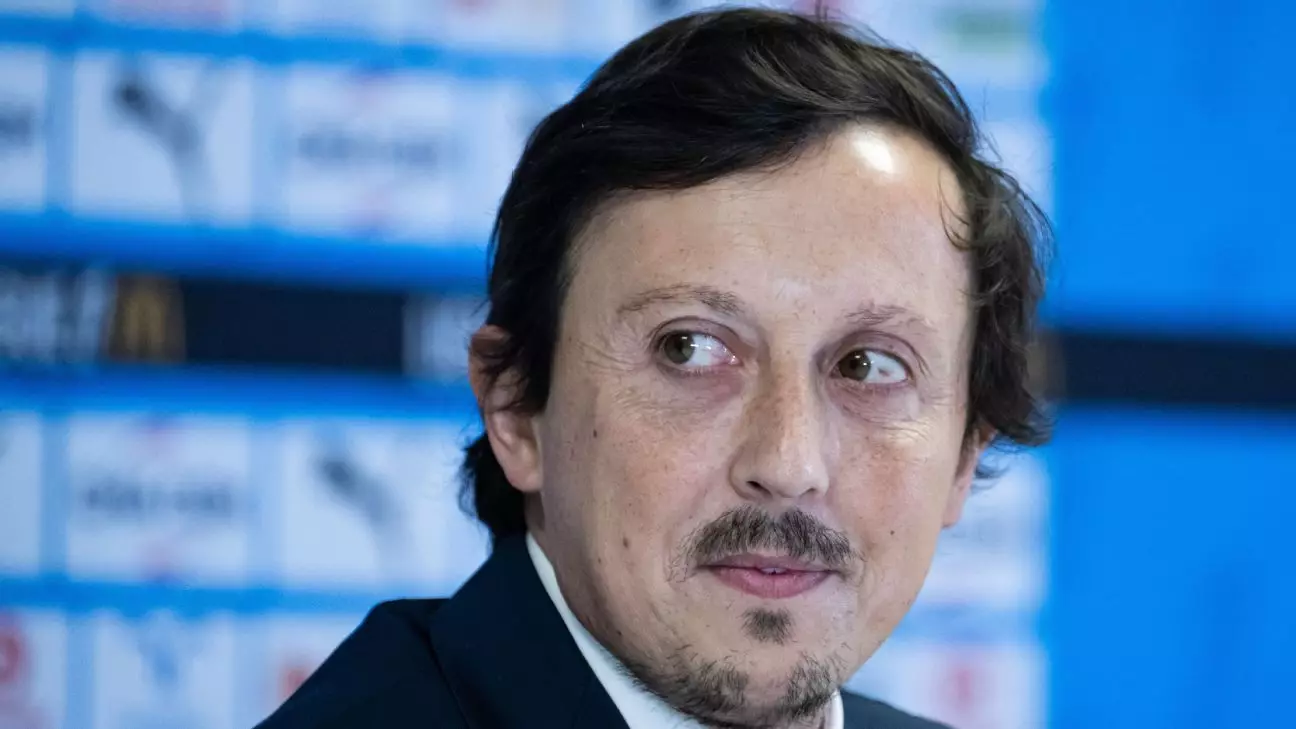
In a dramatic turn of events in the world of French football, Marseille president Pablo Longoria has been handed a hefty 15-match suspension from all official functions following a public outburst of accusations against league referees. This disciplinary action comes in the wake of a disappointing 3-0 defeat to Auxerre, where Longoria’s criticism of officiating was both heated and unequivocal. He alleged that Marseille’s misfortunes were rooted in “true corruption,” implying a systemic bias against his team. The league’s response was swift and severe, a necessary action in an era where maintaining integrity and respect for the game’s officials is paramount.
Longoria’s incendiary remarks sparked outrage not only from the French football community but especially from the referees’ union. They condemned his comments, arguing that such claims undermine the authority and professionalism of match officials. The ban imposed on Longoria prohibits him from carrying out any functions associated with his role, effectively sidelining him during a crucial phase of the season. His subsequent apology illustrates a recognition of the severity of his initial statement, but the damage to his reputation and Marseille’s standing in the league may already be significant.
Adding fuel to the fire, Fabrizio Ravanelli, a former Marseille player and now an adviser to the club, echoed Longoria’s sentiment after the Auxerre defeat. Ravanelli went so far as to question the competence of referee Jérémy Stinat, labeling him as someone who “did not know what he was doing.” Yet, this outcry came with consequences of its own; Ravanelli received a three-match suspension, indicating that the disciplinary measures extend beyond administrative figures to include former players as well.
Consequently, these events raise concerns about the internal atmosphere at Marseille and how it might affect team morale as they strive for success in Ligue 1. With Longoria now barred from official interactions—such as directing from the sidelines or accessing the dressing room—the leadership dynamics within the club may feel a palpable shift. His absence over the next several weeks will necessitate adaptive strategies as the team prepares for the remainder of the season.
The implications of this incident extend beyond the club itself, engaging the intricacies of sports governance and the crucial role of referees in maintaining game integrity. Death threats received by referee Stinat illustrate the shocking reality that officials often face in the world of sports, where passion can turn to hostility. While Stinat expressed readiness to officiate in future Marseille matches, the question remains: Can the refereeing community expect a supportive environment?
With ten matches left in the league calendar and Marseille currently positioned second, the team must focus on their upcoming fixture against Nantes this Sunday—a game Longoria will still be able to attend. Nonetheless, the specter of these suspensions is a reminder that accountability in sports must be upheld, whether it comes from players, officials, or club management alike.