
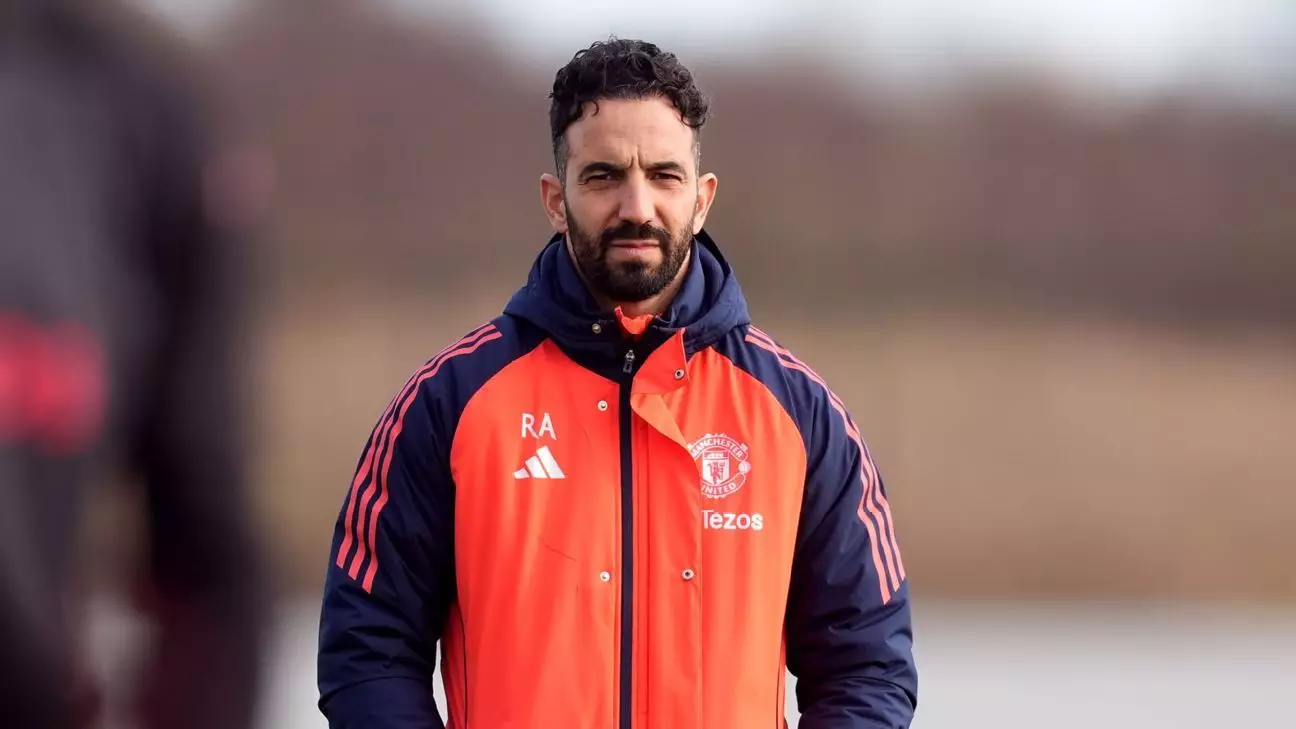
The recent acknowledgment by Ruben Amorim regarding the ongoing staff reductions at Manchester United sheds light on a grim chapter in the illustrious history of one of football’s most storied clubs. In stark terms, the admissions made by Amorim—who assumed the managerial role amid the club’s struggle—underscore the delicate interplay between on-field performance and off-field ramifications. This situation reflects a broader narrative in sports today, where teams face financial realities that often translate into actions impacting not just the athletes but the entire organization.
The announcement that Manchester United might lay off an additional 200 staff members, following the prior loss of 250 jobs, offers a stark reminder of how low performance can lead to significant operational decisions. Amorim has candidly pointed out that these job cuts stem from the men’s first team’s disappointing results. Manchester United’s staggering losses, exceeding £300 million over the past three years, directly correlate with a lack of competitive success—a correlation that speaks volumes about the modern sporting landscape where financial health is closely tied to performance.
Traditionally, football clubs have relied on their sporting success to ensure robust revenue streams through ticket sales, merchandise, and sponsorship deals. However, United’s current positioning at 15th in the Premier League, particularly as they prepare to face an Ipswich Town squad similarly struggling in their own right, epitomizes the struggle not only for redemption on the pitch but also financial stability off of it. Amorim’s acknowledgment that the football team is the “engine of any football club” highlights how deeply intertwined performance and financial viability have become.
Sources indicate that the atmosphere within the club has deteriorated since Sir Jim Ratcliffe’s appointment as co-owner, further exacerbated by extensive cost-cutting measures. The repercussions of these layoffs extend beyond merely financial metrics. Staff morale has taken a substantial hit—a reality that can permeate the organization and affect overall productivity and commitment. The emotional toll on staff witnessing their colleagues being dismissed not only sows discontent but disrupts the spirit of community that is vital in high-pressure environments such as football clubs.
Amorim’s record, which currently rests at a troubling nine defeats in just 22 matches, serves as a clear reflection of the difficulties faced by a new manager trying to navigate a convoluted landscape. His recognition of the hardships faced by everyone within the club signals an awareness of the gravity of the situation. It highlights access to mental health and emotional support systems that could play a vital role in a period of unrest and instability within the organization.
In the face of mounting pressure, Amorim emphasizes the importance of focusing on improvement in his department, specifically honing in on player performance. Yet, expectations are, understandably, at odds with reality for a club with a heritage as resplendent as Manchester United. The daunting prospect of imminent clashes tends to amplify that pressure; however, it’s pivotal for managers like Amorim to maintain a long-term vision that prioritizes sustained growth over immediate success.
As Ipswich Town makes their way to Old Trafford—a venue that has historically been a fortress for home teams—the stakes intensify. It represents an opportunity for Amorim to start shifting his narrative from a precariously low winning rate at home to establishing a reliable home ground advantage once again. His remarks about feeling buoyed by the incredible support of the fans encapsulate the essence of a club that thrives on community spirit, despite the current turmoil.
Ultimately, Manchester United’s recent plight is a poignant reminder of the shifting dynamics in modern football. Where clubs once stood firm on the pillars of proud histories, financial sustainability and on-field success now dance a tight waltz. As they navigate this challenging period, it will be critical for Amorim and his staff to foster a strong sense of unity and resilience, aiming not just for a brief recovery but a return to long-term prominence—and in doing so, hopefully safeguard the jobs of those who contribute to the rich tapestry of this iconic football institution.