
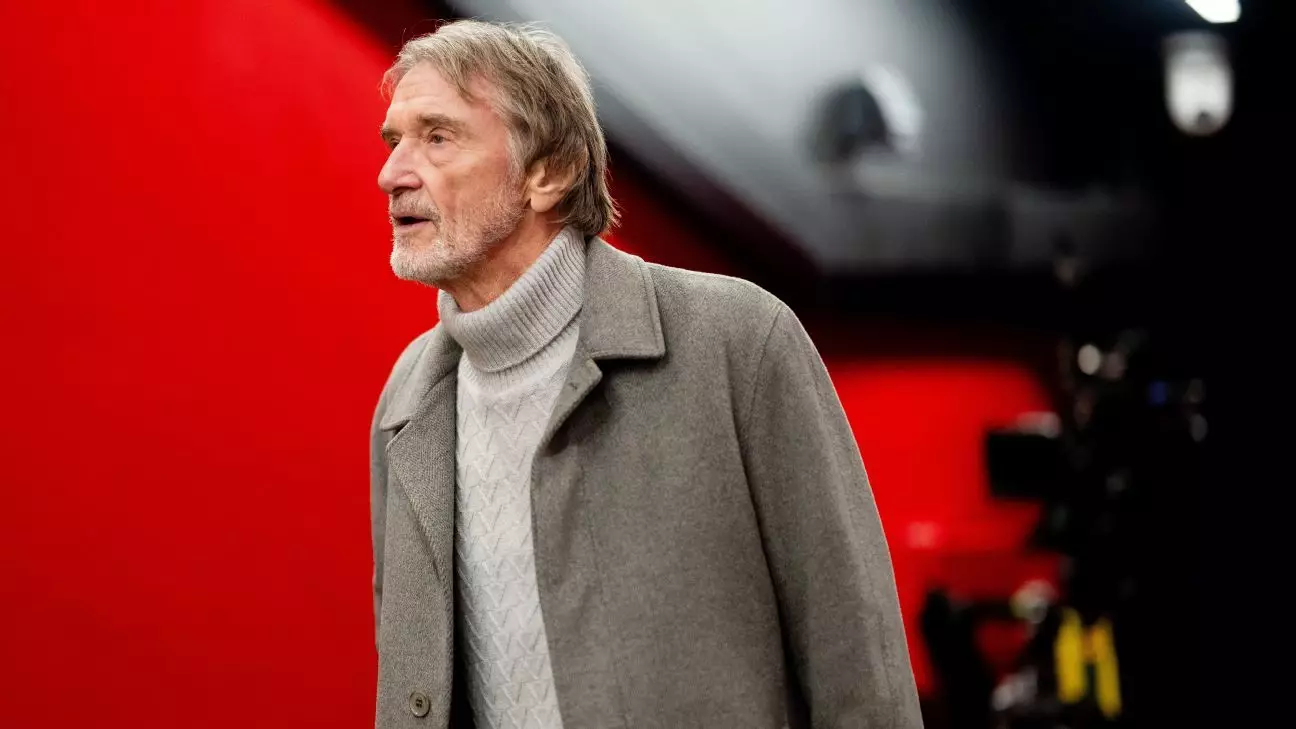
Manchester United, one of the most storied football clubs globally, finds itself grappling with severe financial deficits that necessitate drastic measures. The club recently revealed its decision to lay off an additional 200 staff members as part of its broader cost-reduction strategy. This announcement follows the previous dismissal of around 250 employees the prior summer, highlighting an alarming trend of job losses that seem likely to continue. The timing of this announcement is particularly notable, coming just a year after Sir Jim Ratcliffe’s controversial acquisition of a stake in the club, raising questions about his management strategies and long-term vision for the club.
CEO Omar Berrada’s statement emphasized a commitment to steering Manchester United toward a stronger future, focusing on success across all levels—both men’s and women’s teams, as well as the academy. However, the need for such sweeping changes underscores a dire situation; recent reports indicate the club has accumulated over £300 million in losses over the past three years. These figures are not only alarming in their scale but also raise significant concerns about the club’s operational viability and its ability to compete on the global stage. Berrada’s candid acknowledgment of losses over five consecutive years indicates a systemic issue that cannot simply be addressed through labor reductions.
The financial reports released recently reflect a downturn in revenues, plummeting from £225.8 million to £198.7 million for the last quarter of 2024. Such a decline necessitates urgent strategic reconsiderations that go beyond personnel cuts. The club’s priorities, as stated by Berrada, include not just financial recovery but also fulfilling the expectations of its passionate fan base by enhancing team performance and investing in facilities. Yet, the reality of consistent financial losses hampers these aspirations, creating a paradox where the ambitions of both the management and fans seem increasingly unattainable.
Beyond layoffs, the operational structure is undergoing significant changes, with plans to relocate staff from the historic Old Trafford offices to the Carrington training ground. Such moves might reflect an attempt to streamline operations and minimize overhead costs. Additionally, reports indicate a planned reduction of the club’s presence in Mayfair, suggesting a conscious effort to cut costs in high-rent areas. Even small changes, such as ending free lunches for staff at Old Trafford—a decision anticipated to save upwards of £1 million annually—illustrate the dire necessity for financial prudence.
While Manchester United’s leadership asserts a commitment to restoring financial health, the reliance on job cuts and operational reshuffles raises significant concerns about the club’s long-term vision. Their approach necessitates a delicate balance between immediate recovery and sustainable growth, ensuring that the club does not just survive but thrives in the competitive landscape of modern football. As the uncertainty looms, fans and stakeholders alike will be watching closely to see whether these hard choices indeed prove to be a catalyst for a rejuvenated Manchester United or a recurring theme of struggle and transition.