
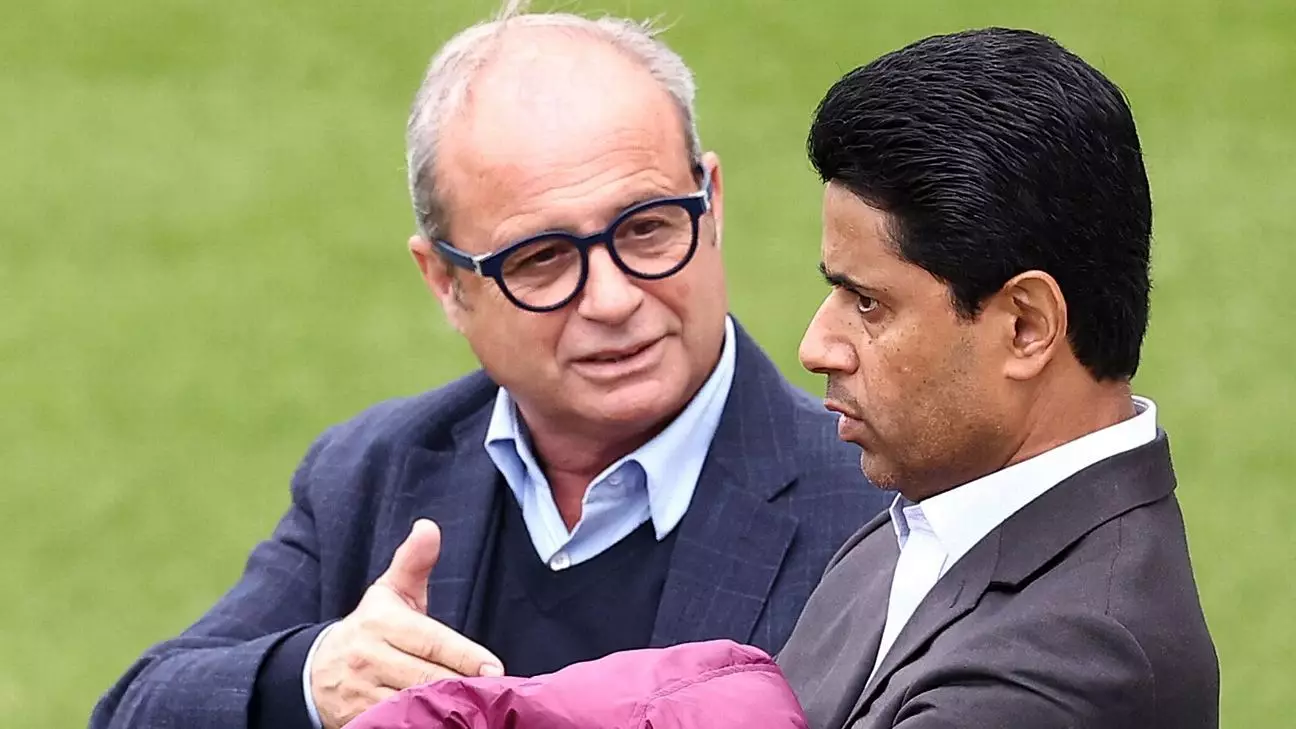
In a significant move that quells the swirling rumors regarding his potential transfer to Manchester United, Luis Campos has made a bold statement about his future in football management. Recently, Campos signed a substantial five-year contract with Paris Saint-Germain’s stakeholders, Qatar Sports Investments (QSI). This partnership, which extends until 2030, highlights the importance of stability and continuity in a club that has ambitions to dominate both domestic and European competitions. Campos has been a pivotal figure at PSG since his arrival in 2022, and this contract serves as an endorsement of his strategic acumen.
Campos’ tenure at PSG has been marked by a deliberate approach to player recruitment and talent development. His extensive experience, which includes serving as sporting director at both Monaco and Real Madrid, positions him uniquely to navigate the complexities of modern football. The current landscape demands innovative strategies, a skillset that Campos has mastered over the years. By reaffirming his commitment to PSG, he not only reinforces the club’s vision but also affirms his own philosophy to cultivate talent sustainably.
The Dynamics of Decision-Making in Football
The landscape of football is often turbulent, particularly regarding management roles. The recurring associations between Campos and Manchester United illustrate the intense pressure facing clubs to remain competitive. Following the abrupt exit of Dan Ashworth from United, Campos emerged as a prime candidate to fill the void. However, the decision to stay authentic to PSG demonstrates his belief in the team’s potential, emphasizing loyalty over short-term gains. This reflects a broader narrative about leadership in professional sports: the need to prioritize long-term goals and collective vision over fleeting opportunities.
While many may view Campos’ return as a missed chance for Manchester United, it actually emphasizes the ongoing transformation within PSG. Under Campos, the club has established a defined sporting philosophy and recruitment strategy tailored for both immediate results and future success. His ability to identify and develop young talents, coupled with the strategic acquisition of experienced players, showcases his versatility and understanding of the game’s nuances. This commitment to nurturing talent is essential as football continues to evolve into a more competitive arena.
A Vision for the Future
QSI’s chairman, Nasser al Khelaifi, expressed confidence in Campos’ leadership, describing the renewed partnership as a cornerstone of their long-term aspirations. The crux of this contract lies not just in the immediate benefits but in cultivating a sustainable framework that ensures PSG’s status as a powerhouse in football. Campos’ tenure has already altered the club’s trajectory, and his renewed role will likely accelerate this momentum.
The upcoming challenges—highlighted by PSG’s preparations for the Coupe de France final and their Champions League matchup against Inter Milan—will test the strategy and decisions made under Campos’ guidance. His track record suggests an ability to handle high-pressure situations effectively, which will be critical as PSG aims to reclaim its position at the pinnacle of European football.
In essence, Campos’ decision to renew his commitment to PSG reaffirms the significance of strategic foresight in football management. His role transcends mere recruitment; it embodies a vision that prioritizes collective success, cultural stability, and a quest for excellence that can shape the future of PSG and possibly transform the football landscape altogether.