
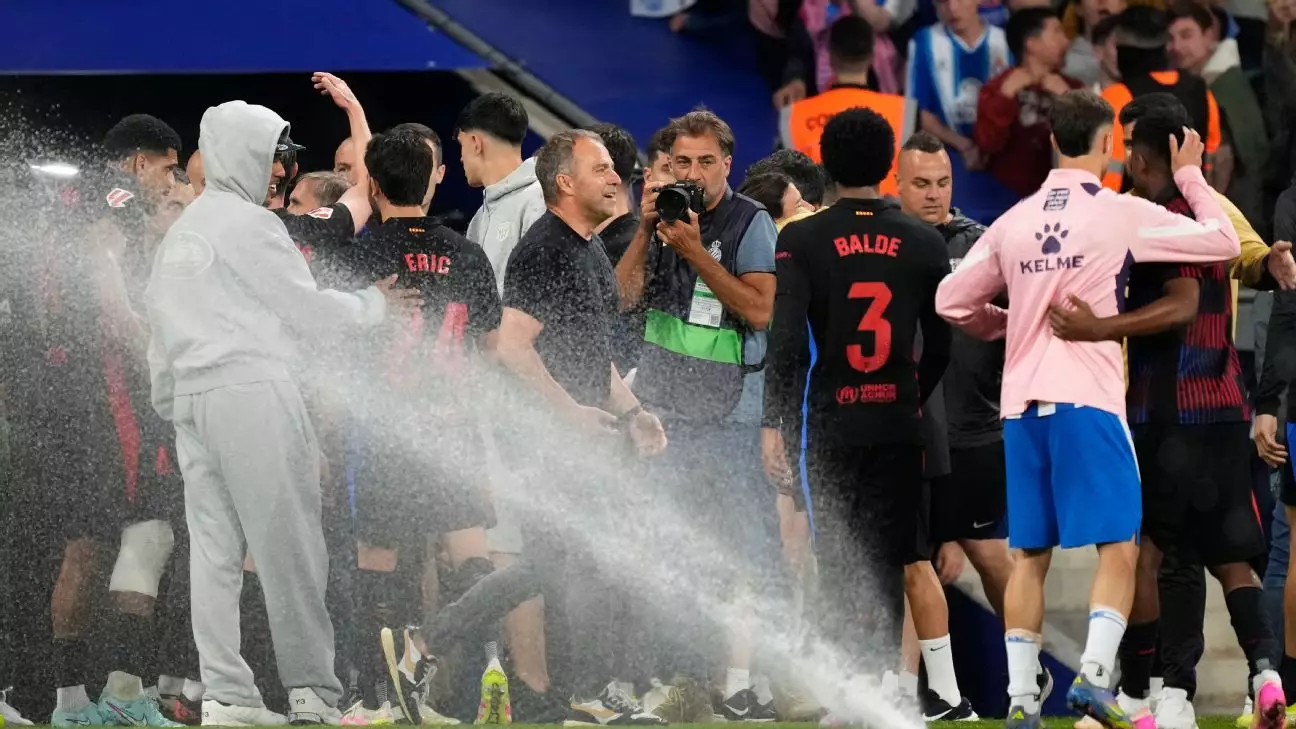
The world of football is rife with passionate rivalries, particularly in leagues like LaLiga, where local derbies can ignite fervent emotions among players and fans alike. Barcelona’s recent title clinching against city rivals Espanyol showcased not just the talent on the pitch but also an important display of sportsmanship off it. Under pressure, tensions can easily flare, transforming festive celebrations into chaotic confrontations. Such was the backdrop against which Barcelona coach Hansi Flick conducted himself remarkably well.
In the lead-up to this crucial match, misunderstandings and disruptions loomed. A chaotic incident involving a vehicle colliding with fans before the game added a layer of anxiety. This unexpected drama could have easily precipitated violence, exacerbating the nervous atmosphere. Yet, Flick exhibited not only tactical prowess but also an acute understanding of the human elements at play.
A Lesson in Leadership
Flick’s leadership qualities were on full display when he made the crucial decision to escort his players off the pitch promptly after the final whistle. With the tension palpable and earlier disturbances fresh in the minds of both players and supporters, he sensitively navigated the emotional minefield that had the potential to spiral into chaos. His decisiveness not only shielded his squad from unnecessary confrontation but also respected the opposing fans who were clearly affected by the day’s events.
Espanyol coach Manolo González aptly labeled Flick a “gentleman” for his behavior, crediting him with a level of respect rarely seen in high-stakes situations like this. Instead of basking in the glory of a hard-fought victory in front of the home supporters, Flick opted for pragmatism, a move that arguably overshadowed the sheer joy of winning. By prioritizing safety and emotional intelligence over unchecked celebration, Flick set a precedent that is rarely acknowledged in professional football.
The Emotional Complexity of Sports Celebrations
Winning is often viewed as an unequivocal good, yet success can be marred by the emotional backdrop of rivalry. Flick’s decision highlighted an essential truth: celebrations should not come at the expense of respect. The 2023 title win had already seen troubling incidents involving supporters rushing the pitch, which left an indelible mark on the rivalry’s narrative.
This year, Flick’s actions underscored not just sportsmanship but also emotional intelligence in sport. He emphasized that celebrations do not need to occur in the immediate aftermath of triumph, suggesting a more mature approach to victories—it’s not merely about the team or its supporters basking in glory, but about honoring the spirit of competition and the many fans involved in the game.
The Impact of Collective Celebrations
Upon leaving the pitch, Flick reassured fans that celebrations could still occur but in a more controlled and respectful environment. His attention to detail is commendable; he instilled a sense of community among the team while respecting the ongoing tension with their rivals. High emotions indeed linger long after the final whistle blows, and public displays of elation must consider and temper those feelings, particularly when potential animosity brews.
Barcelona secured not just another LaLiga title with their 2-0 triumph but a domestic treble in an exceptionally demanding season. It’s a testament to their resilience and talent under Flick’s guidance. Yet, winning alone should not define a club’s ethos but rather how they carry themselves amidst triumph and adversity.