
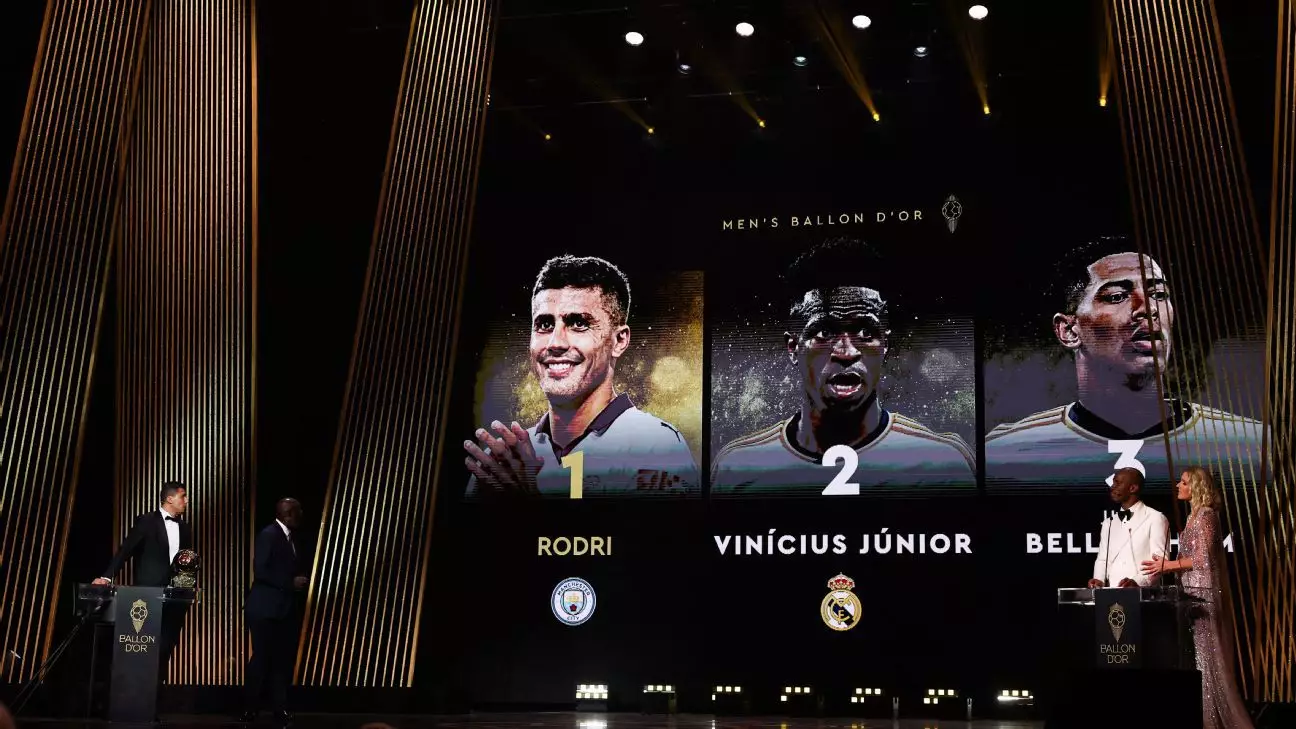
The recent boycott by Real Madrid of the Ballon d’Or ceremony in Paris has stirred quite a frenzy in the football community, provoking diverse opinions from fans, players, and even officials like LaLiga president Javier Tebas. Madrid’s decision to cancel their trip arose when the club learned that Vinícius Júnior would not be awarded the coveted trophy, conceding the win to Manchester City’s Rodri. This incident not only emphasizes the competitive spirit of football but also opens discussions on sportsmanship and institutional practices within prestigious award ceremonies.
In a pointed critique, Javier Tebas expressed his disappointment with Real Madrid’s decision to boycott the ceremony. His comments highlight a significant concern regarding sportsmanship, underscoring the importance of humility and respect in defeat—core values that he believes Real Madrid has lost sight of. Tebas argues that the process behind the Ballon d’Or is transparent, with input from 100 journalists, thereby contesting the notion that Real Madrid’s claims of unfairness hold any weight. The president’s sentiments illustrate a broader concern in the sport: the necessity for leading clubs to maintain dignified behavior as representatives of their leagues and fans.
Contrarily, former Real Madrid star Karim Benzema offered a more empathetic perspective regarding the situation. He voiced solidarity with Vinícius, asserting that the Brazilian’s recent performances justified his potential claim to the Ballon d’Or. Benzema emphasized the significance of Vinícius in driving Real Madrid’s success, particularly in the Champions League. Such comments not only underscore Benzema’s loyalty to his former teammate but also highlight a generational divide in how players perceive awards like the Ballon d’Or—transitioning from institutional validations to personal merit and talent recognition.
This incident extends beyond the personal reflections of Tebas and Benzema, capturing the essence of how players and teams relate to individual accolades. The Ballon d’Or, a celebration of the individual in a team sport, often incites debate not only about fairness and recognition but also about evolving talents in football. Benzema’s acknowledgment of Vinícius’s capabilities directs attention to an essential discussion: are traditional institutions adequately recognizing talent that significantly impacts the game? This fuels ongoing conversations about deserving players who may be overlooked due to institutional biases or awards’ conventional selection criteria.
Ultimately, the scenario surrounding Real Madrid’s boycott showcases a critical junction in football, where the intersection of individual merit and institutional recognition poses new challenges. While Javier Tebas’s critique spotlights the need for sportsmanship, Benzema’s comments draw attention to the importance of acknowledging the dynamic talents within the sport. This discourse not only reflects the passions of football but also serves as a reminder that both clubs and players must navigate the complexities of personal ambition amidst the larger community of football. The path forward could benefit from constructive dialogue about recognition, respect, and the celebration of talent in an increasingly competitive landscape.