
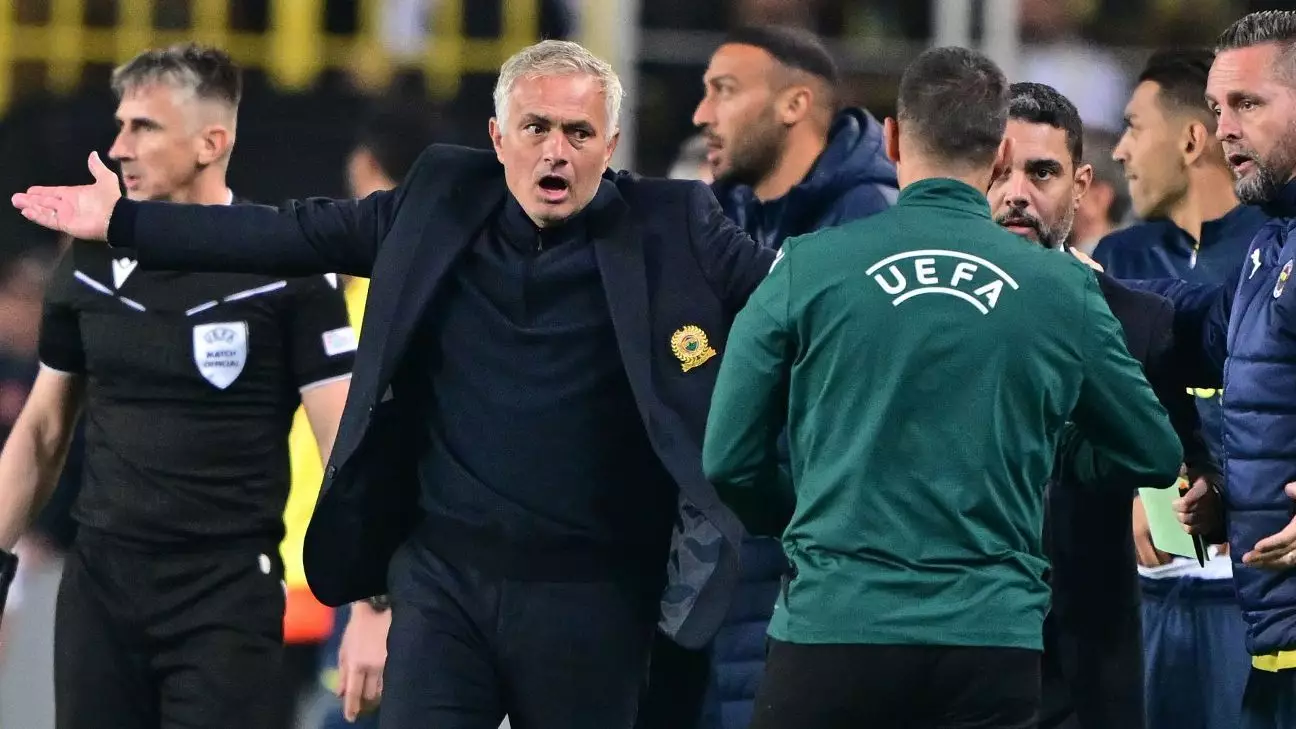
In the world of football, few figures are as polarizing and controversial as Jose Mourinho. Renowned for his tactical acumen and unparalleled success, he has always been a subject of scrutiny. Recently, his frustrations regarding the treatment he receives from UEFA have come to the forefront, especially after his team, Roma, faced a heartbreaking defeat in the 2023 Europa League final. Mourinho’s grievances are not just limited to a single incident; they tap into broader issues about fairness, accountability, and the standards applied within European football.
Mourinho’s Red Card Conundrum
Following his team’s defeat to Sevilla, Mourinho received a four-match touchline ban for verbally confronting referee Anthony Taylor. This incident, stemming from an intense rivalry on the pitch, appears to have left a significant mark on Mourinho’s psyche. In a revealing interview with Sky Sports, he expressed feelings of being unfairly targeted by UEFA. The nature of sport often brings out heightened emotions, especially in high-stakes matches like finals. However, Mourinho’s red card in a recent Europa League match against Manchester United reignited discussions about his treatment by officials and governing bodies.
His emotions encapsulate a struggle many coaches face: the fine line between passion for the game and maintaining decorum on the field. Mourinho’s assertion that he simply desires equal treatment—whether he is in the same position as other esteemed coaches like Carlo Ancelotti or disadvantaged ones—challenges the established norms of accountability in football. The fact that Mourinho holds himself to the same standards as other coaches reflects his deep-seated belief in continuous professional integrity.
Emotional Toll and Career Reflections
Beyond his disputes with UEFA, the emotional burden of constant scrutiny weighs heavily on Mourinho. After expressing discontent regarding his situation, he humorously remarked that his next managerial role should not involve a club fighting relegation. This statement highlights his precarious position. While he acknowledges the emotional strain of battling against relegation, he demonstrates a desire for stability and happiness—something he feels is lacking in his current role at Fenerbahce due to the continuous pressure of competing in European competitions.
Mourinho’s career trajectory illustrates how the mounting pressures in football can overshadow the joys of success. He has often been perceived as a “winner” and, yet, the burden of expectations can sometimes become overwhelming. Reflecting on this offers insights into the mental health struggles of modern coaches, who juggle high expectations, public criticisms, and the relentless pursuit of victory. His statements about wanting to return to the Premier League while also managing to maintain his happiness reveal a coach caught between ambition and wellbeing.
While Mourinho’s professional future remains uncertain, one thing is evident: his love for the game and desire to return to England still burn brightly. His recent comments about wanting to come back to London show a deep connection to the city and the English football scene that shaped much of his career. This longing expresses more than just nostalgia; it hints at a need for a familiar environment where he can thrive once again.
The irony lies in the fact that his reputation, which was built on winning trophies and creating competitive teams, may be leading him to a crossroads. He openly admits that he needs to prioritize his happiness, suggesting that the pressures associated with managing top teams have changed significantly. Would he find a path to personal satisfaction while battling for titles in a Premier League setting?
Mourinho’s situation brings to light the importance of fair treatment in sports. The perceptions of bias and differential treatment can lead to a toxic environment. By calling for consistency in treatment, he raises critical questions: Are UEFA’s decisions driven by an unbiased approach, or do certain esteemed figures face disproportionate scrutiny?
Ultimately, the complexities of management within the realm of European football encompass various challenges, both on and off the pitch. Mourinho, despite his controversial style, contributes to a discourse that is vital for the future of football leadership. Coaches, fans, and governing bodies alike must understand the implications of their actions and decisions, for they are pivotal in shaping the landscape of this beloved sport.
In sum, Jose Mourinho’s narrative is a poignant reminder of the intersection between personal identity, professional integrity, and the quest for fairness in football—making his voice one that resonates well beyond the touchline.