
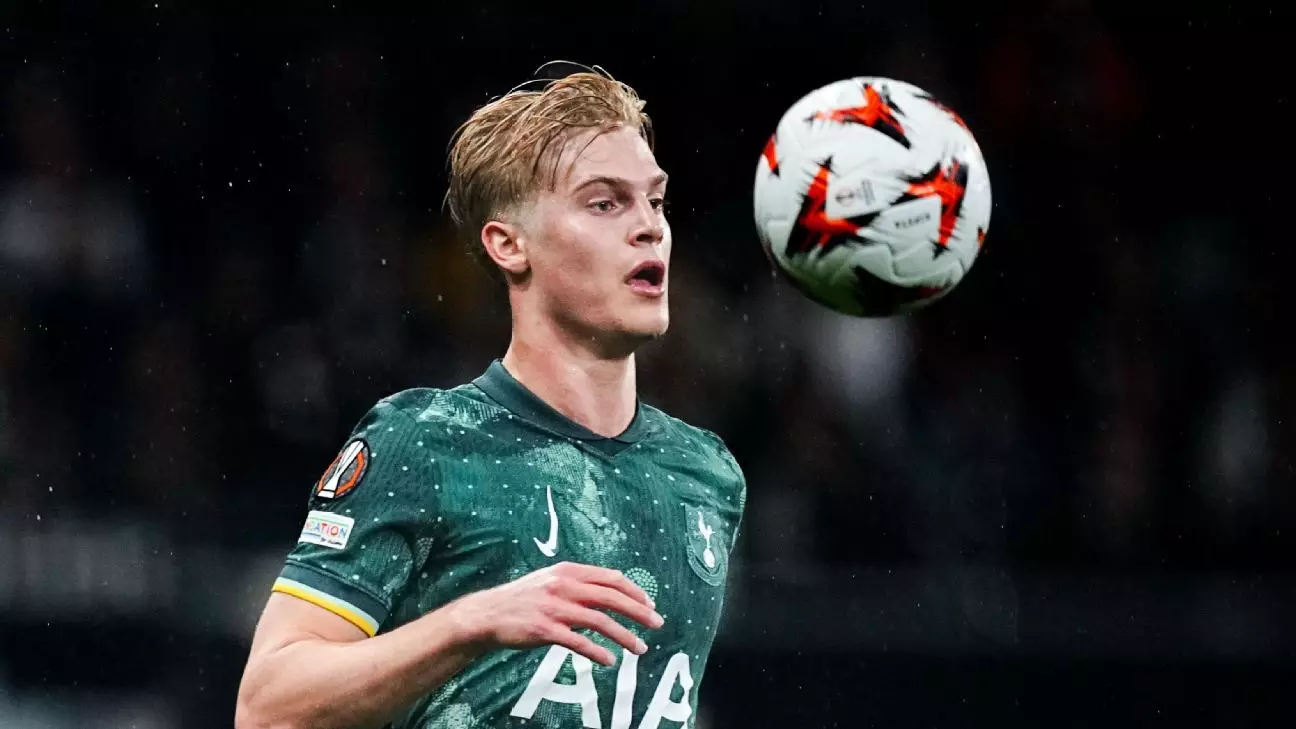
In a season fraught with challenges, Tottenham Hotspur finds itself at a critical juncture, grappling with injuries that could derail its ambitions. Latest reports reveal that midfielder Lucas Bergvall has suffered a significant ankle injury during training, which has left him sidelined for the remainder of the season. Manager Ange Postecoglou has confirmed the harsh blow, indicating that the team’s depth is not just being tested but thoroughly strained. With a Premier League standing that has languished around 16th, the stakes have never been higher as the club eyes the Europa League as its primary path to re-establishing dominance.
The Impact on Team Dynamics
Bergvall’s injury isn’t the only concern nagging the Tottenham camp. Key players Dominic Solanke and James Maddison are also nursing their own injuries, raising questions about team cohesion as they gear up to face West Ham United this weekend. While Solanke’s thigh issue appears manageable, Maddison’s knee presents more uncertainty as scans are awaited. The fragility of the squad is evident; it’s not just about losing players but also the rhythm and synergy that those players bring to the pitch.
Captain Son Heung-Min, nursing a foot injury himself, has been absent for five matchdays. His experience and leadership are sorely missed, and his anticipated return could be a game-changer for the Spurs. Postecoglou remains optimistic, emphasizing that Son is making strides in his recovery. The longer such injuries persist, the more the team’s tactical options become limited, forcing Postecoglou into a creative corner.
Turning Setbacks into Opportunities
Despite the setbacks, there is a palpable sense of resolve among the Spurs. Their recent comeback from a staggering 5-1 loss to Liverpool, followed by a commendable performance against Bodo/Glimt in the Europa League, illustrates a team capable of weathering storms. “We needed to refocus,” Postecoglou remarked, highlighting the necessity of learning from defeats. Rather than relegating those experiences to mere negative memories, the manager believes that cultivating anger and disappointment can be fuel for future success.
This mentality is crucial for any team wishing to achieve. Tottenham’s journey in European competition has often been uneven, but there appears to be a collective intent to learn and convert challenges into stepping stones. Postecoglou’s role as a motivator will be vital as they approach the latter stages of the Europa League. The psychological aspect of the game cannot be underestimated, and the Spurs must channel their disappointments into a cohesive force.
Chasing Glory
Tottenham’s aspirations hinge on more than just survival in the Premier League; the Europa League presents an opportunity to redeem a lackluster domestic campaign. The ambition to reclaim a status among Europe’s elite through this tournament gives the squad a singular focus. Winning the Europa League is not just about silverware; it’s about securing a coveted Champions League spot for the next season. With the squad’s morale hanging by a thread, harnessing the intensity of their emotional experiences could be the difference between triumph and failure.
Tottenham Hotspur stands at a crossroads, grappling with adversity but embodying resilience. The challenges of injury could either spell doom or galvanize a season marked by fluctuating fortunes. The key lies in whether Postecoglou can inspire his players to convert their disappointments into a fierce quest for glory, turning a fractured lineup into a formidable force.