
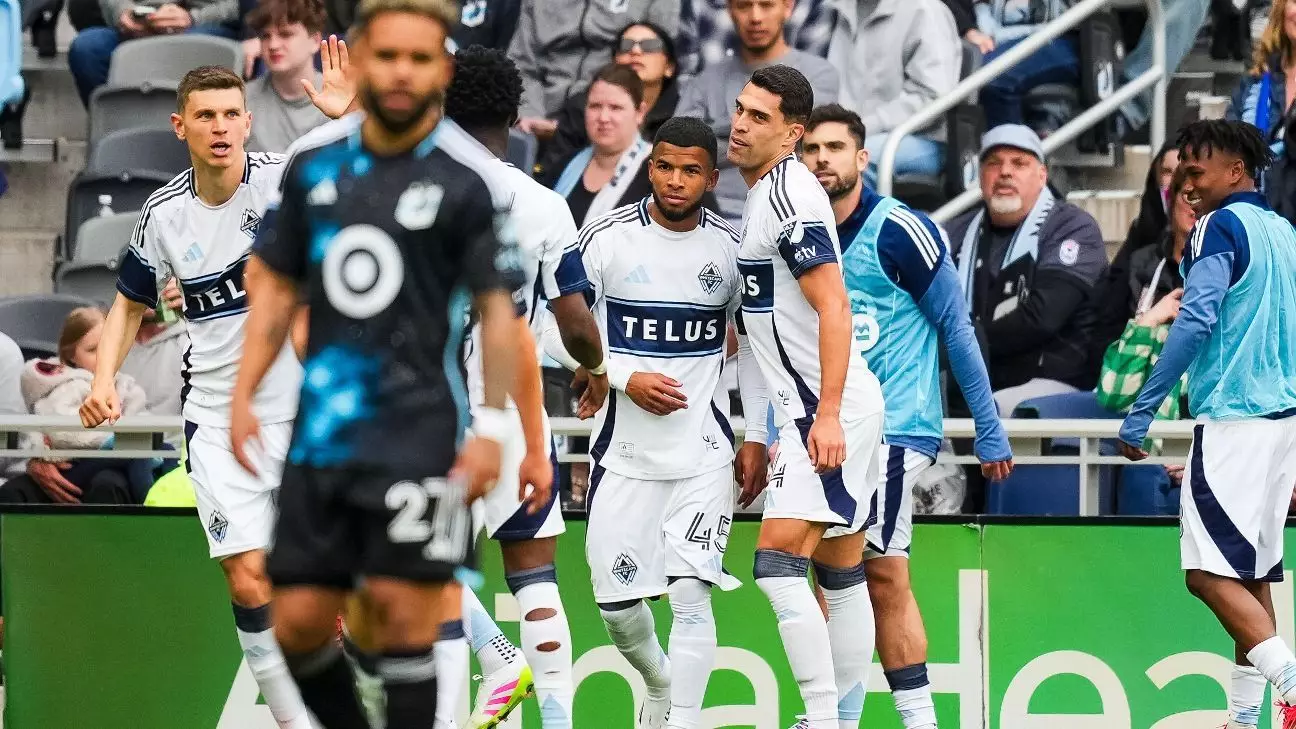
In a world where sports serve as a mirror to society, the recent altercation during the MLS match between Minnesota United FC and the Vancouver Whitecaps underscores the harsh reality of discrimination that continues to plague not only the sport but also society as a whole. On a day when the Whitecaps triumphed over Minnesota with a 3-1 scoreline, the match transcended sportsmanship and turned into a reminder of the deep-rooted issues within the league. The league’s Non-Discrimination Policy came under the spotlight as MLS announced its intention to investigate allegations involving players Joseph Rosales and Emmanuel Sabbi, following a heated verbal exchange in the dying moments of the match.
The sharp exchange caught the attention of many viewers watching the broadcast, leading to confusion and concern across the board. Referee Drew Fischer, who found himself in the difficult position of addressing the incident without clear evidence, invoked the league’s Non-Discrimination Protocol. The fact that no immediate sanctions were levied begs the question: how can we ensure stricter enforcement of anti-discriminatory measures in real-time situations? The ambiguity in the referee’s ability to corroborate the claims highlights systemic gaps in the mechanisms designed to protect players and, by extension, the integrity of the sport.
Rehabilitation Through Awareness and Education
Promptly following the incident, Minnesota United FC issued a statement denouncing harassment, reinforcing that discriminatory behavior has no place in soccer. While their stance is commendable, the league must recognize that statements alone are insufficient. The organization needs to embody its message through systemic change and education. This brings to light the existing training programs developed in partnership with Black Players For Change and the MLS Players Association, initiating a new paradigm in player awareness of unacceptable verbal conduct.
Yet, one cannot overlook the irony; despite leagues championing inclusion, incidents like these reveal that education and training, while vital, still have not insulated the culture from discriminatory breaches. Players, often from diverse and multicultural backgrounds, require extensive engagement in understanding how their words and actions can have far-reaching effects, not just on the pitch but also in the cultural sphere. Addressing the disparity between policies on paper and genuine behavioral change on the field is paramount for a league that aspires to be progressive and inclusive.
The Role of Stakeholders in Perspective Change
The response from MLS emphasizes the importance of unified support from all stakeholders. It’s crucial that teams and player representatives work actively with the league to foster an environment of accountability. This means not only publicly condemning actions but also working behind the scenes to address the attitudes that perpetuate discrimination. The culture in sports has historically been one of silence around such issues, but change requires a collective commitment to break that cycle.
The persistent pattern of discriminatory actions among players signifies a deeper issue that resonates with societal norms. When players like Kai Wagner and Dante Vanzeir receive suspensions for engaging in discriminatory misconduct, it still begs the question of whether these measures instill genuine change or merely serve as punitive responses. It is incumbent upon MLS to lead by example, ensuring that such incidents become increasingly rare and never tolerated.
Building a Culture of Inclusivity
Advancing beyond reactive measures, there’s a vital need to create a proactive culture that champions inclusivity. This goes beyond mere punishment; it involves fostering empathy, understanding, and respect at every level of the organization. Teams must be willing to engage their fans in discussions about respect and inclusivity in the stands, where the real long-term change begins. Fans play a critical role in cultivating an environment that discourages discrimination and encourages acceptance.
As soccer enthusiasts, we should demand more than mere acknowledgment from our teams and leagues. Engaging in honest, open dialogues about racism and discrimination must be a continuous thread woven through the fabric of our sporting culture. Whether through community outreach, educational programs, or fan forums, the goal is to redefine what it means to be a supporter in today’s world. The sanctity of the sport speaks to the values that we uphold as a society; thus, the pursuit for equity and dignity in the sporting arena must reflect that ethos wholeheartedly.
The recent incident in MLS is a poignant reminder that discrimination, in any form, remains a formidable adversary in sports. By fostering an inclusive culture with strong, clear protocols and education, the league can take significant strides in combating discrimination, thus preserving the beauty of the game for generations to come.