
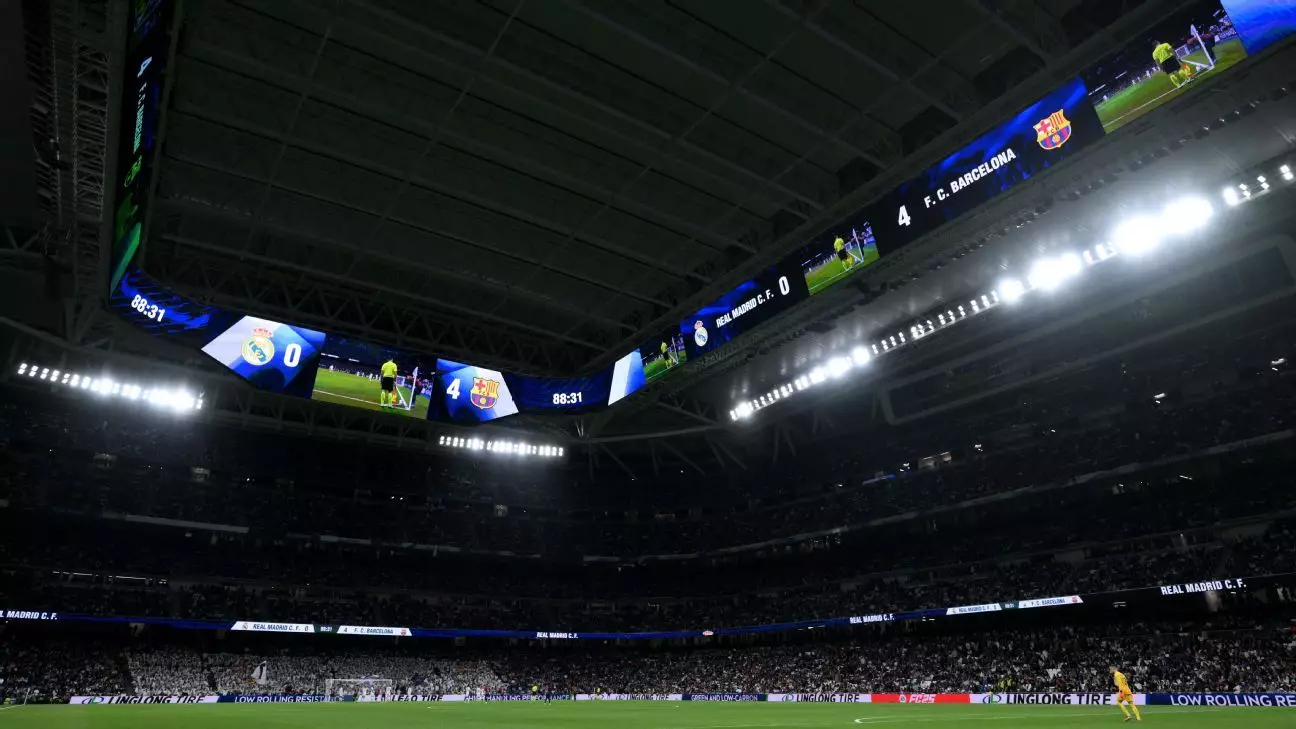
In a recent clash between two football giants, Barcelona and Real Madrid, an unsettling incident cast a shadow over an otherwise thrilling match. LaLiga, Spain’s premier football league, has vowed to take action against racist insults directed at Barcelona players, specifically targeting Lamine Yamal after his impressive goal contributed to a commanding 4-0 victory at the Santiago Bernabéu. Following the match, video footage emerged showcasing the degrading remarks aimed at the young player, prompting LaLiga to issue a stern condemnation of the behavior displayed by a section of the crowd.
The league’s statement asserted its commitment to addressing hate speech in all forms, pledging to report the incident to law enforcement agencies. This decisive response underscores a broader awareness and intolerance towards racism within the sport, fulfilling a crucial role in advocating for a more positive environment in football.
In a complementary response, Real Madrid publicly denounced the behavior of the fans involved in this racist incident. The club’s official statement expressed regret over the discriminatory remarks made by a minority of supporters and announced the initiation of an investigation aimed at identifying the offenders. This move illustrates a growing recognition among clubs of the need to address and dismantle the pernicious effects of racism within their ranks, ensuring that all fans can enjoy the game free from discrimination.
Real Madrid’s stance not only affirms the ethical responsibility of clubs to maintain a respectful atmosphere but also signals a unified front against the proliferation of hate in football. As these incidents gain traction, the collaboration between clubs and governing bodies becomes essential in curtailing racial abuse, fostering unity, and promoting inclusivity among fans.
LaLiga’s efforts to combat racism in football have intensified in recent years, as the league has experienced a series of high-profile cases that have attracted public scrutiny. The plight of Vinícius Júnior, for instance, highlighted the urgency of addressing racial abuse amid widespread fan engagement. The establishment of legal precedents, such as the conviction of fans who racially abused Vinícius in a recent incident, marks an encouraging shift in confronting these issues head-on.
Additionally, LaLiga’s recent initiatives, including conferences and collaborative efforts with local governments, aim to enlighten stakeholders about the detrimental impacts of racism and prejudice in football. The call for legal reforms to provide the league with enhanced authority in managing racist incidents underscores the pressing need for sustained action beyond mere condemnation.
As football continues to captivate millions globally, the importance of eradicating racism from the sport stands paramount. The incident targeting Yamal not only serves as a reminder of the work that remains but also represents an opportunity for change. The league’s reaction, supported by Real Madrid, fosters hope that systemic transformation is attainable. While the road ahead will undoubtedly be challenging, the commitment expressed by LaLiga and individual clubs signals a promising start in the fight against racism. By prioritizing education, accountability, and collaboration, the football community can work towards ensuring an inclusive and respectful environment for all players and fans alike.