
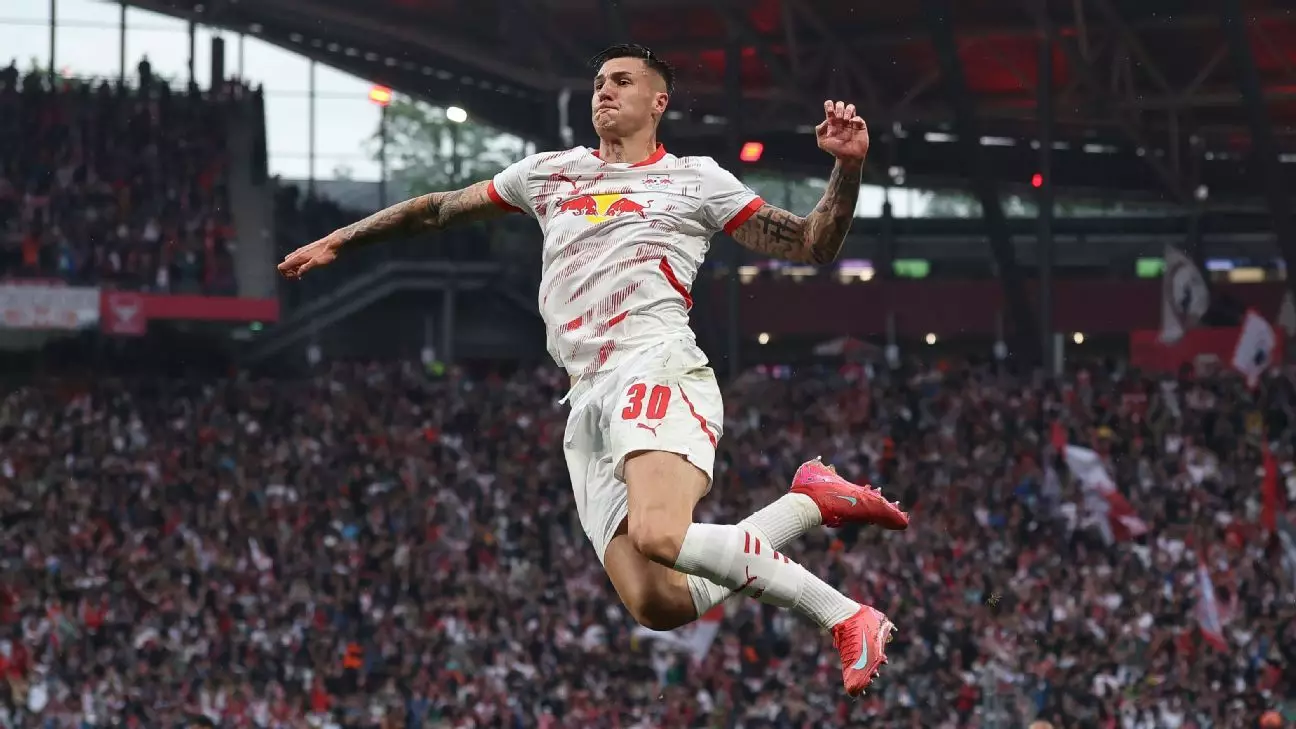
In the exhilarating realm of football transfers, few stories are as tantalizing as Arsenal’s ongoing quest to secure the striking talents of RB Leipzig’s Benjamin Sesko. With 21 goals to his name last season, including a noteworthy four during his UEFA Champions League outings, the 22-year-old Slovenian forward has catapulted himself onto the radar of major European clubs. Reports suggest that despite there being no official bid submitted yet, Arsenal remains optimistic about finalizing a deal that aligns with manager Mikel Arteta’s vision.
What makes this pursuit particularly compelling is not just Sesko’s impressive stat sheet but also the sheer potential he possesses. His dynamic style of play could be the breath of fresh air Arsenal needs to bolster their attacking options. Furthermore, as the Gunners navigate the highly competitive landscape of the Premier League and beyond, securing Sesko would send a strong signal about their ambitions to contend at the highest levels. A price tag hovering around €100 million speaks volumes about Sesko’s worth, but for a club intent on establishing its supremacy in English football, this investment might very well be justified.
Manchester United’s Search for Goalkeeping Stability
Amidst the swirling transfer rumors, Manchester United’s attention now drifts toward Barcelona’s Marc-André ter Stegen, revealing the club’s vulnerability in the goalkeeper department. Following a string of inconsistent performances from André Onana, the Red Devils are carefully evaluating their options in net. Ter Stegen, who recently returned to form after battling injury setbacks, has a wealth of experience accrued from his extensive tenure at Barcelona, where he has established himself as one of the top shot-stoppers in La Liga history.
The challenges at Old Trafford underscore a broader theme in modern football: the critical importance of a reliable goalkeeper. With reports indicating Chelsea’s interest as well, it is evident that Ter Stegen’s talents are in high demand. For United, the acquisition of such a high-caliber player could provide the stability they desperately need, especially as they look to reclaim their place among the elite. However, the question remains whether the club will act decisively to prevent another season of goalkeeping woes.
Real Madrid’s Strategic Addition of Franco Mastantuono
In a move that signifies their ongoing commitment to building a future-oriented squad, Real Madrid looks poised to finalize the signing of young Argentine Franco Mastantuono from River Plate for €45 million. This youth-focused strategy is not only a testament to Madrid’s eye for emerging talent but also serves as a robust counter to the financial powerhouses like Paris Saint-Germain and Manchester United, who also vied for Mastantuono’s signature.
Madrid’s insistence on allowing Mastantuono to participate in the FIFA Club World Cup this summer indicates a calculated approach that values player development alongside immediate strategic acquisitions. This dual-focus positions Real Madrid not simply as a club chasing immediate success but as an institution planning well into the future, ensuring they remain competitive at both domestic and international levels.
Victor Osimhen’s Decision to Stay in Europe
The transfer market’s unpredictability is perhaps best illustrated by Napoli striker Victor Osimhen’s recent decision to reject a lucrative offer from Al Hilal. After initially agreeing on a transfer fee, Osimhen’s late change of heart underscores a growing trend among top talents prioritizing their European careers. The striker, fresh off a stellar loan spell with Galatasaray, where he managed 26 goals in just 30 league appearances, is now positioned to return and make an impact at Napoli.
This narrative highlights the nuanced landscape of transfer negotiations, where financial incentives often contend with players’ aspirations and career trajectories. For Osimhen, sticking to the European circuit means he aligns himself with options that challenge him at higher levels and offer more significant opportunities for professional growth. His decision not only reflects individual ambition but also indicates a broader sentiment among players who prefer to hone their skills in the fiercely competitive European leagues rather than chase the payday in less challenging environments.
Brighton’s Forward-Thinking Strategy
As the transfer window continues to heat up, Brighton’s recent €40 million bid for Olympiacos’ promising forward Charalampos Kostoulas serves as a vivid illustration of the club’s astute approach to building a competitive squad. Widely regarded as one of Europe’s rising stars, this strategic move could become a turning point for Brighton as they look to replace João Pedro amidst ongoing speculation surrounding his potential transfer to Newcastle United.
What’s fascinating about Brighton’s pursuit is how it exemplifies the club’s ability to compete economically while still targeting high-potential prospects. Such moves not only bolster the club’s current roster but also reflect an intelligent long-term vision that prioritizes talent scouting and development. As the landscape of European football evolves, clubs like Brighton demonstrate that success isn’t solely dictated by vast financial resources, but rather by a clear strategy and the execution of meticulous planning.