
Analyzing Manchester United’s Struggles.
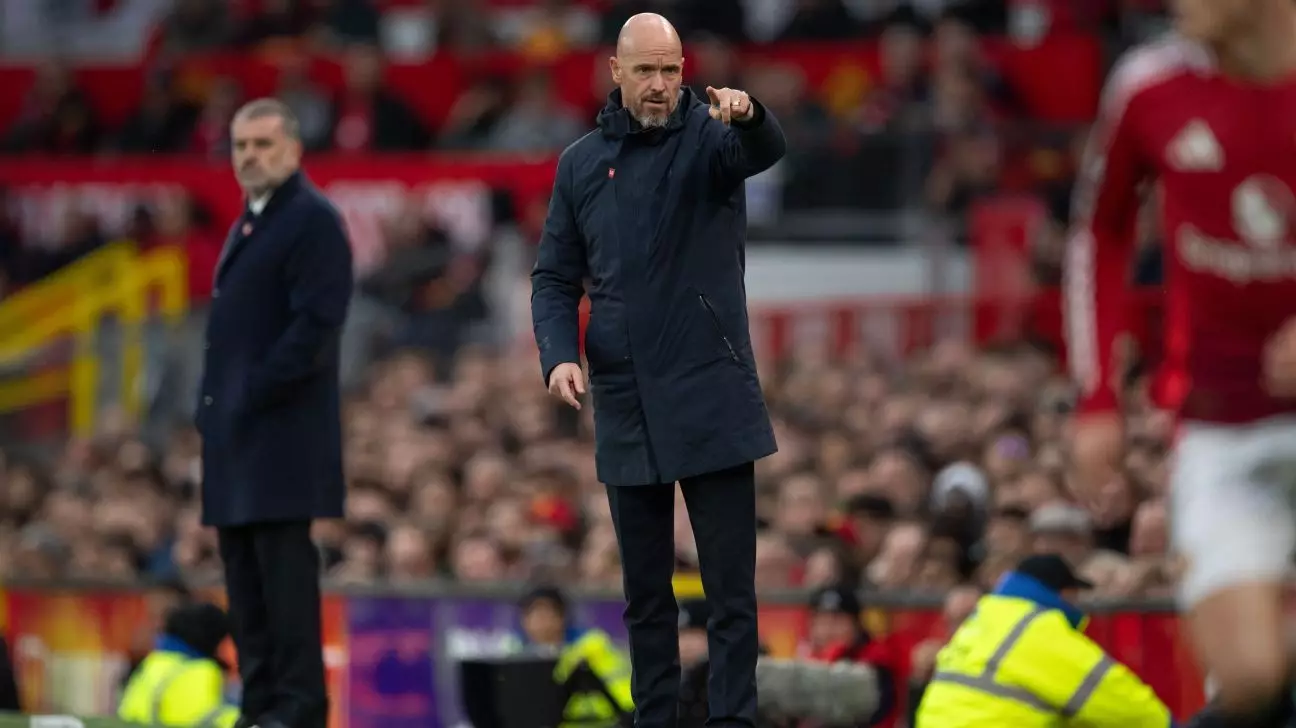
In the world of football, few events are more jarring than a significant defeat at home, particularly for a historic club like Manchester United. After a disheartening 3-0 loss to Tottenham Hotspur, manager Erik ten Hag faced intense scrutiny. However, instead of dwelling on the negativity of that match, Ten Hag opted to reinterpret the narrative by focusing on a pivotal moment—the red card shown to Bruno Fernandes. This pivotal moment heavily influenced the match, leaving Ten Hag in a position where he effectively chose to disregard the entire game due to the subsequent overturning of the red card decision.
The defeat at Old Trafford on September 29 was marked by an impressive performance from Tottenham, who confidently scored three goals courtesy of Brennan Johnson, Dejan Kulusevski, and Dominic Solanke. However, the incident involving Fernandes and James Maddison overshadowed the result itself. Fernandes, the team captain, received a straight red card in the first half for what was interpreted as a reckless challenge, leaving United with ten men and raising immediate questions about Ten Hag’s tactical decisions under pressure.
Ten Hag’s leadership philosophy comes to the forefront in this scenario. By dismissing the match against Tottenham as unrepresentative of his squad’s capabilities, he appears to be practicing a form of psychological resilience not only for himself but for his players and the fans as well. His remark, “I deny that game, ignore that game,” reflects a deliberate choice to shift focus from past mistakes toward future opportunities. This determination is admirable; it echoes a broader psychological tenet that maintaining a forward-looking mindset is essential for success in competitive sports.
While his dismissal of the Tottenham game as a fair assessment might seem controversial, careful scrutiny reveals that in professional sports, a single incident can dramatically alter an outcome. Ten Hag’s focus on resilience and determination is an optimistic lens through which to view future matches, particularly as the team navigates a tumultuous season compounded by injuries.
Injuries have emerged as a recurrent theme for Manchester United, which further complicates Ten Hag’s task of stabilizing the team’s performance. The manager highlighted how the absence of key players—like defenders Luke Shaw and Tyrell Malacia, as well as midfielder Mason Mount—has hindered their progression in the league. An incomplete squad oftentimes translates to inconsistency in results, and as Ten Hag noted, “when you don’t have the players available, you can’t line up the best team.”
This lack of availability is not merely a statistical issue; it creates a ripple effect that impacts morale, strategy, and individual player performance. The situation calls for collective responsibility from players, coaching staff, and medical teams. The integration of fitness and injury prevention into training regimes must remain a focus to ensure that the squad can field their best lineup consistently.
Preparing for Future Challenges
As Manchester United prepares to face West Ham, Ten Hag has the opportunity to congeal his earlier assessments into actionable strategies. More crucial than merely discussing injuries and past defeats is the necessity for the team to channel their fighting spirit into overcoming their immediate obstacles. In upcoming fixtures against strong opponents, the incorporation of tactical flexibility coupled with unyielding perseverance will be paramount.
The resilience Ten Hag speaks of is not just about putting on a brave front, but also about making critical adjustments in gameplay based on real-time evaluations of opponents and any personnel challenges. If Manchester United can successfully leverage their character and fighting spirit, they can maneuver through what appears to be a daunting period and possibly emerge more robust.
Erik ten Hag is facing the dual challenge of managing a storied club’s expectations while also grappling with significant obstacles. His refusal to accept the narrative created by the Tottenham defeat showcases a bold approach to leadership in high-pressure situations. Looking ahead, the real test will be whether he can harness the strength of the team dynamics amidst adversity and injuries, ensuring that Manchester United can not only recover but thrive as a formidable contender in the league.