
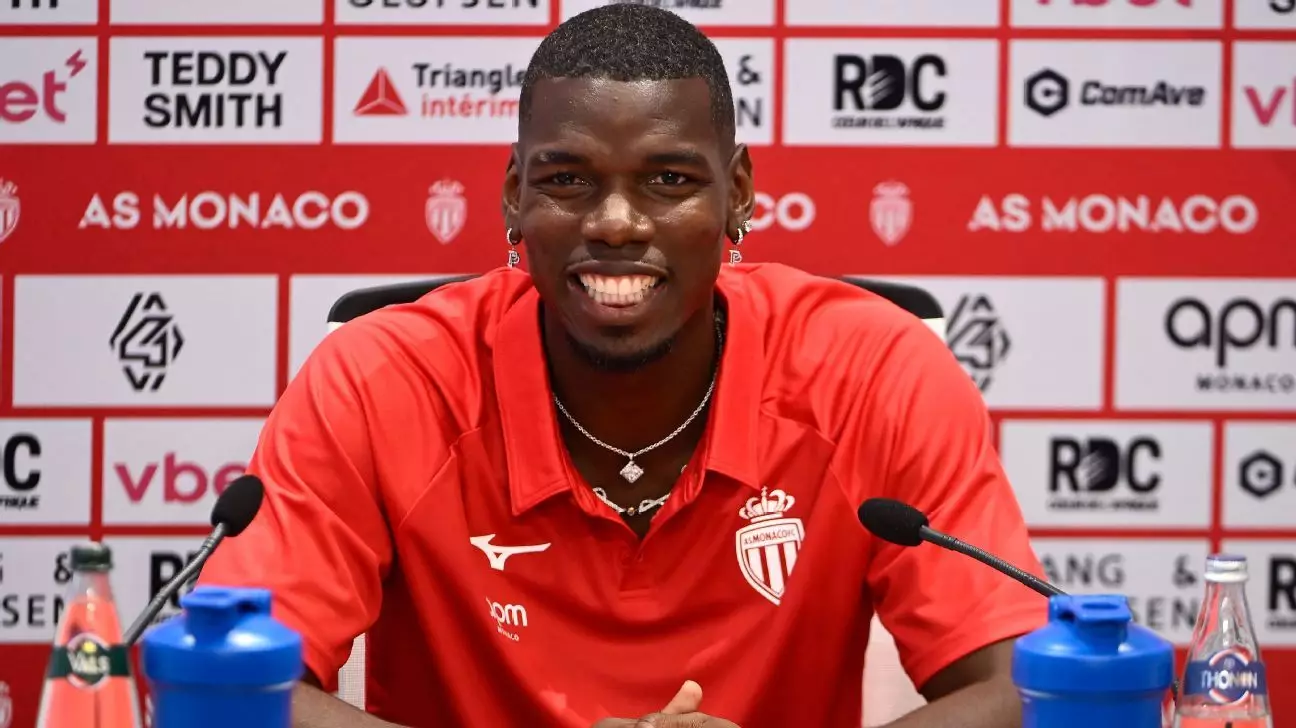
Paul Pogba’s professional journey has been nothing short of a rollercoaster, marked by stellar peaks and challenging valleys. Now, at the age of 32, he stands on the precipice of a new chapter, aiming to reclaim his place at the top of football’s elite echelons. His recent signing with AS Monaco symbolizes more than just a club transfer; it signifies an audacious attempt at redemption. After serving an 18-month ban due to a doping violation involving DHEA, Pogba’s decision to join Monaco is a testament to his resilience and unwavering belief in his abilities. His ambitions are clear: to re-establish himself as a crucial figure in French football and international competition.
Despite the controversy, Pogba’s message remains optimistic. He acknowledges that returning to the French national team involves a meticulous process—one that demands patience, dedication, and relentless perseverance. His words underscore an understanding that success in sports is rarely instantaneous; instead, it is crafted through deliberate stages of effort. This insight reveals his maturity and strategic mindset. As he strives to regain form, the footballing community must see his effort as symbolic of a broader narrative: the human capacity to overcome setbacks and pursue excellence anew.
The Significance of a Fresh Start at Monaco
Joining Monaco might seem like a lateral move for a player with Pogba’s illustrious resume—Champions League titles, World Cup triumphs, and countless individual accolades. However, this shift into Ligue 1 reflects a strategic pivot. Pogba’s decision to sign a two-year contract rather than accepting lucrative offers from the Saudi Pro League illustrates his genuine desire for competitive relevance and personal growth. He is seeking a setting that challenges him physically and mentally, where his talent can flourish outside the spotlight of the Premier League and Serie A.
Monaco’s signing of Pogba is also a bold statement from the club itself. With top-tier players like Eric Dier and Ansu Fati joining the squad, Monaco clearly intends to challenge the dominance of PSG. Pogba’s influence could be pivotal in transforming the team’s fortunes, infusing experience and leadership that only he can provide. His arrival isn’t merely about individual revival but about catalyzing a collective effort to restore Monaco’s standing in French football.
The Power of Ambition and Legacy
Pogba’s past achievements—such as his World Cup victory and multiple league titles—are indelible marks of his talent. Yet, what truly defines him now is his resilience amid adversity. The doping ban was a significant setback, yet his willingness to return to high-level competition demonstrates a commendable inner strength. His explicit desire to earn his spot back in the national team, openly recognizing the competitive nature of a talented French squad, reveals a humbling yet confident outlook.
His move to Monaco also highlights his hunger for relevance and impact. This isn’t about chasing easy money or fleeting fame; it’s about positioning himself for a sustained period of contribution and growth. Pogba’s journey is a potent reminder that true greatness isn’t solely determined by natural talent but by the ability to confront setbacks head-on and adapt. His story urges current and aspiring players alike to view challenges as opportunities for reinvention, turning obstacles into stepping stones.
Drawing Inspiration from a Changing World of Football
In today’s football landscape, where players often chase short-term gains or international recognition fades quickly, Pogba’s approach is refreshingly countercultural. His choice to re-engage with the sport at Monaco underscores a belief in long-term legacy and personal redemption. The admiration expressed by teammates and fans demonstrates that, despite past controversies, respect for his talent remains intact.
Nevertheless, his journey is far from over. The next chapter will demand consistent performance, mental fortitude, and an ability to inspire both on and off the pitch. Rival clubs and fans will scrutinize every move he makes, but Pogba’s audacity to return signals that he refuses to accept a diminished role. Instead, he is positioning himself as a symbol of resilience—a leader capable of transforming setbacks into comebacks that can redefine his career and influence French football profoundly.
Pogba’s story is a compelling tapestry of ambition, redemption, and relentless pursuit of excellence. His reinvention at Monaco exemplifies a deep belief in second chances and the transformative power of perseverance. As he aims to reclaim his spot on the international stage, the football world must watch closely—because Pogba’s comeback could very well become one of the most inspiring chapters in recent sports history.