
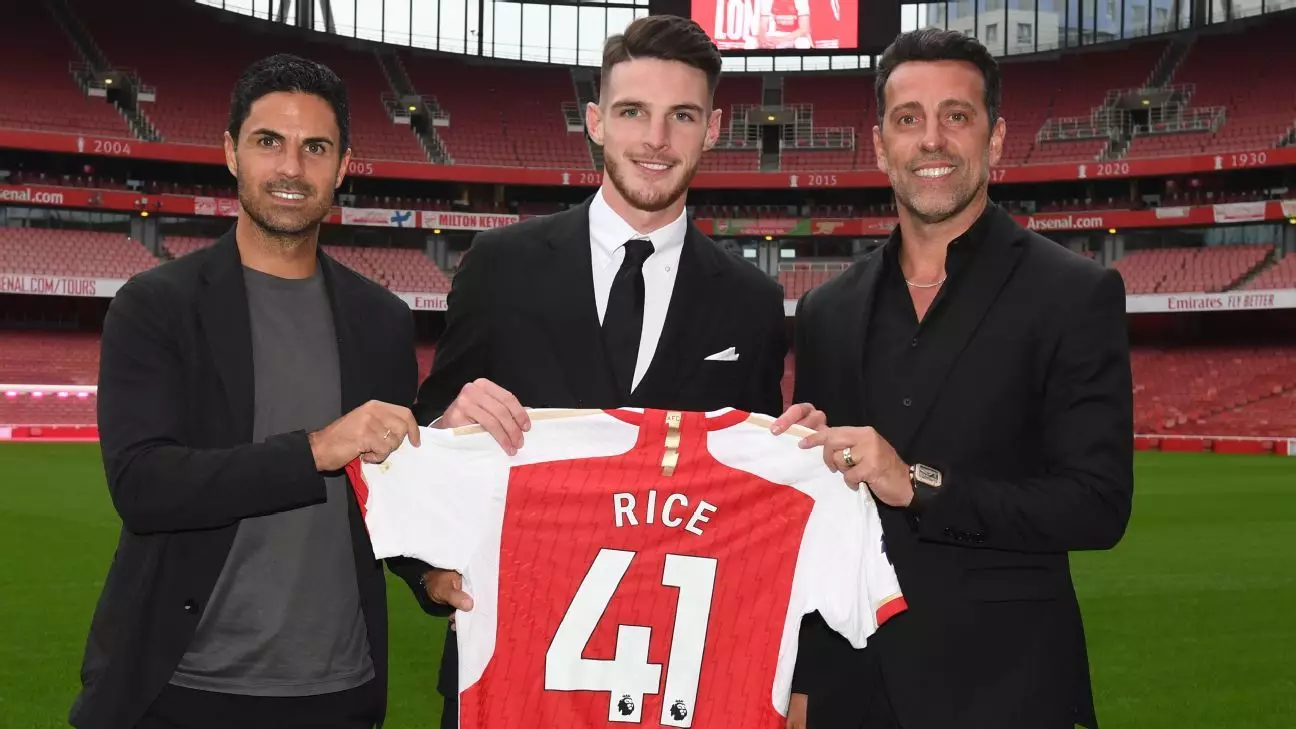
On September 12, Arsenal Football Club made headlines when manager Mikel Arteta eagerly announced that he had signed a new contract. His words were filled with praise for sporting director Edu Gaspar, whom he credited as a vital figure in the club’s resurgence. Arteta expressed gratitude for their strong bond, emphasizing the trust and transparency that formed the backbone of their working relationship. However, this moment of optimism quickly turned to uncertainty when, less than two months later, the club revealed Edu’s resignation. His abrupt departure raises many questions about the direction of Arsenal’s ambitions and the challenges ahead.
Edu’s tenure at Arsenal began in 2019 following a successful stint as the technical director for the Brazil national team. His appointment was significant not only because of his illustrious playing career with the club during the “Invincibles” season but also as part of a larger strategy to infuse sporting expertise into the club after the long-serving Arsène Wenger’s exit. Initially facing skepticism over his decisions in the transfer market, Edu gradually endeared himself to fans as he played an instrumental role in transforming the squad following Arteta’s appointment in late 2019. This transformation was marked by a ruthless approach to releasing underperforming players and shrewd investments that slowly turned Arsenal back into title contenders.
The pivotal moment in Edu’s career came in November 2022, when he was promoted from technical director to sporting director. This advancement reflected both his growing importance within the club and the increasing responsibilities he assumed, which included oversight of both men’s and women’s football. Edu’s influence extended beyond transfers to the very fabric of the club, as he was involved in significant changes to Arsenal’s training facilities and fostered a culture of transparent communication.
Edu’s resignation has sent shockwaves through the club, not only for its unexpected timing but also due to the profound impact he had on Arsenal’s culture and competitiveness. Reports have indicated that Edu’s move to join the multiclub model overseen by Nottingham Forest owner Evangelos Marinakis presents a lucrative offer and a broader scope of influence than he could have experienced at Arsenal. While his exit does not appear to be the result of internal strife, it raises crucial questions about the strategy moving forward and the void left by his departure.
The significance of his exit cannot be understated; Edu was more than just a sporting director. He was a stabilizing force who helped redefine the club’s identity in the post-Wenger era. Arteta and Edu’s shared vision created a cohesive philosophy surrounding recruitment, player development, and overall club culture. With Edu gone, both Arteta and the club face the daunting task of filling a gap that was not only professional but deeply personal.
As Arsenal begins the search for Edu’s successor, the club must carefully consider what type of sporting director they need to continue their upward momentum. Historical precedents suggest they often appoint individuals with a prevailing connection to the club. With the recent hiring of James King as the director of football operations, there seems to be a stabilizing network within the club. King’s familiarity with Arsenal, combined with Jason Ayto stepping in on an interim basis, may provide some continuity during this transitional period.
Despite this internal leadership structure, however, the timing feels precarious. With the January transfer window approaching, Arsenal must decide whether they will fortify their squad or prioritize strategic long-term planning focused on player development rather than immediate fixes. They might be strategically conservative in the upcoming window, particularly as they evaluate their options without the visionary guidance of Edu.
The current landscape seems uncertain, yet there are signs that Arsenal is built on a foundation that could withstand this sudden change. The core team is stable, with many key players signed to long-term contracts, providing a buffer against immediate instability. Additionally, Arsenal’s recent progress in the men’s and women’s programs has created a wave of optimism among the fanbase.
However, the absence of someone like Edu leaves a significant hole in the club’s leadership. His unique blend of experience, charisma, and insight is not easily replaceable. The upcoming months will reveal whether his exit is merely a bump in the road or a turning point that Arsenal will come to regret. As the club seeks to maintain its aspirations of competing at the highest levels, the balance between short-term adjustments and long-term goals will be critical.
As Arsenal bid farewell to Edu Gaspar, they step into a future marked by uncertainty and necessity for strategic re-evaluation. The tasks ahead are formidable, but with a committed manager and a supportive infrastructure, the club has the opportunity to embark on a new chapter that honors the legacy left by Edu while pursuing fresh ambitions. Only time will reveal how this will unfold, leaving fans pondering the future of their beloved Gunners in the wake of such a seismic shift.