
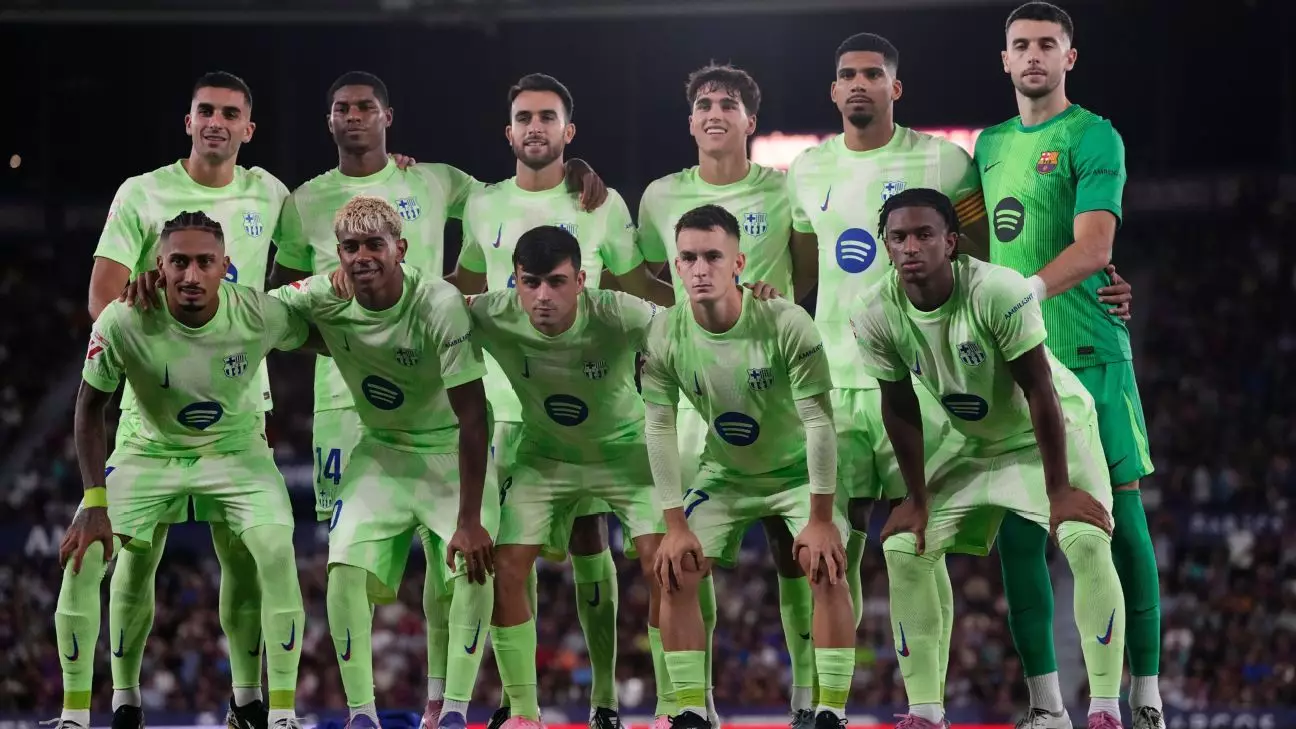
In the realm of top-tier football, much of the attention tends to focus on tactics, star players, and match results. However, the latest developments in LaLiga’s kit approval process reveal an overlooked yet crucial aspect of professional football: the logistical and regulatory ballet behind on-field presentation. Barcelona, one of the most iconic clubs globally, exemplifies how even the most high-profile teams are ensnared in mundane yet impactful bureaucracy. Their struggle with new kits not passing approval underscores a significant shift in how leagues manage visual identities to avoid confusion and ensure clarity for all stakeholders.
Imagine a club synonymous with tradition and innovation, yet forced to dust off last year’s kit merely because the new design clashes with opponents’ colors. It highlights an increasingly rigid system where aesthetics and practicality collide. The league’s introduction of the Kit Selector tool, designed to streamline and standardize kit approval, exposes a tension between creative expression and regulatory compliance. Despite the importance of club branding, safety and clarity in visual communication remain paramount, often at the expense of fashion or marketing ambitions.
The Power Dynamics of Color and Contrast
At the core of the controversy lies the league’s unwavering emphasis on visual contrast. The purpose of the kit approval process isn’t merely about aesthetics but centers on ensuring that referees, broadcasters, and fans can distinguish teams instantly, avoiding confusion that could influence officiating or viewing experiences. The rules stipulate that kits, shorts, and socks must differ sufficiently to prevent any ambiguity. For Barcelona, their sleek blue and garnet home shirt, historically their hallmark, was deemed too close visually to Mallorca’s and Levante’s similarly colored kits.
The complication deepened with their away kit—a luxurious gold collaboration with Kobe Bryant’s Mamba brand—failing the contrast test once shorts and socks were included in the consideration. Despite the aesthetic appeal and commercial cachet of such unique designs, practicality takes precedence. The league’s insistence on proper differentiation literally forces a return to last season’s uniforms, illustrating how the ecosystem values clarity over innovation. This pragmatic approach, albeit frustrating for design teams and fans eager to see fresh looks, aims to prevent on-field mishaps and visual confusion during fast-paced play.
The Consequences of Administrative Rigidity
This stringent approach to kit approval reveals a broader issue: the potential stifling of creative expression in professional sports. While safety and clarity are undeniably essential, the inflexibility of the system often results in dashed hopes for unveiling innovative designs. Barcelona’s orange third kit, intended as a bold statement piece, was sidelined because it crossed the league’s boundaries with opponents’ uniforms, forcing the club to revert to existing solutions. Such restrictions can dampen the enthusiasm of fans and diminish marketing opportunities, especially when clubs invest heavily in branding and merchandising.
Furthermore, the process’s complexity magnifies the bureaucratic nature of modern football management. Teams submit their choices via an app, awaiting league approval, which considers not only primary colors but also the ensemble of shorts and socks. While undoubtedly necessary for clarity, the process occasionally results in bizarre scenarios, like a team wearing a different shorts color simply to meet approval standards—an anachronism in the modern game.
Yet, the system’s historical context paints it as a necessary evolution. Past incidents, such as Tenerife wearing Zaragoza’s shorts in 2013, exemplify how confusion can arise without strict controls. The league’s proactive stance seeks to prevent repeat incidents, even if it means sacrificing some degree of aesthetic freedom. For Barcelona, next week’s clash at Rayo Vallecano will test whether their new kits will finally get their moment in the spotlight, underscoring the league’s authority over design choices.
In sum, the league’s stance on kit approval reflects a broader tension: balancing creative appeal with functional necessity. While it may impede innovation, this system champions clarity, safety, and fairness—values that are crucial in the fast, fluid world of elite football. The ongoing tug-of-war reveals how even the most glamorous clubs must navigate the mundane, yet vital, protocols that underpin the beautiful game.