
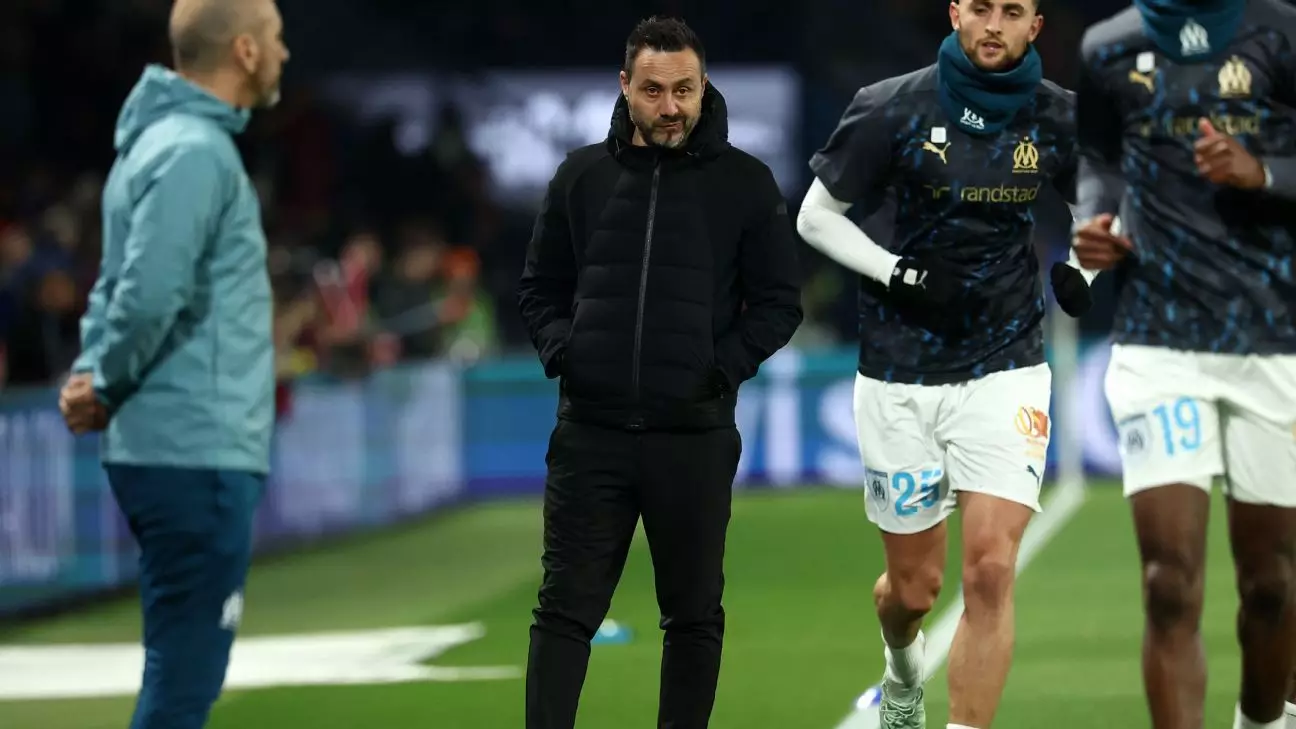
In the realm of professional sports, the incident involving Marseille’s players Adrien Rabiot and Jonathan Rowe highlights a troubling breach of decorum that goes beyond mere misconduct. The altercation, vividly described as reminiscent of an “English pub fight,” exposes a glaring lack of self-control and discipline that should be the cornerstone of any reputable club. The fact that players, who serve as ambassadors of their organization, resorted to physical violence signals a breakdown in team cohesion and personal accountability. This unprofessionalism not only damages individual reputations but also casts a shadow over the entire club’s image. Such episodes underscore the vital importance of fostering a culture where respect and composure are non-negotiable, especially in high-stakes environments.
Leadership’s Role in Upholding Standards
Marseille’s leadership, including President Pablo Longoria and head coach Roberto De Zerbi, faces an uphill battle in restoring order. Their reactions—public condemnations and decisive actions like transferring players to the reserve list—reflect an acknowledgment that discipline must be enforced unwaveringly. De Zerbi’s comparison of the players’ scuffle to an “English pub fight” is a stark metaphor illustrating how far removed this incident is from acceptable professional conduct. His emphasis on hierarchy within the club reveals a belief that authority and respect are foundational to team success. Leaders must act decisively to establish boundaries, ensuring that such chaos remains an isolated incident rather than a recurring pattern. The decision to suspend the players serves as a stern reminder that actions carry consequences, and that maintaining dignity is essential for sustained success.
Consequences and Lessons for Future Conduct
What transpired within the Marseille locker room should serve as a wake-up call across all levels of competitive sport. Physical altercations, especially involving players of high caliber, threaten not only the immediate matchday preparations but also the long-term integrity of the club. Integrity and professionalism are the bedrock of sportsmanship, and neglecting these principles can lead to a cycle of chaos diminishing morale and fan trust. It is paramount that clubs implement strict codes of conduct, coupled with effective conflict resolution strategies, to prevent backstage conflicts from spilling onto the pitch. Ultimately, investing in character and emotional intelligence within a team outweighs temporary tactical gains garnered through reckless behavior.
Challenging the Notion of Exceptionalism
The incident at Marseille invites a broader reflection on the glamour versus the gritty reality of professional football. While fans celebrate goals and victories, behind the scenes, players and staff are navigating complex personalities and pressures. That such a violent clash occurred indicates a failure of leadership and team cohesion, challenging the often romanticized idea that these athletes are immune to the very human flaws of anger and egocentrism. It’s crucial for clubs to recognize that discipline isn’t just about rules—it’s about cultivating an environment where respect prevails, conflicts are managed constructively, and personal growth is prioritized over temporary victories. If professional sports are to truly evolve, governing bodies and clubs alike must treat discipline not as an inconvenience, but as an essential pillar of sustainable success.