
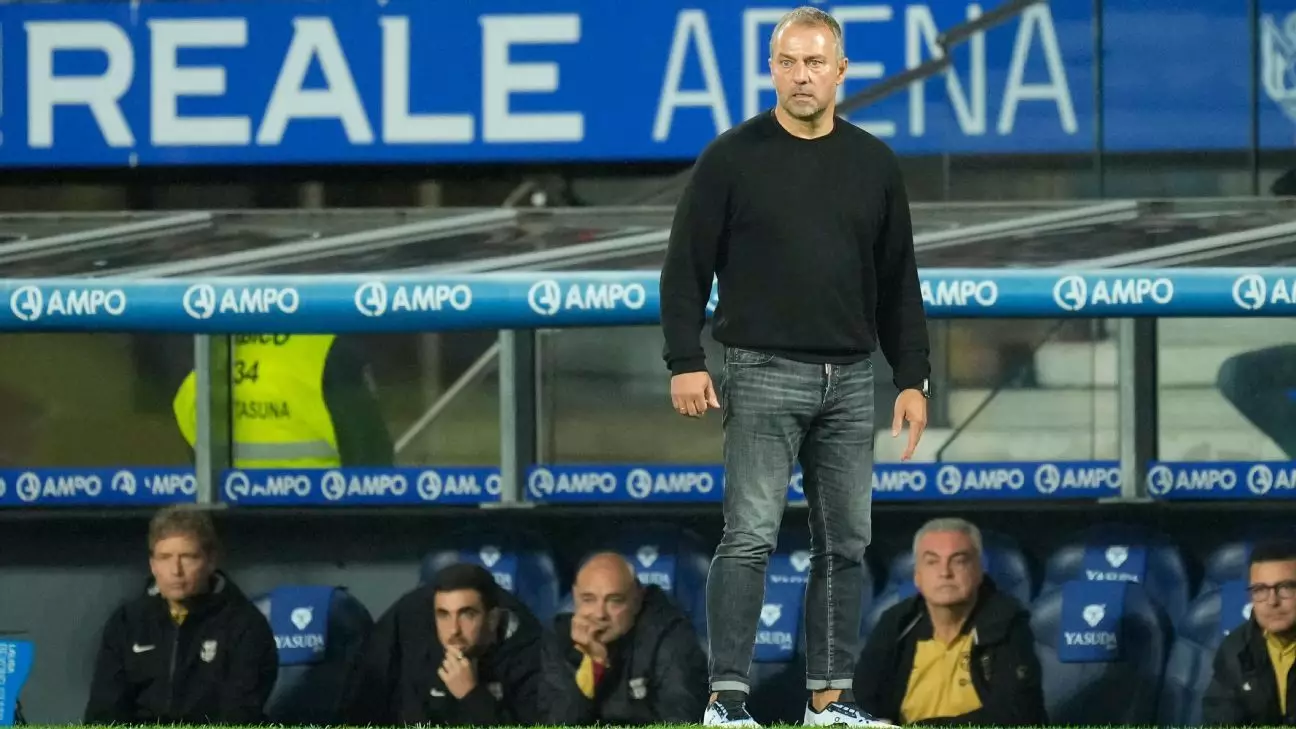
Barcelona’s head coach, Hansi Flick, expressed his frustration following his team’s narrow 1-0 loss to Real Sociedad, a match marred by a contentious decision that disallowed a goal from star striker Robert Lewandowski. The incident occurred in the 14th minute when a supposed breakthrough by Lewandowski was flagged offside by the semi-automated offside technology (SAOT), which had recently been rolled out in Spain. This decision marked a turning point in the game, as Barcelona faced setbacks throughout the match, ultimately breaking their streak of successes across competitions. Flick’s post-match comments, in which he deemed the offside ruling a “wrong decision, clear,” reflect the heightened stakes and tensions of top-flight football, where every goal can drastically shift a match’s outcome.
The introduction of SAOT in LaLiga has generated a discourse about its reliability and consistency. While Italy’s Serie A has successfully implemented similar technology, the adoption of such tech across European leagues remains inconsistent. Flick’s criticism of the technology highlights a growing unease among coaches and fans, arguing that even marginal variables can lead to what he termed a “big mistake.” Although he acknowledged that mistakes are intrinsic to human nature, this incident has sparked a broader conversation about the intersection of technology and officiating in sports. The subtleties of offside calls have always been hotly debated subjects among fans and pundits alike, and as technology evolves, so too do the expectations around fairness and accuracy in officiating.
Barcelona has undergone significant shifts under Flick’s management. Despite the unfortunate defeat, the coach praised his squad’s performances leading up to this match, emphasizing the long-term progress they have made. However, their first failure to score this season underscores a vulnerability that Fleck acknowledged, hinting at tactical decisions that failed to capitalize on offensive opportunities. The absence of 17-year-old sensation Lamine Yamal, who sat out the match with an ankle injury, further complicated their strategy, showcasing how crucial young talents are becoming for Barcelona’s play. It begs the question of how much inconsistency will impact the team’s overall performance as they juggle injuries and developmental challenges.
Despite this defeat, Barcelona holds a slim advantage at the top of LaLiga, with second-placed Real Madrid shadowing them closely. However, the loss not only dented their lead but also raised concerns about maintaining momentum as they prepare for upcoming fixtures. After the international break, they will face Celta Vigo, a crucial matchup where every point will count. The team’s ability to adapt and recover from setbacks while managing the fitness of key players like Yamal will determine their standings in the league as it progresses. Flick’s remarks suggest that while the current situation is disappointing, it is imperative for the team to remain focused and work toward improving decision-making in their attacking play.
The confrontation with Real Sociedad serves as a complex microcosm of Barcelona’s season—a showcase of highs and lows encapsulated by technology, youth, and the ongoing journey of a coach and his squad. As Flick navigates through a challenging season, his ability to learn from this loss while inspiring confidence in his players becomes paramount to Barcelona’s success. Their path ahead will require more than mere resilience; it will demand a concentrated effort to refine their tactical approach, cultivate young talent, and navigate the treacherous waters of LaLiga competition. In the world of elite football, recovering from adversity is as crucial as celebrating victories, and Barcelona’s spirit will be tested in the matches to come.