
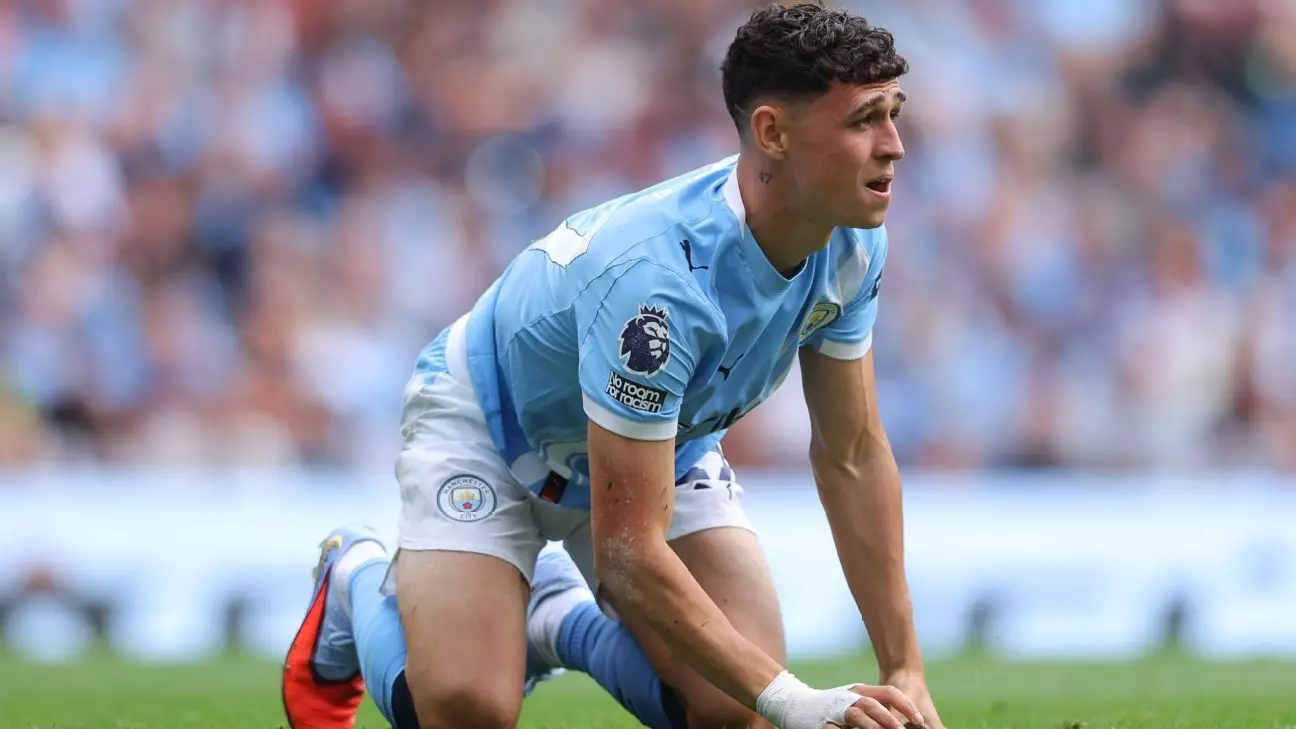
Phil Foden’s recent struggles serve as a stark reminder of how heavily a player’s form is intertwined with physical health and mental confidence. Once heralded as Manchester City’s brightest prospect and a key figure in their domestic dominance, Foden’s trajectory has been interrupted by injuries and inconsistent performances. His off-peak form during the 2024-25 season, with a drastic drop in goal contributions and appearances, underscores how fragile a player’s confidence can be when physical setbacks occur. Despite this, his raw talent remains undeniable. The challenge lies not in his abilities but in restoring his self-belief—an intangible yet vital component that can elevate his contribution back to where it once was.
Pep Guardiola’s Deep Desire for Foden’s Resurgence
Pep Guardiola’s comments reveal a manager not only eager for Foden’s return to full fitness but also invested in his mental well-being. Guardiola’s mention of Foden’s lost joy on the pitch highlights a crucial aspect often neglected in modern football: the importance of player happiness. His acknowledgment that Foden’s creativity and work ethic are essential to City’s attacking engine demonstrates a clear understanding that talent alone isn’t enough. Guardiola’s proactive approach emphasizes patience and holistic recovery—both physically and psychologically. This focus suggests that the work to bring Foden back to peak form isn’t solely about physical rehabilitation but involves a nurturing environment that rebuilds confidence and passion.
Injury Management and Its Long-term Impact
The recurring ankle injuries have significantly hampered Foden’s stability and rhythm. His summer performances hinted at a player in good condition, but subsequent setbacks reveal how fragile recovery can be without proper management. Football, especially at the highest level, is unforgiving to players who aren’t fully fit. Each setback not only delays his return but also chips away at his certainty on the pitch. Guardiola’s comments about the cycle of setbacks stress the need for meticulous injury management, emphasizing that a steady, gradual process is more beneficial than rushing players back prematurely. For Foden, patience will be a crucial ally in ensuring that his comeback is sustainable rather than a fleeting glimpse of promise.
The Psychological Toll of Inconsistency
Foden’s diminished role in the opening games of this season must weigh heavily on his mind. When highly talented players face repeated setbacks, their confidence can falter, leading to self-doubt and misplaced hesitations. Guardiola’s explicit focus on Foden’s happiness underscores the mental toll that poor form and injuries can exact. Restoring Foden’s mental resilience involves more than just physical rehab; it requires a supportive environment where he feels valued and trusted. Only then can he fully express the creativity and dynamism that made him one of the most promising young talents in Europe. His reintegration into City’s team must be a carefully managed process—coaching that encourages him to rediscover his joy in playing and to believe in his own capabilities once again.
Foden’s trajectory is at a pivotal juncture. His talent, when unleashed, has the power to transform Manchester City’s attack. Yet, true revival hinges on a comprehensive approach—balancing injury recovery, mental health, and match fitness. Guardiola’s role as a mentor and motivator is crucial in this journey. If Foden can regain his physical form and, more importantly, rekindle his passion for the game, he can evolve from a promising young talent into a consistent star. His story underscores a universal truth in football: raw ability is only the starting point; sustained success demands resilience, patience, and a supportive environment that nurtures both body and mind.