
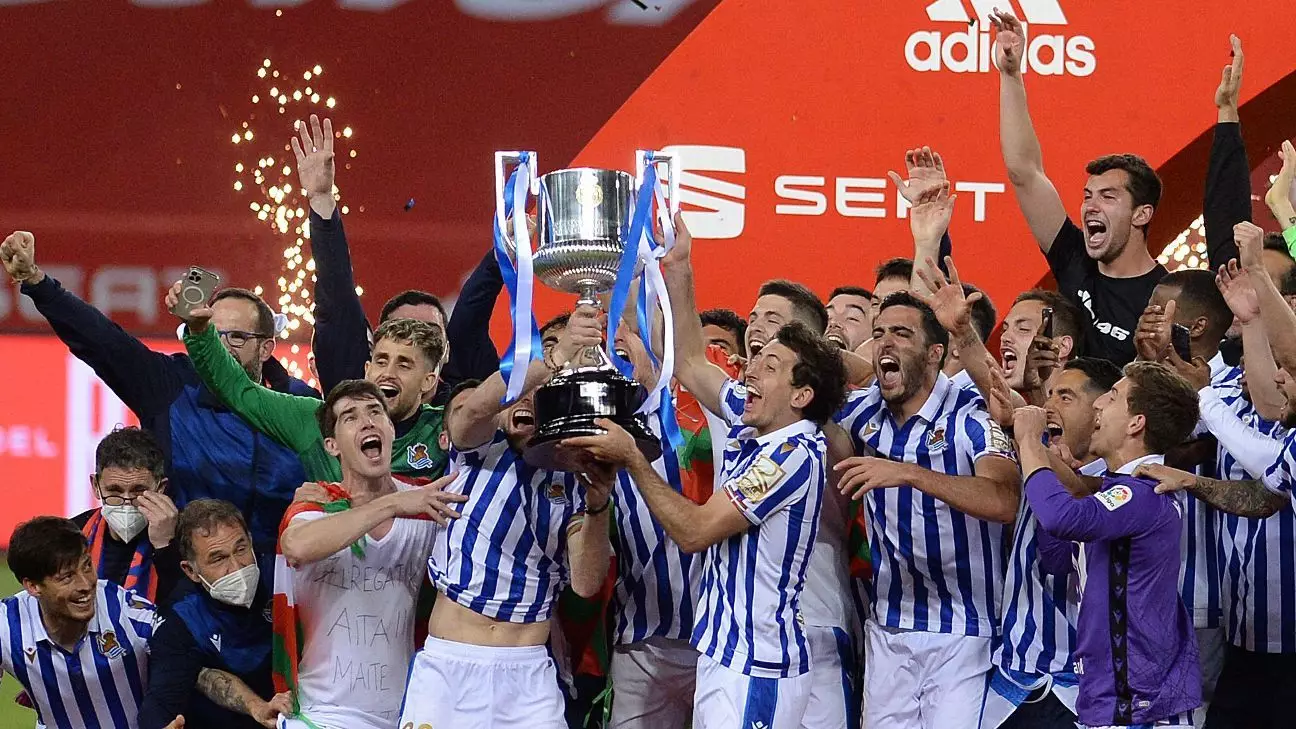
In a significant development for Real Sociedad, the club has confirmed that their esteemed football director, Roberto Olabe, will part ways with the organization at the end of the current season. Despite having a contract that extended until June 2026, Olabe made the decision to leave a year prior, indicating a desire to pursue new opportunities. The club has announced Erik Bretos as Olabe’s successor, who will take the helm as the new Football Director starting next season. This transition marks a pivotal moment for Real Sociedad, as they prepare to usher in a new era without one of their key figures.
Olabe’s impact on Real Sociedad’s trajectory has been undeniable. Having served in various capacities, including a return to his roots as a goalkeeper before transitioning into the football director role, his extensive experience within the club has greatly influenced their recruitment strategy and overall team performance. His tenure has been marked by exceptional talent acquisitions that have bolstered the team’s competitive edge. The club’s statement on his departure noted his pivotal role in some remarkable transfers, which have solidified Real Sociedad’s standing in La Liga.
Among his most notable achievements was securing Alexander Isak from Borussia Dortmund for a reported €15 million in 2019. Isak’s development under Olabe culminated in a high-profile transfer to Newcastle United for €70 million two years later, illustrating Olabe’s aptitude for fostering and subsequently capitalizing on talent. Furthermore, his ability to attract and sign promising players like Japan’s Takefusa Kubo from Real Madrid epitomizes his vision for a competitive squad. Not to mention, Spain’s Mikel Merino, acquired from Newcastle for €12 million, further demonstrates Olabe’s eye for quality.
The departure of Olabe comes amidst rumors linking him with Arsenal, who are in search of a new sporting director following Edu Gaspar’s recent resignation. Arsenal’s keen interest in Olabe signals the high regard in which his strategic prowess is held, not just at Real Sociedad but across European football. The market dynamics play a vital role in these movements; clubs must navigate the ever-evolving landscape to secure leaders capable of elevating their organization.
Real Sociedad has experienced a tangible rise under Olabe’s stewardship, making his exit a substantial loss. The new challenge ahead lies in ensuring that the foundations he laid can be built upon and that Bretos can seamlessly continue the progression of the club’s vision. The pressure on the new football director will be to uphold the standards set and further enhance the club’s reputation as a formidable team in Spain and beyond.
As Real Sociedad prepares for the post-Olabe era, the transition will not merely be about filling a position; it will represent an evolution of identity and strategy. The incoming director will need to embrace the legacy of success and continue the momentum in securing the next wave of talent and productivity that keeps the team competitive. With the right direction, Real Sociedad can navigate this change and continue their ascent in the realm of football.