
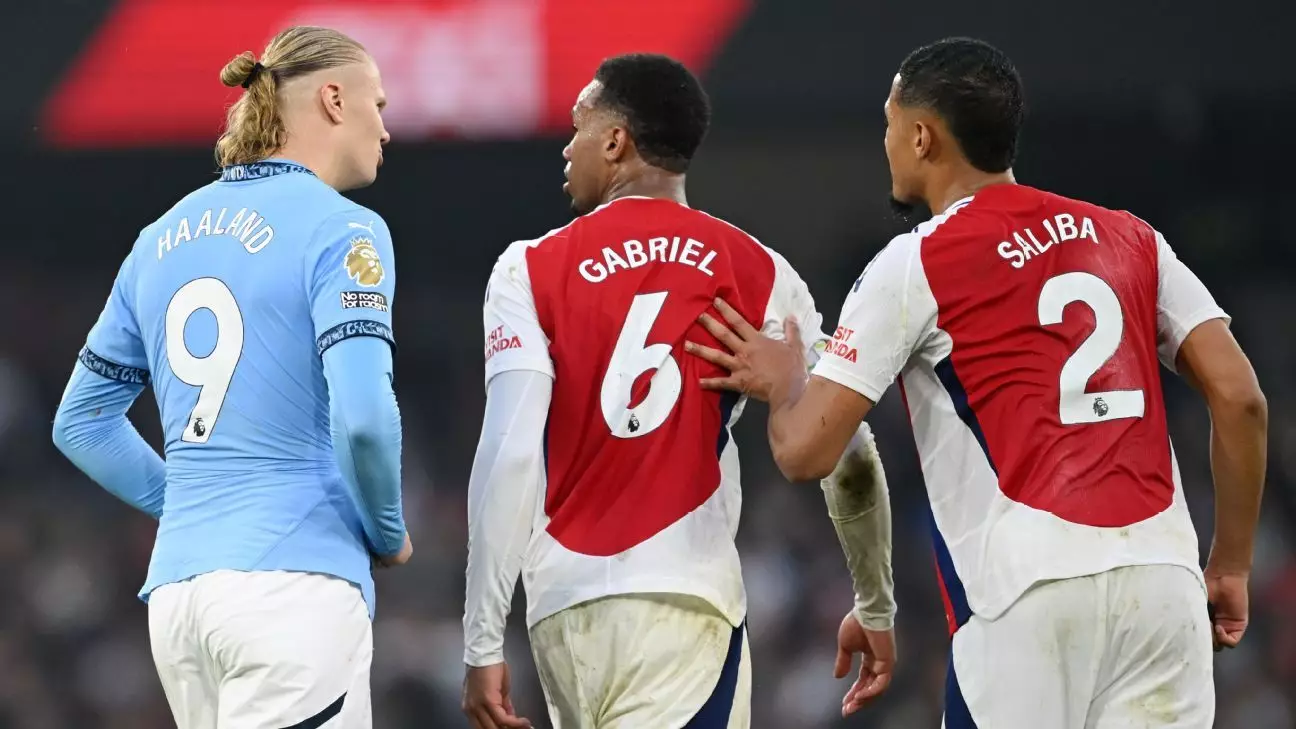
In contemporary football, the significance of traditional shirt numbers has evolved markedly, particularly within the competitive sphere of the Premier League. This transformation raises important questions about the implications for team identity, tactics, and the game itself. No longer do we witness the familiar arrangement of shirt numbers aligning cleanly with player positions; instead, modern football has seen a dissolution of the old numbering conventions, sparking debate among fans and analysts alike.
During the heyday of football, the numbering system was deeply rooted in the game’s fabric, with each number explicitly linked to a player’s role on the pitch. For instance, goalkeepers donned the illustrious No. 1, defenders occupied numbers 2 through 5, while forwards proudly claimed No. 9 and No. 10. Yet, the last instance of a Premier League match showcasing a lineup with consecutive numbers from 1-11 dates back to 1998, indicating a dramatic shift in the sport. The introduction of unconventional numbers, like Declan Rice’s No. 41 or Trent Alexander-Arnold’s No. 66, symbolizes a departure from established norms and a broader trend toward individuality among players.
While some may view this new approach critically, espousing that traditional values have been compromised, others argue it fosters creativity and personal expression. This contention leads us to ponder which of the Premier League’s elite clubs could field a competitive side using only players with numbers 1 through 11. The exploration not only reveals the depth of each squad but also highlights the iconic players left by the wayside due to their unconventional numbers.
The Evolving Landscape of Shirt Numbers in Premier League Football
In the dynamic world of football, few traditions have witnessed as much change as the significance of shirt numbers, particularly in the Premier League. The Evolving Landscape of Shirt Numbers in Premier League Football reflects a shift from the era when numbers defined positions to a modern age where individuality and creativity reign. Today, players like Declan Rice with No. 41 or Trent Alexander-Arnold with No. 66 symbolize this departure from convention, raising questions about its impact on team identity and tactics.
This evolution provokes a fascinating exploration: How would Premier League squads fare if limited to players wearing traditional numbers 1 through 11? Such a scenario reveals the depth and balance of teams, alongside the enduring symbolism of numbers in shaping the game. Let’s delve into this thought experiment to better understand the implications of this trend on modern football.
Arsenal: An Underwhelming Lineup
For Arsenal, allowing the absence of players outside the 1-11 range exposes significant gaps, particularly a glaring void in goalkeeping. Their hypothetical starting XI comprises solid defenders — Saliba, Tierney, White, and Gabriel — ideally positioned to construct a resilient back line. A midfield of Partey and Ødegaard possesses potential, albeit overshadowed by the missing numbers that would traditionally comprise a more robust formation.
However, the absence of a goalkeeper starkly undermines any optimistic assessment of this lineup. The squad is compelled to operate with a nine-player formation, demonstrating a stark weakness that questions their ability to compete effectively under these bizarre stipulations.
Chelsea: A Midfield Struggle
Chelsea’s challenge similarly stems from glaring absences, with star players like Cole Palmer missing from the equation. Their lineup, though initially promising with Robert Sánchez in goal and a five-man defense, soon reveals its fragility. The weight of a sole midfield presence in Enzo Fernández paints a daunting picture. He’s charged with the enormous task of linking defense to a front three that’s as disjointed as it is underfunded in terms of talent. Not having a dedicated striker amplifies their struggles, harking back to a lamentable era for this storied club.
The required shift to a five-man back line adds an extra layer of desperation to their strategy, emphasizing the necessity for Chelsea to not just defend but to cover the gaps left by their absent stars. From the outset, they seem ill-equipped to handle the fluid dynamics of modern attacking football.
Liverpool
In contrast, Liverpool presents a more appealing case in this peculiar lineup creation. Alisson anchors a robust defense that includes premium talent like van Dijk and Konaté. The balance in this formation seems slightly more optimal compared to others. However, the glaring absence of the iconic No. 6 reveals vulnerabilities in midfield, particularly in terms of providing support to a striking trio tasked with shouldering the scoring burden.
An enhanced performance metric in terms of overall attacking play is possible, yet the question remains: can they maintain defensive excellence in a setup largely devoid of traditional roles? An inability to account for their second-string goalkeepers further caps their potential success.
Manchester United
Manchester United intriguingly emerge as the only club capable of presenting a full formation under the 1-11 constraint, but even they face hurdles. Limited by both talent and recent transfer strategies, their lineup overshadows individual brilliance with collective ineffectiveness. While they boast a complete 11, a meager contribution to the scoreline illustrates the potential pitfalls of relying solely on an old numbering system sans creativity.
Manchester City
Manchester City, laden with talented players, suffers from similar afflictions. Their talent pool, teeming with high numbers outside the traditional scope, could spell doom on urgent occasions where tactical agility is key. Engaging with a nominal 4-2-2-1 formation, the club’s direction hinges entirely on promotional statistics, rather than genuine connection across all positions.
Tottenham Hotspur
Tottenham Hotspur’s situation stands as perhaps the starkest representation of the potential pitfalls of today’s evolving number conventions. With significant vacancies at four key positional numbers, their capacity to form a cohesive unit shrinks markedly. The undertone of a depleted squad reflects broader organizational issues, with high turnover rates forcing the squad to stretch their capabilities unnecessarily thin.
Analysis of shirt-number restrictions in Premier League squads paints a tremendous picture of the intricacies of modern football. It provokes discussion regarding linkages to team identity, tactical adaptability, and how clubs navigate a rapidly changing sport landscape. As teams continuously adopt unorthodox numeral selections, the inherent meanings ascribed to numbers may fade, but the competitive spirit of the game persists, urging teams to redefine their outreach and functionality.
In the news: The January Transfer Window: Key Players and Emerging Rumors
Conclusion: The Legacy of Shirt Numbers in Modern Football
The journey through The Evolving Landscape of Shirt Numbers in Premier League Football showcases more than just a shift in numerical traditions—it highlights the sport’s adaptability and enduring complexity. While some may mourn the loss of rigid positional associations, the freedom of modern numbering allows players to carve unique identities on the pitch.
However, this change also underscores the importance of strategic depth and adaptability. The hypothetical limitations of traditional shirt numbers reveal gaps and opportunities for clubs, emphasizing the critical role of squad management in today’s game.
As Premier League teams continue to evolve, the balance between honoring tradition and embracing innovation remains crucial. Whether through iconic single-digit shirts or unconventional high numbers, the heart of football’s competitive spirit endures, driven by the players who make each number their own.