
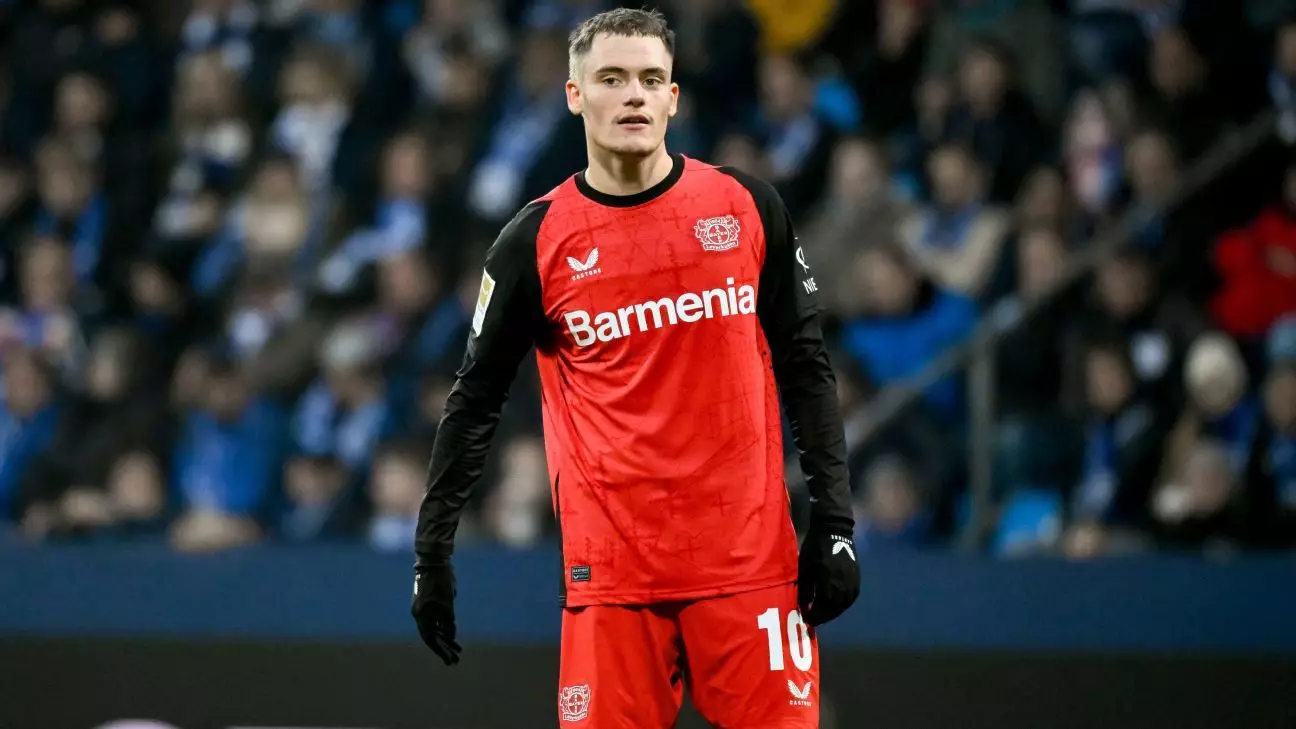
As the January transfer window looms, Bundesliga giants Bayern Munich have made it clear that Bayer Leverkusen’s promising talent Florian Wirtz is their number one target for the upcoming summer. The landscape of European football is buzzing with transfer rumors, and Wirtz’s situation encapsulates a theme: the battle among elite clubs for top-tier talent. Reports indicate that amidst the interest from clubs like Real Madrid and Manchester City, Bayern’s interest is particularly aggressive, aiming to solidify their squad for future campaigns.
Under the stewardship of sporting director Max Eberl, Bayern Munich appears to be taking a systematic and strategic approach to their transfer strategy. Engaging Wirtz’s family in preliminary discussions signifies a proactive stance. A potential transfer fee of over €100 million underscores the seriousness of the interest and the player’s estimated market value. However, to finance such a significant acquisition, Bayern will need to offload some first-team individuals, indicating a potential shift in squad dynamics.
This situation raises questions about Bayern’s current roster, including which players might be shown the exit door and how the team’s chemistry could be affected. Furthermore, it highlights the broader economic realities of top-tier football, where clubs must balance their ambitions with financial prudence. Bayern’s willingness to invest heavily in Wirtz reflects their long-term vision and ambition for European dominance, yet this must be tempered by a robust financial strategy.
While Bayern Munich’s interest in Wirtz is well-documented, Manchester United’s aspirations concerning Atalanta’s Éderson add an intriguing layer to the transfer narrative. The Brazilian midfielder, who recently debuted for the national squad, has become a coveted asset. Manchester United’s midfield struggles have been well-known, and Éderson’s versatility could provide the much-needed reinforcements.
The reported constraints of United’s budget have led to a renewed focus on younger talents, yet they find themselves in a competitive market. With Manchester City also eyeing Éderson, the competition could force both Manchester clubs to up their offers or revise their strategies altogether. The January window promises to be a high-stakes battleground as clubs scramble to secure their top targets.
Meanwhile, Manchester City appears to be widening their scouting net, with reports emerging of interest in Sporting CP’s winger Maxi Araujo. His performance against City in the UEFA Champions League undoubtedly made an impression on their scouts, further solidifying his inclusion in City’s evolving transfer strategy. Araujo represents a younger player who can not only contribute immediately but also develop into a key player for the future. City’s ability to integrate young talent speaks to their successful long-term planning and adaptability in a competitive landscape.
Similarly, Liverpool’s interest in Real Sociedad’s Martín Zubimendi adds another dimension to the ongoing transfer conversations. After an initial rejection, Liverpool is reportedly gearing up for a second offer, signaling their continued pursuit of the Spanish midfielder despite previous setbacks. Zubimendi’s decision to remain with Sociedad could indicate a transformation in his career aspirations, yet further negotiations are anticipated in January.
Lastly, Real Madrid’s refusal to loan out their exciting young striker, Endrick, signifies their commitment to his development within the club’s framework. With a potential reliance on the 18-year-old as a backup to superstar Kylian Mbappé, Madrid is signaling that nurturing younger talents is a crucial part of their future vision. This commitment also has ramifications for clubs like Juventus and AS Roma, who are looking to bolster their attacking options.
As the football world gears up for the January transfer window, the focus on young talent is at an all-time high. Bayern Munich’s ambition to secure Florian Wirtz and the competitive pursuits of Manchester United and Manchester City for the likes of Éderson and Araujo, respectively, illustrate the shifting dynamics of squad-building and financial maneuvering in football. This transfer season promises not only intrigue and competition but also a reshaping of power dynamics within European football. As clubs balance their immediate needs with long-term vision, the markets may yet unveil surprises that keep fans engaged well into the next season.