
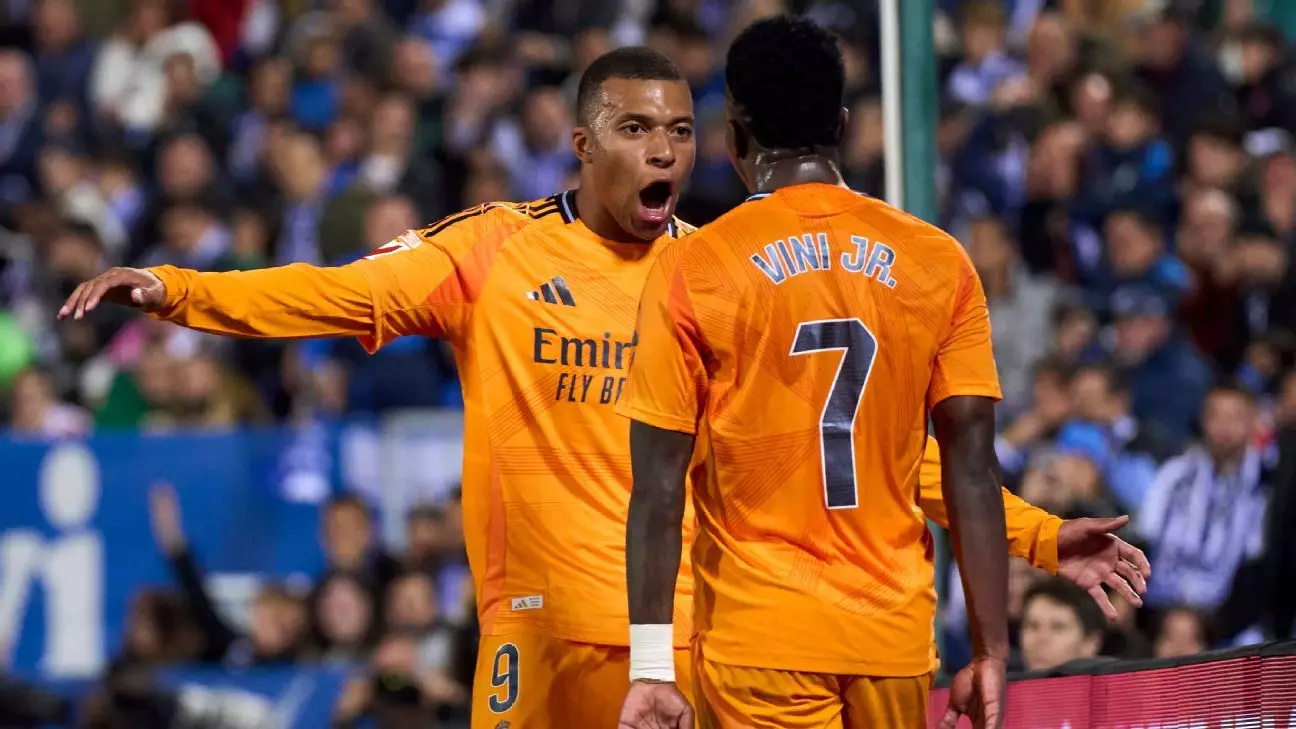
In the fascinating world of football management, tactical adjustments can make or break a match. Recent events saw Carlo Ancelotti celebrate Kylian Mbappé’s significant contribution in Real Madrid’s commanding 3-0 La Liga victory over Leganés. Notably, it was Mbappé’s shift to a left-sided position on the pitch that drew attention. Scoring right before halftime, he converted an exquisite pass from Vinícius Júnior, marking his first goal in five games for the club. This tactical maneuver has sparked discussions about the importance of flexibility in a player’s position and how it can rejuvenate their scoring potential.
On that sunlit Sunday at Butarque, Real Madrid showcased a high level of performance that was both solid and strategic. Ancelotti attributed a significant part of this success to the alterations made in forward positions. Not only did this switch enliven Mbappé’s performance, leading to a well-received goal, but it also enabled Vinícius to operate from a more central location. The result? A well-controlled match that saw the team maintain their composure after establishing an early lead. The synergy between Mbappé and Vinícius has piqued the interest of football analysts and fans alike, highlighting the impact of understanding positional play in a team’s overall execution.
After the match, Mbappé expressed his adaptability within the team structure, emphasizing his readiness to play in various roles as required. His ability to transition between the left and right flanks, or even supporting a two-striker setup, underlines a quality that many attribute to great players. “It’s the story of my career,” he stated modestly, framing his positional versatility as a source of pride rather than just a tactic. This mindset not only reflects his personal aspirations but also speaks to a broader theme in modern football: the necessity for players to be multi-dimensional assets capable of fulfilling different tactical roles as situations demand.
Ancelotti’s decisions, particularly related to player positioning, have long been admired in football circles. He explained that placing Mbappé on the left might enhance his effectiveness in games and ultimately support team dynamics. The manager’s keen ability to evaluate player conditions and adjust on-the-fly is indicative of a deep understanding of the game. With his regular right-backs unavailable due to injuries, he turned to Federico Valverde—usually a midfielder—to cover the role, illustrating that good managers adapt rather than conform to a rigid lineup. It’s a testament to the depth of Madrid’s squad and Ancelotti’s ability to maximize every player’s potential.
As Real Madrid prepares for their upcoming encounter against Liverpool in the Champions League, the dynamics established through this match could be crucial. Ancelotti’s acknowledgment of Valverde’s adaptability suggests a willingness to experiment further with team composition, posing a potentially tactical advantage. However, with the stakes higher in European competition, every managerial decision will be under scrutiny. The vibrant connection forming between Mbappé and Vinícius could be a deciding factor for future matches, making their performances vital to Madrid’s chances of success.
The gravelly roads of professional football are often navigated through flexibility and resilience. Kylian Mbappé’s recent display against Leganés serves as a reminder that sometimes, a change in position can unlock a player’s dormant potential, reinvigorating their contribution to the team. Under Ancelotti’s guidance, the collaborative efforts of this young forward duo might just light the path for Real Madrid in both league and Champions League contexts. The talk around versatility might well be the secret weapon that retains their status in the football elite, proving that in the beautiful game, being a multi-faceted player is not a luxury but a necessity.