
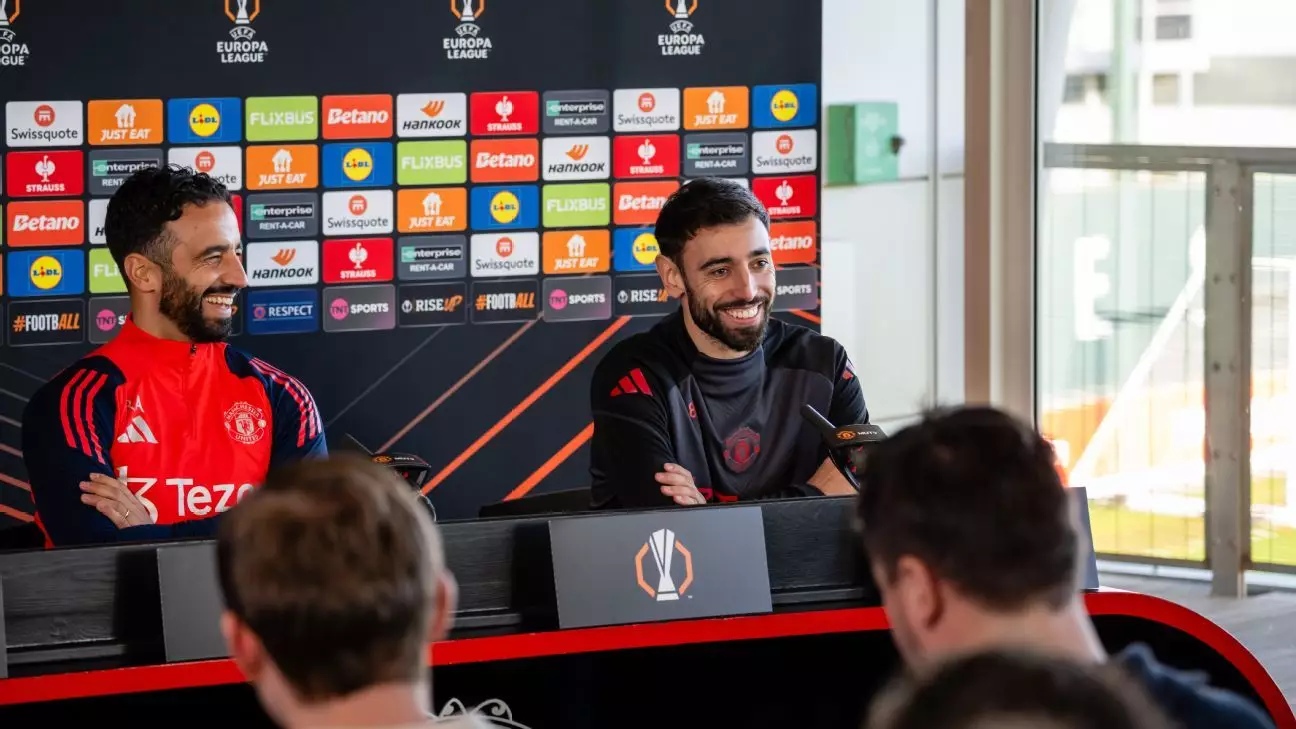
In the world of football, leadership on and off the pitch can be the linchpin that determines a team’s success or failure. Bruno Fernandes, the captain of Manchester United, finds himself at the heart of this transition as the club embraces the tactical philosophy of its new manager, Ruben Amorim. Following a lackluster performance that ended in a 1-1 draw against Ipswich, Amorim acknowledged that the team would endure growing pains as it adapted to his strategic system. Fernandes is very much aware of the challenges posed by this change and has taken it upon himself to facilitate this process for his teammates.
Fernandes’s approach to leadership goes beyond traditional captaincy; he sees himself as an on-field coach, striving to translate Amorim’s complex tactical instructions into actionable in-game strategies. “I’m really aware of what we do in training,” Fernandes stated. His commitment to understanding every player’s role and the tactical nuances of different positions speaks volumes about his dedication. Given the cacophony of a football match, a captain’s ability to communicate effectively can make all the difference. Fernandes is keenly aware that the manager, limited by distance and the crowd’s noise, might not always be able to relay instructions effectively.
He emphasizes that his role extends to reading the game dynamically and working collaboratively with his teammates. This proactive approach is essential as the squad grapples with the complexities of Amorim’s system. The responsibility of adapting to the new style falls far from just the manager’s shoulders; it becomes a shared duty amongst players, particularly those in leadership positions like Fernandes.
In the aftermath of Erik ten Hag’s dismissal—a decision undoubtedly linked to the team’s underwhelming performances—Fernandes reiterated the collective responsibility shared among players. A managerial change reflects deeper issues and the sampling of accountability is a necessary aspect of any frustrated side. “Everyone has to take the blame. Everyone in their department,” he explained. This insight highlights the fractal nature of responsibility in high-stakes professional football. While a coach may be the face of a struggling season, the players’ performances—and their collective mindset—are equally significant.
Fernandes’s confession about reaching out to Ten Hag post-sacking demonstrates a culture of respect and introspection within the dressing room. Apologizing for the outcome underscores his awareness that even amidst transitions, recognition of one’s influence on the team dynamic plays a pivotal role in rebuilding morale.
As United prepares to face Bodo/Glimt in the Europa League, the journey ahead is filled with obstacles and opportunities. Fernandes’s willingness to assume the mantle of on-field leadership is commendable and vital for a united front as they maneuver through the uncertainties of a challenging season. Today’s modern game demands adaptability, and with captains like Fernandes taking charge, Manchester United may find their footing sooner rather than later. A strong performance in upcoming matches could very well set the tone for the rest of their season as they strive to restore their former glory under Amorim’s guidance.