
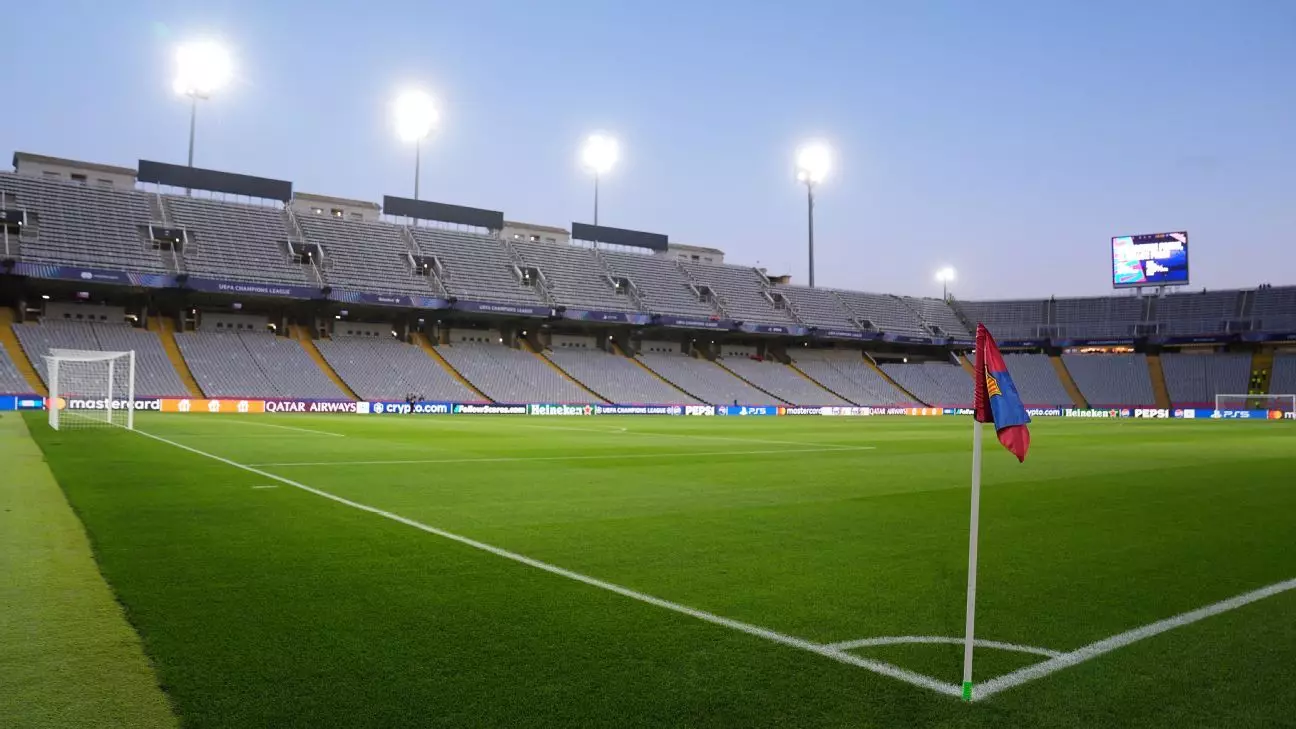
In a significant step that reflects the complexities of fan-club relationships, FC Barcelona has announced the indefinite closure of a fan section known as the Espai d’Animació (EDA) at the Olympic Stadium. This action comes in response to ongoing disputes with supporter groups over unpaid fines totaling approximately €21,000 (about $22,092). The EDA, which serves as a vibrant singing section where loyal fans gather to cheer on their team, has now become an emblem of discord rather than unity.
The predicament stems from the club’s assertion that the supporter groups failed to honor an agreement regarding the financial penalties imposed due to their behavior during the last season. These fines were a result of 14 disciplinary actions that highlighted violations of stadium regulations, marking a troubling trend in the dynamics between the club and its supporters. The relationship is indeed strained, showing how fan loyalty can sometimes be put to the test when accountability is involved.
Impact on Team and Supporters
The closure of the EDA is not merely an administrative decision; it reverberates through the very fabric of Barcelona’s game-day experience. Home matches are typically characterized by electric atmospheres, powered by passionate supporters in the stands. The decision to shutter this section could dampen the energy during crucial matches, particularly as Barcelona continues to navigate through a transitional period at the Olympic Stadium while renovations at the Camp Nou take place.
Moreover, the social impact of such a closure cannot be overlooked. The EDA, housing around 600 seats, not only fosters a spirit of camaraderie among fans but also enhances the home advantage by creating an intimidating environment for visiting teams. With the closure, the club risks alienating a segment of its most ardent followers, who might feel that their voices and contributions to the matchday spectacle are being silenced.
Looking Forward: Breaching the Divide
Barcelona’s administration claims a willingness to reopen discussions once the supporter groups fulfill their financial obligations. This suggests a glimmer of hope that the rift could be mended, fostering a restoration of the charged atmosphere that characterized their matches. However, trust needs to be rebuilt from both sides. The communication channels between fans and the administration must remain open and constructive.
Moving forward, the club should consider alternative methods to engage with its supporters to facilitate better understanding and cooperation. Perhaps a forum where fans can voice their grievances directly, or a structured framework to oversee the behavior of supporters and the associated consequences, could create a more amicable relationship.
The indefinite closure of the EDA serves as a cautionary tale about the fine line clubs must tread when managing supporter conduct. While upholding regulations is crucial, the methods of enforcement and communication can make a significant impact on relationships with fans. For Barcelona to maintain its legacy as a club with a fiercely loyal support base, a cooperative spirit must guide future interactions between the club and its supporters. Working together to solve disputes might just help restore the sense of unity and excitement that is essential to the charm of football.