
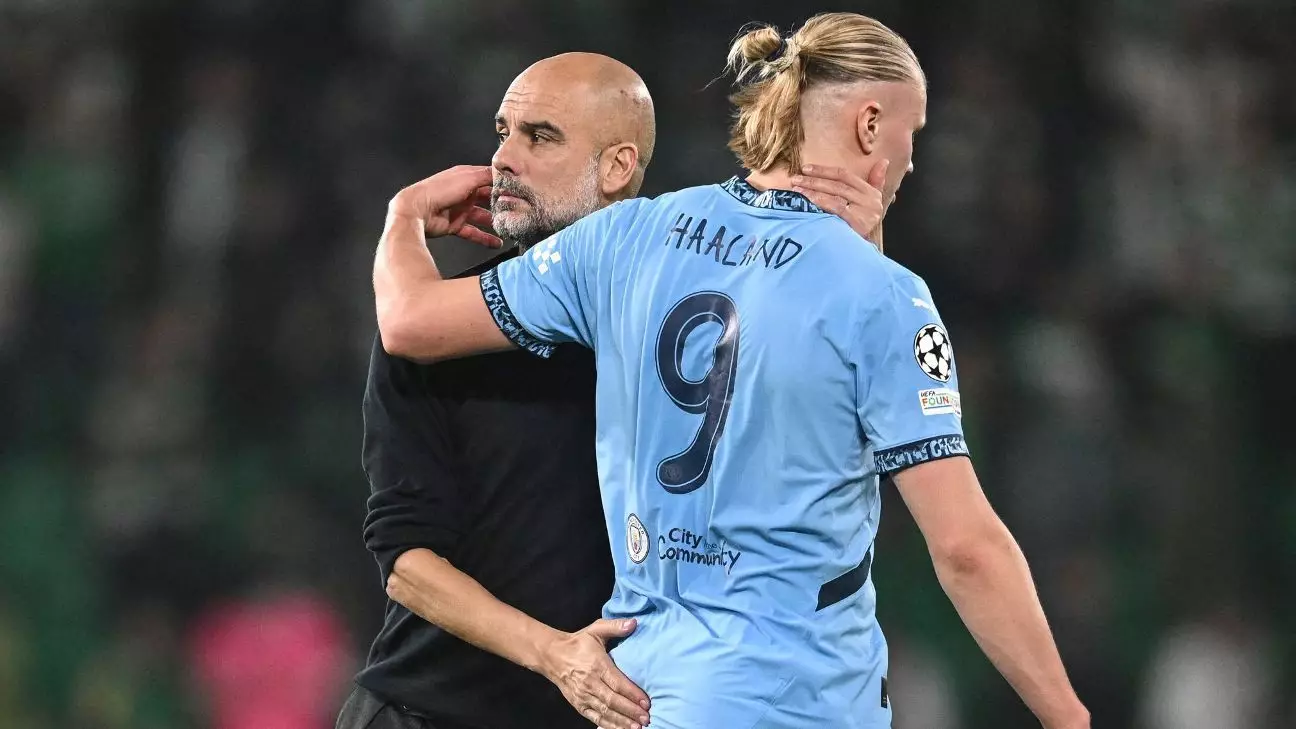
Manchester City, a juggernaut in modern football, recently made a headline-grabbing move by securing Pep Guardiola’s services for an additional two years. While the extension of the manager’s contract has been hailed as a victory for the club, the challenges facing City now extend far beyond this announcement. The club is on the brink of a critical juncture as it grapples with the futures of 16 first-team players, all of whom will see their contracts expire before Guardiola’s tenure concludes in 2027. This situation is undeniably complex, and how it unfolds will be key for City’s ambitions both on and off the pitch.
Among the individuals whose contracts are set to lapse are marquee names such as Erling Haaland, Kevin De Bruyne, Bernardo Silva, and Rodri—each a cornerstone of the team’s success. While Guardiola’s extension provides a semblance of stability at the managerial level, the uncertainty surrounding these players leaves an aura of unpredictability lingering over the club. As results become more erratic, fans and analysts alike are left pondering how these impending contract decisions will shape the team’s core.
As recent events have shown, this uncertainty coincides with a troubling performance record. The club finds itself entangled in a spin of tumult: recent losses, including a bruising 4-0 home defeat to Tottenham Hotspur, symbolize a stark contrast to its typically dominant form. Moreover, the ongoing legal battles against charges of financial irregularities add a hefty shadow over the club’s operations. The gravity of these accusations, which number 115, could potentially lead to penalties that include fines or, in extreme scenarios, points deductions. Such factors inevitably influence the thought processes of players who might be considering their futures, hindering their willingness to negotiate new contracts.
The impact of the Premier League’s investigation into Manchester City’s financial dealings cannot be overstated. With a hearing underway at the International Dispute Resolution Centre, players like De Bruyne may find themselves hesitant to engage in contract discussions until the outcome is more defined. De Bruyne himself has recently voiced the ambiguity surrounding his future, suggesting that, “If no talks come, it will be my last year.” This highlights a growing apprehension amongst key players, as the ramifications of potential penalties could reshape the aspirations of this squad.
The reality is that without decisive management and resolution over these contractual issues, the club risks replicating the mistakes seen at other top clubs that left their star players in limbo. For instance, Liverpool has experienced the repercussions of failing to secure extensions ahead of contract expiration, leading to the unsettling prospect of losing significant talent for free. Manchester City’s situation is exacerbated by a unique twist: the players are not merely weighing contractual options but are evaluating the broader stability and direction of the club amid ongoing disputes.
In navigating this minefield, City must identify which players are essential to their future and prioritize negotiations accordingly. Despite the looming deadlines, there is a restricted window of opportunity. Players like Haaland, Phil Foden, and Ruben Dias should be given urgent attention; an appreciation of their value must resonate in the boardroom to ensure they remain committed rather than seeking alternatives. But therein lies a predicament, as no extensions can be reasonably expected until the legal cloud dissipates.
Additionally, the situation is complicated further by the impending contract expirations of veteran midfielders Ilkay Gündoğan and De Bruyne, both of whom will be free agents at the end of the season. Their experience and leadership qualities are vital to the team, yet both men face an uncertain future if negotiations do not progress swiftly.
Adding another layer of complexity to the mix is the anticipated transition within the club’s management hierarchy. With the long-serving director of football, Txiki Begiristain, set to depart and be replaced by Sporting CP’s Hugo Viana, the potential for further shifts in strategy cannot be ignored. Such changes often herald new philosophies and directions, which may or may not align with the remaining players’ aspirations. The intersection of managerial, player, and administrative change presents a daunting challenge that requires alignment and clear communication to minimize disruption.
Secure Guardiola’s commitment was undoubtedly a critical step for Manchester City; however, it remains only part of a much larger strategy that needs to be executed deftly. This transition period is pivotal as City must grapple with contract negotiations while maintaining competitive performance on the field. The ripple effects of the current legal uncertainties will undoubtedly shape the players’ decisions, creating an atmosphere of caution and trepidation.
Ultimately, the club’s ability to navigate these turbulent waters will determine its future. Success in addressing player contracts while managing ongoing challenges with the Premier League could lead to a rejuvenated City side, refocused and eager to reclaim its position atop the football world. Only time will reveal if the club is prepared to meet the hurdles ahead with the fortitude necessary to sustain its legacy.