
In the ever-competitive landscape of English football, few rivalries have captured public attention like that of Pep Guardiola and José Mourinho. Their exchanges are not just a reflection of sportsmanship; they represent a deep-seated rivalry that encompasses personal and professional dynamics. Recently, these dynamics took a humorous yet pointed turn when Guardiola joked about his superior record of Premier League titles compared to Mourinho’s achievements. This playful banter, however, has broader implications that touch on serious undercurrents in football regarding ethics, financial regulations, and the nature of rivalry itself.
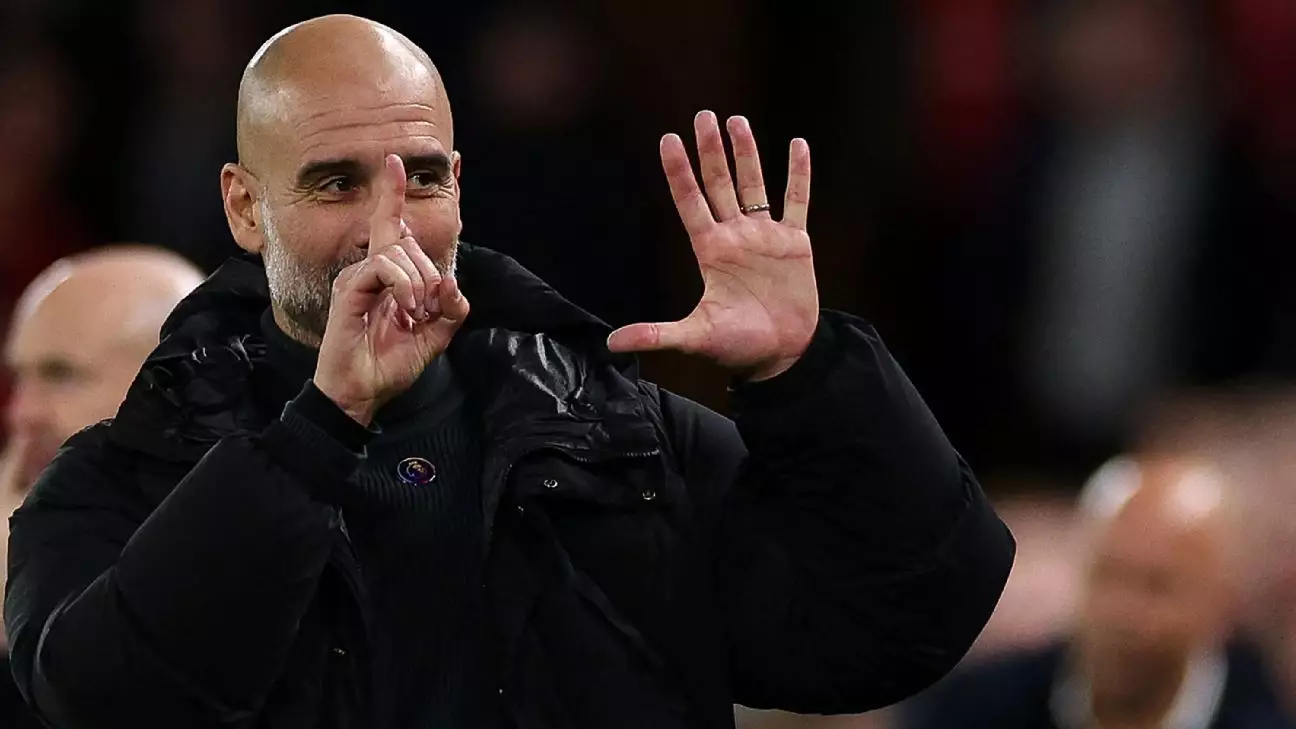
For context, Guardiola’s comment came in the wake of Mourinho’s assertion that his three Premier League titles were won cleanly and ethically. In a league where integrity is scrutinized, Mourinho’s emphasis on “clean” victories resonates strongly with fans who value fairness in competition. Guardiola’s retort that he has won six titles while Mourinho has only three saw him display six fingers as a symbolic gesture to fans. This back-and-forth now underscores the multifaceted nature of their rivalry—one that is as much about titles as it is about personal legacies and reputations.
Guardiola’s humor can be interpreted as a light-hearted jab—but such jokes often mask deeper tensions. The fact that Guardiola subsequently indicated that he did not mean to offend suggests that the rivalry is layered with an awareness of the stakes involved. In football, especially at the upper echelons where both managers operate, any perceived slight can resonate throughout the broader community.
Additionally, the recent leans towards financial allegations facing Manchester City loom large over the discussion. Mourinho’s insinuations that he would like to inherit titles if City were found guilty of financial wrongdoing adds another layer of intensity to their rivalry. Guardiola, however, maintained a stance of innocence, stating that City is “innocent until proven guilty.” This phrase encapsulates a growing sentiment in sports where the burden of proof increasingly falls upon those making allegations.
Mourinho’s grievances are not unfounded, as financial regulations are crucial for ensuring competitive balance in leagues. Chelsea, for instance, is also under investigation for potential breaches during the period Mourinho was at the helm, which raises questions about the integrity of success in football. The debate is not just about winning; it’s about fairness, credibility, and the essence of what makes a victory meaningful.
The rivalry between Mourinho and Guardiola extends beyond mere statistics. Both managers have felt the weight of expectations that come with success. Their journeys have been marked by highs and lows, and their legacies are intertwined with the clubs they represent. Guardiola’s assertion that both he and Mourinho could sit at the same table as Sir Alex Ferguson and Arsène Wenger speaks to a unique form of respect, acknowledging that the fight for supremacy extends beyond the number of trophies in the cabinet.
However, the question of legacy is complicated by the contemporary realities of football. It’s not solely about wins; the manner of winning matters—a factor that Guardiola and Mourinho both understand deeply. The professional rivalry transcends personal differences, rooted in a mutual ambition to leave an indelible mark on the game.
As Manchester City continues to navigate the challenges of financial scrutiny and league investigations, and José Mourinho attempts to reshape his legacy in the modern game, one thing remains clear: their rivalry is a rich tapestry woven with ambition, humor, and complexity. Guardiola’s light-hearted remark, while seemingly innocuous, underscores the broader landscape of football where success is measured not just in titles but in ethics, reputation, and a deep-seated desire for recognition. In this evolving narrative, both managers are not merely competitors; they are both pivotal figures shaping the future of the beautiful game.