
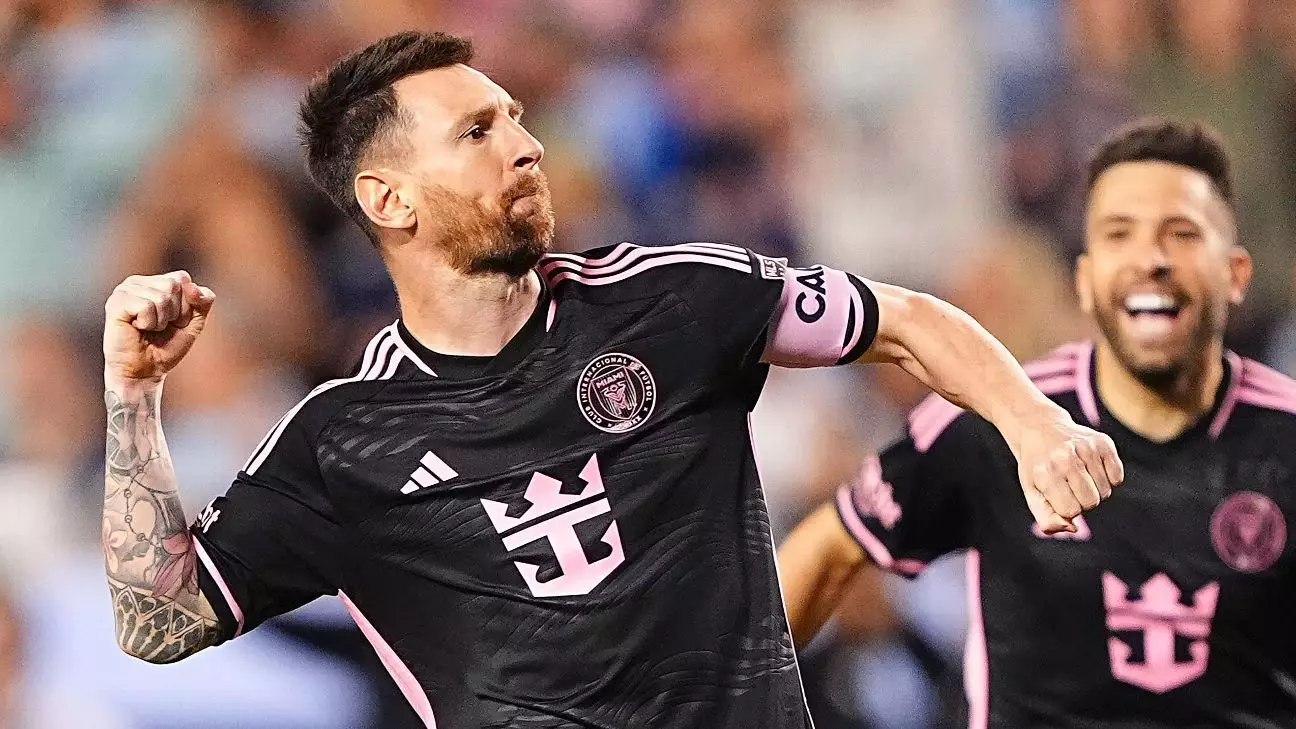
When it comes to selecting a Most Valuable Player (MVP) in any professional sports league, the debate can be as colorful and contentious as the games themselves. The MVP award’s definition is inherently subjective, often sparking vigorous discussions among fans, analysts, and players. Is the MVP merely the standout talent among a pool of players, or must they also embody the heart of the best team in the league? Should statistics dictate value, or is it the broader impact that a player has as they lead their team to success? These questions fuel the lively debates surrounding awards and honorifics in sports.
The recent announcement that Lionel Messi has won the MLS Landon Donovan MVP raises these very questions. Messi’s exceptional skills on the field, coupled with his ability to elevate Inter Miami from obscurity to prominence, seem to position him as a clear choice. Indeed, Messi delivered an impressive performance during the 2024 season, contributing a staggering 36 goals (20 goals, 16 assists) – leading the league in goal contributions. This creates an enticing narrative: the superstar was crucial in transforming a lackluster team into a title contender.
While Messi’s statistics dazzle, a more nuanced analysis is necessary to understand his full impact. Despite his extraordinary contributions, Messi’s participation in only 19 of 34 regular-season games casts a shadow over his MVP candidacy. He played less than half the available minutes, logging a mere 1,486 minutes out of 3,090. Comparatively, this participation rate starkly contrasts with MVP performances across major North American sports. Historical examples from the NFL, MLB, NHL, and NBA showcase athletes who played a significantly higher percentage of games, hinting at the potential inconsistency in criteria for awarding the MVP.
To draw an informed conclusion, one must examine not just Messi’s performance with Inter Miami, but also the team’s overall performance during his absences. In matches that Messi started, Miami posted a remarkable 12 wins, 6 draws, and only 1 loss. These performances yielded an impressive 51 goals scored while conceding just 26. However, during the periods that Messi was sidelined, Miami still managed to secure 10 wins, 2 draws, and 3 losses, albeit with a less sparkling offensive record. The team’s resilience illustrates an interesting counterpoint: it seems that even without Messi, Miami remained competitive in the league.
This overlapping performance raises essential philosophical questions. Does the sheer act of being missing negate Messi’s impact? Should he be celebrated for achieving exceptional results in limited appearances, or should he face criticism for not being available for the majority of the season? The MVP discussions blur further: if Miami could still have clinched the Supporters’ Shield based on their record without him, can one truly declare Messi’s influence to be as crucial as the statistics suggest?
Delving deeper, we also need to recognize the power of Messi as a market magnet. His arrival at Inter Miami not only brought star talent to the roster such as Luis Suárez and Sergio Busquets but generated a significant ripple effect across the entire league. Increased interest from sponsors, an uptick in ticket sales, and heightened media exposure are indirect benefits tied to Messi’s presence. Taken together, these factors underpin a broader conversation about how value is quantified in sports. Financial implications might not be formal voting criteria, but they certainly form part of the narrative built around a player.
Another critical factor in Messi securing the MVP title lies in the performance of his competition. Not only did Messi excel, but many of his contenders did not have the same captivating impact. Players like Evander, Christian Benteke, and others may have enjoyed successful seasons, but their teams did not achieve playoff success or struggled to leave a lasting impression on the league. Messi’s threshold of performance stands uniquely above this backdrop, reinforcing the argument for his recognition as the league’s premier talent.
While the debate over value and performance metrics continues to evolve, the essence of the MVP award remains complex. Messi’s selection as the 2024 MLS MVP undoubtedly brings forth many perspectives on the nature of value. From statistical leadership to the financial elevation of the league, Messi has created waves in areas extending far beyond the field of play. The notion of value in sports will always be multifaceted, and Messi’s MVP award serves as a testament to that reality as fans and analysts navigate the intertwined narratives of contribution, availability, and impact.