
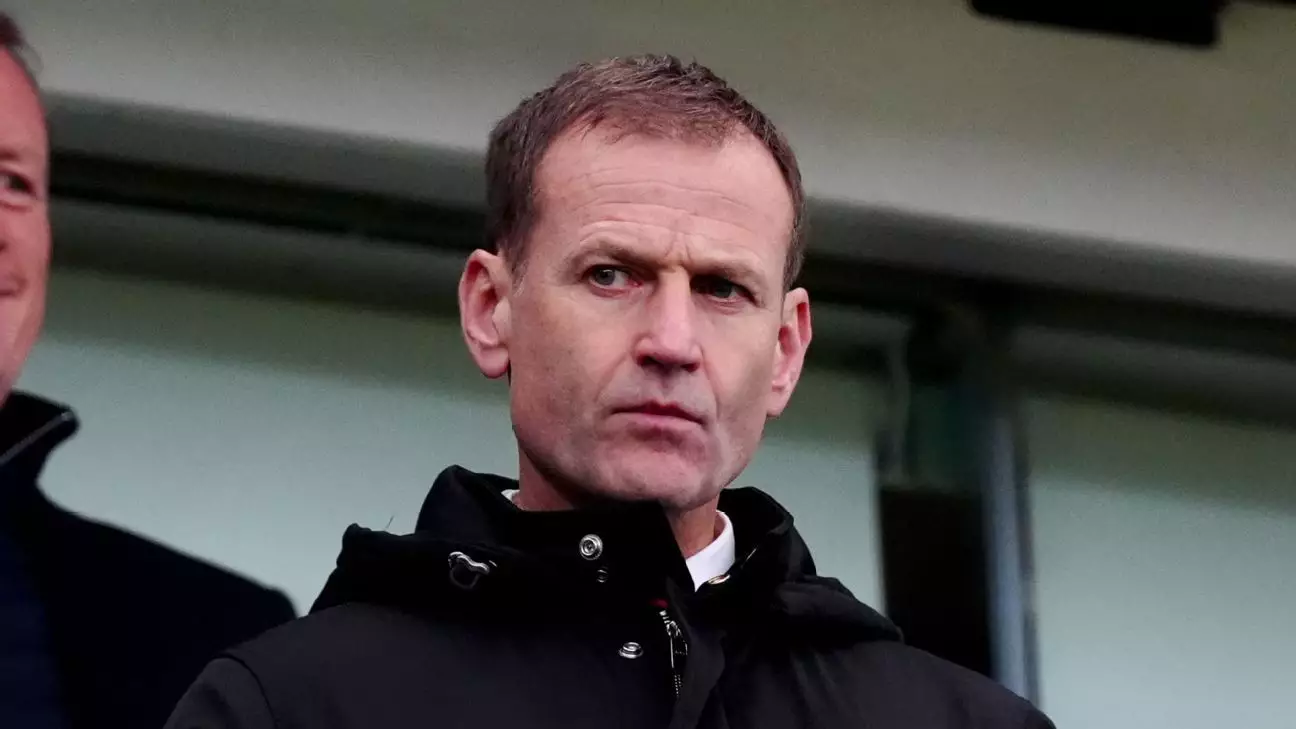
In a surprising twist of events, Dan Ashworth’s tenure as sporting director at Manchester United has come to an abrupt end after a mere five months. Initially appointed amid a high-stakes overhaul at Old Trafford led by Sir Jim Ratcliffe, Ashworth’s departure raises questions about the club’s strategic direction. His time at Manchester United officially commenced in July when he left Newcastle United following a costly settlement. However, the anticipated positive impact of his appointment has not materialized as expected.
Appointed to rejuvenate a struggling Manchester United, Ashworth was seen as a pivotal figure amid efforts to recover from a dismal season start. His collaboration with technical director Jason Wilcox and CEO Omar Berrada was aimed at creating a sustainable long-term vision for the club. Unfortunately, the lack of a harmonious transition from Erik ten Hag to new head coach Ruben Amorim has led to intensified scrutiny of Ashworth’s role and overall effectiveness as a sporting director.
During his short stint, Ashworth was influential in making several decisive acquisitions aimed at revitalizing the squad. Five notable signings, including Matthijs de Ligt and Manuel Ugarte, were secured with significant financial investment exceeding £180 million ($229.3 million). However, the resulting performances have not yielded immediate success, as exemplified by the team’s unexpected defeat to Nottingham Forest, which left United languishing in the 13th spot of the Premier League table.
Despite high hopes, the lack of coherent strategy during this transitional phase has been glaringly evident. Ashworth’s inability to produce a competitive squad, coupled with the team’s poor start to the season, hints at underlying issues that extend beyond individual player performances. As seen in football, management changes can often derail progress; thus, Ashworth’s exit begs the question of whether club leadership is aligned with immediate goals.
Reflections on Leadership and Future Directions
Ashworth’s departure could signify deeper turbulence within the club’s hierarchy. Manchester United’s management team may need to reconsider the foundations of their strategy and re-evaluate the processes behind recruitment and development. The selection of Ruben Amorim as head coach was a major move, yet the subsequent fallout reveals potential misalignment between leadership and vision.
Moving forward, the club will need to engage in a thorough review of its core strategy and decisively address internal dynamics that could lead to instability. Essential changes might include revisiting player recruitment strategies, coaching philosophy, and long-term club vision to solidify Manchester United’s longstanding legacy in the sport. With critical junctions ahead, United must tread carefully to avoid further setbacks and reassess its ambitions within the competitive landscape of Premier League football.
While Dan Ashworth’s brief tenure has concluded, the implications of his departure resonate across the organization. Manchester United stands at a crossroads, compelled to adapt and reaffirm its position in English football amidst rising challenges.