
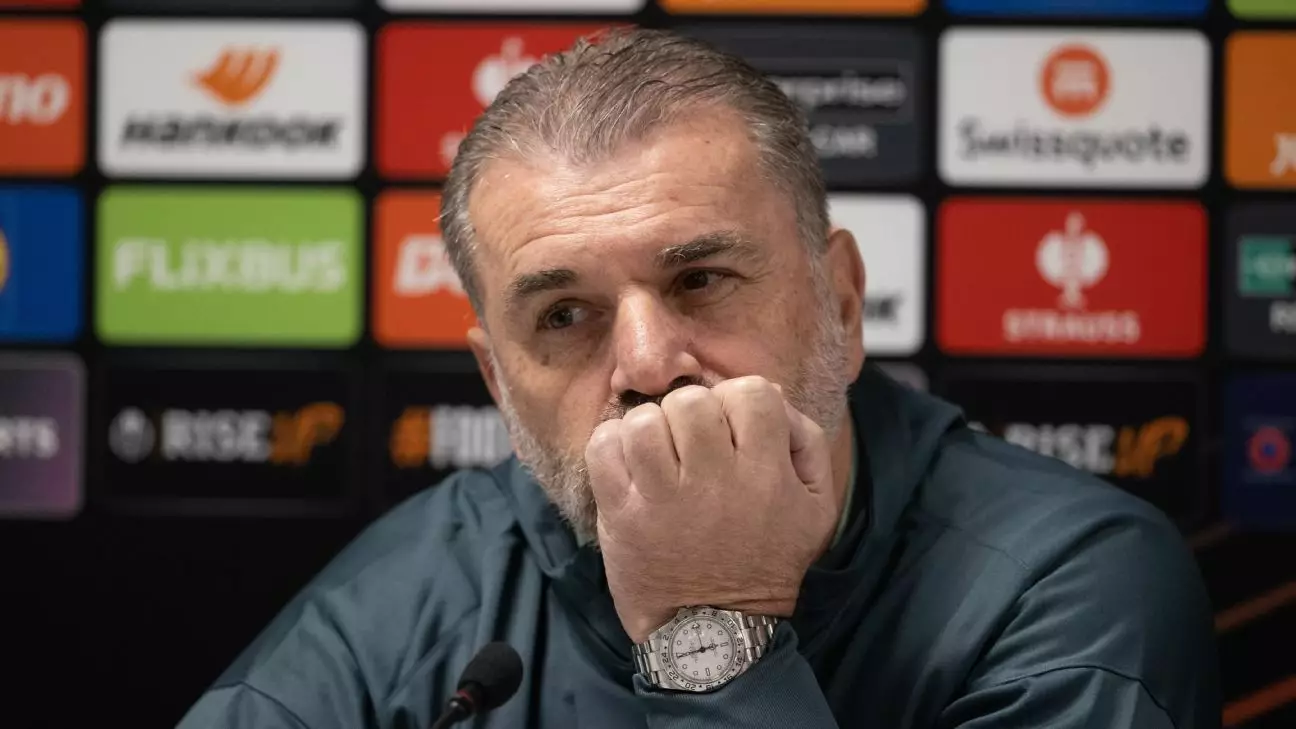
As the Premier League season unfolds, Spurs find themselves in a situation fraught with challenges. The latest development stems from Cristian Romero’s recent remarks that scrutinized the strategic direction of Tottenham Hotspur’s management. Following a disappointing 4-3 defeat to Chelsea, Romero’s candid reflections on the club’s recruitment strategy raised eyebrows and, subsequently, displeasure from both the coaching staff and club hierarchy.
In a notable interview with Telemundo Deportes, the Argentine defender did not shy away from expressing his frustrations concerning the club’s spending habits relative to their competitors. Romero articulated a narrative that many fans and analysts could resonate with: a pattern of instability where, year after year, coaching staff and players were swapped, but the problems at the administrative level persisted. His pointed remarks suggested that the club’s structure was holding back its potential, proclaiming that “it’s always the same people responsible.” This brazen criticism struck at the heart of a club still searching for its identity and success following a series of managerial upheavals.
Romero’s comments were undoubtedly fueled by the passion and intensity that come with being a professional player who desires to compete at the highest level. Yet, as head coach Ange Postecoglou pointed out, some of his observations were misrepresented in the public eye. Postecoglou emphasized the importance of maintaining a united front and dealing with internal issues internally, stating, “We deal with these things in our own four walls.” This mantra of confidentiality resonates strongly within team dynamics but raises questions about transparency and accountability in a sport where public opinion can be a double-edged sword.
The leadership displayed by Postecoglou in addressing the controversy showcases his commitment both to his players and to the integrity of the club. While he acknowledged that elements of Romero’s criticism were valid, he maintained that personal grievances should preferably be documented behind closed doors rather than shared with the media. This incident has triggered discussions about player expression and the appropriate channels for voicing concerns within a football club.
Postecoglou’s intent to speak directly with Romero, culminating in an apology from the player, indicates an effort to mend fences while reinforcing the ethos of professionalism and respect. He recognized the human side of Romero’s emotional outburst and likely understood the pressures the young player faces amidst challenging circumstances. Such moments challenge coaches as they juggle the demands of performance while nurturing player relationships, a balancing act critically important for team morale.
Compounding the controversy surrounding Romero’s remarks is the team’s ongoing injury crisis. The absence of key players like Romero himself, alongside Micky van de Ven and Ben Davies, has left Spurs in a precarious position ahead of their Europa League encounter against Rangers. The severity of the injury situation has led Postecoglou to make tough decisions, potentially fielding untested players like 18-year-old Archie Gray in defensive roles. This reliance on youth could inject energy into the team, but it also exposes vulnerabilities that could be exploited by seasoned opponents.
Postecoglou’s admission that this is the “worst injury crisis” of his managerial tenure puts into perspective the uphill battle he faces. The coach now must cultivate creativity within his squad, experimenting with formations and filling gaps with players out of their natural positions—a task that requires not just tactical ingenuity but also significant team cohesion and adaptability.
Facing Rangers will undoubtedly be a critical test for Tottenham. Postecoglou’s connection to Scottish football, having won multiple titles with Celtic, adds a layer of intrigue to the upcoming clash. As he returns to familiar territory, there will be an expectation—not just from former colleagues but also from Spurs’ fan base—that he can harness his experiences to uplift a team in distress. Meanwhile, Rangers’ manager Philippe Clement will urge his team to seize this opportunity to claim a momentous victory against a beleaguered Premier League outfit.
As Spurs sit precariously in the Europa League standings, currently outside the qualification spots with ambitions of reaching the last 16 in jeopardy, the forthcoming matches will set the trajectory not just for tournament hopes, but for the overall morale and stability of the club. The minutes on the pitch will serve as the ultimate test of resilience, revealing whether Tottenham can convert pressure into potent performance or if they will succumb to the weight of expectation amidst turbulence both on and off the field.