
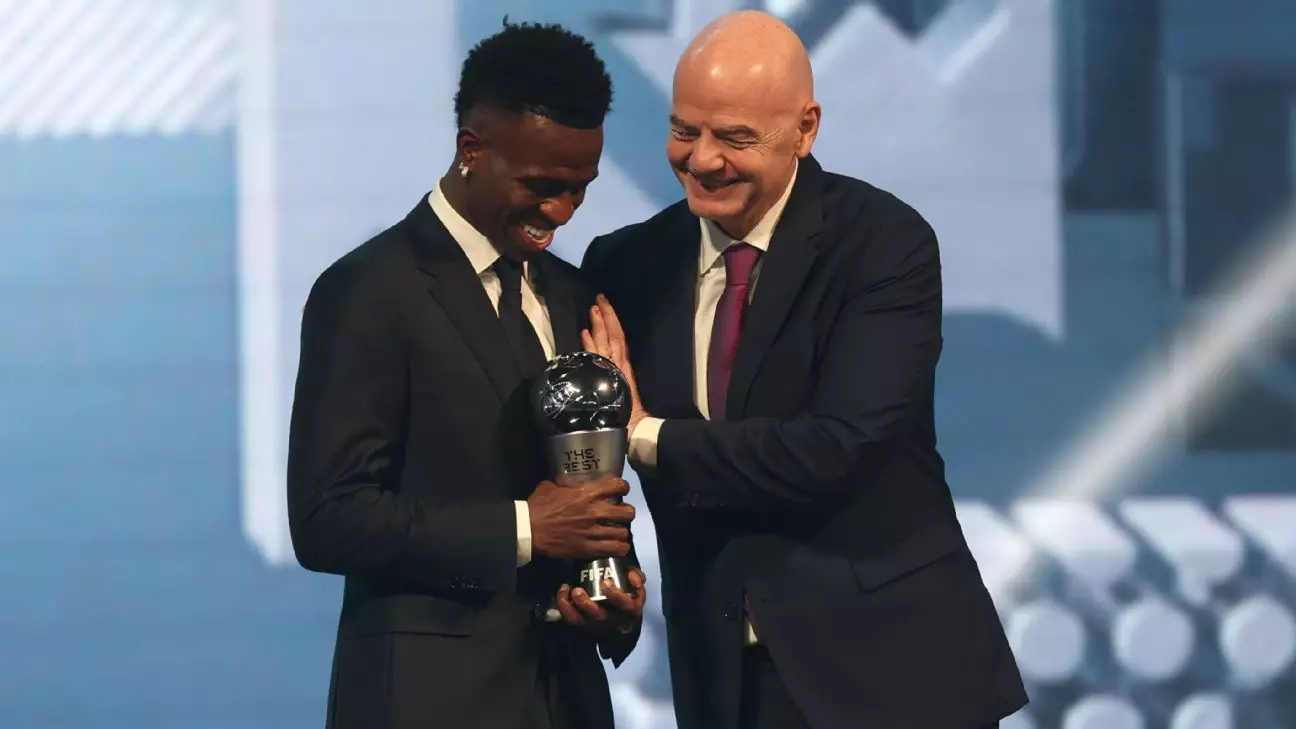
On a momentous occasion, Vinícius Júnior, the gifted forward of Real Madrid and Brazil, showcased his resilience and undeniable talent by winning FIFA’s The Best men’s player of the year award. This recognition is significant not only for Vinícius but also for every young player who dreams of stardom while facing skepticism and criticism. After securing this prestigious title, Vinícius took to social media to confront his detractors head-on, embodying strength and determination. He expressed discontent about those who attempt to “invalidate” and “diminish” his accomplishments, signaling that he is ready to take a stand against the naysayers.
Vinícius, only 24 years old, gathered a total of 48 points in the award voting, coming out ahead of Manchester City’s Rodri, who amassed 43 points, and his Real Madrid teammate, Jude Bellingham, with 37 points. This victory follows a string of challenges, including missing out on the coveted Ballon d’Or, a situation where Rodri had triumphed that led to Real Madrid’s withdrawal from the ceremony in protest. Such experiences only seem to bolster Vinícius’s resolve, reinforcing the notion that success is nothing short of a personal journey paved with setbacks and triumphs.
In his emotional Instagram post, Vinícius stirred the spirits of aspiring footballers everywhere, declaring, “Today I write to the child who has seen so many idols lift that trophy.” With these words, he not only celebrated his victory but also reminded us of the endurance required to reach the top. He describes how, during his beginnings in São Gonçalo, he encountered an indifferent system that threatened to overshadow him. His triumph is less about individual accolades and more about a collective effort — his success is a testament to his family’s support, his clubs’ investment in his talent, and the camaraderie of his teammates.
Moreover, his reflections provide an insight into the emotional labor athletes endure. To fight against the naysayers, to rise past disappointments, and to persist is a lesson that transcends football; it’s a narrative that resonates with anyone who has dared to chase their dreams. The message is clear: he has fought battles that go beyond the pitch, combating both external doubts and internal fears, all while emerging victorious.
Vinícius’s recognition as The Best player coincides with a successful season for Real Madrid, where they celebrated a commendable La Liga and Champions League double. Alongside him, Aitana Bonmatí’s achievements in the women’s category and Carlo Ancelotti’s recognition as men’s coach of the year further illuminate the landscape of football, showcasing diverse talents and leadership.
In the wake of his achievement, the football world rallied in support of Vinícius, including praise from his compatriot Neymar, whose encouragement to “keep flying” captures an essential ethos in sports — the importance of unity and support. In many ways, Vinícius’s journey reflects a broader narrative within competitive sports—overcoming adversity, embracing your identity, and staying grounded despite success.
Despite his recent accolade, it is worth considering the broader context of sports awards and the mechanisms behind them. The debate surrounding the legitimacy of voting processes—most notably exemplified by Florentino Perez’s criticism of the Ballon d’Or selection criteria—raises questions about recognition in modern sports. By emphasizing that “nobody knows” certain journalists’ credibility, Perez advocates for a reevaluation of how athletes are recognized and celebrated. Such discussions are vital as they touch upon what it means for an athlete to receive acknowledgment for their hard work and talent.
Vinícius Júnior’s story is not solely about individual victory but about resilience, community, and the relentless pursuit of excellence. His journey has only just begun, and as he continues to break barriers and elevate himself in the football world, one can only watch in awe and anticipation of what lies ahead for this formidable talent.