
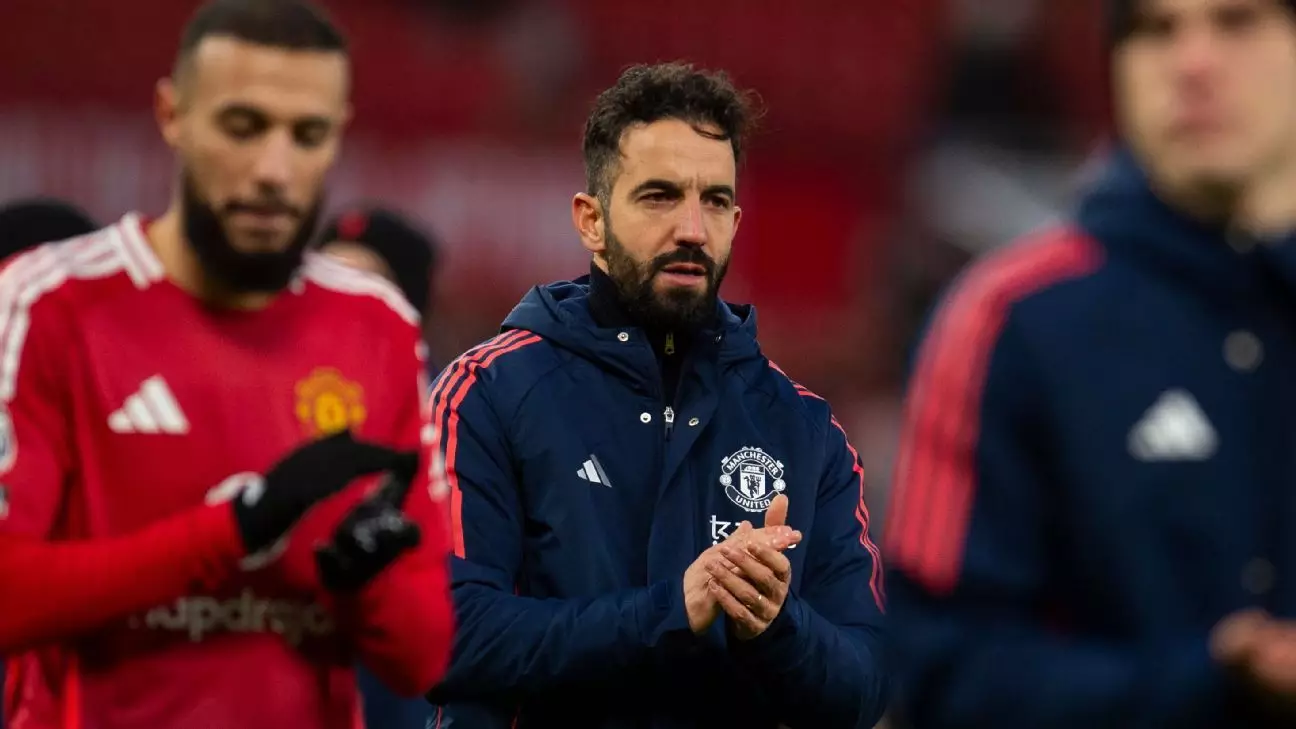
In a dramatic turn of events, Manchester United finds itself steeped in turmoil just weeks into Ruben Amorim’s managerial tenure. Initially buoyed by his arrival, the club is now experiencing a slew of setbacks that have left both fans and players reeling. The phrase “the storm will come” was not merely an abstract warning; it has manifested into a full-blown crisis, marked by alarming inconsistencies in performance, particularly at Old Trafford.
Amorim has faced a barrage of issues, from set-piece vulnerabilities to missed opportunities in front of goal. The stunning defeats to Nottingham Forest and AFC Bournemouth—culminating in a demoralizing 3-0 loss at home—have significantly tarnished the optimistic outlook many had when he was hired. In just three weeks, the prospect of achieving consistency has begun to feel monumental, as the team struggles to grapple with early adversity in the English Premier League.
Historically, Old Trafford has been a fortress for Manchester United, but the current season has shattered that reputation. The overwhelming sensation of anxiety within the stadium—a feeling noted by Amorim himself—has taken a toll on both players and supporters. Fans who have long traveled across the country to support their team have found themselves disillusioned, as the notion of earning points at home now seems an unattainable goal.
The recent home games have seen United supporters express their frustration, with vocal discontent evident from the final whistle of the Bournemouth match. The irony of opponents shouting “Olé” with each completed pass amplified the palpable unease in the stands, underscoring the massive disconnect between the players and the expectations of an illustrious club that prides itself on success.
One of the more troubling aspects of Manchester United’s recent performances has been their defensive frailty during set-pieces. The opening goal conceded against Bournemouth marked the seventh time in six matches that the team has allowed a goal directly from or immediately following a set piece. Such a statistic is not merely indicative of poor execution but suggests a systemic failure in tactical organization and preparation.
Training ground solutions seem far from instantaneous fixes. Despite Amorim’s assurances that the coaching staff is actively addressing these vulnerabilities, the narrative of great missed chances and defensive blunders continues to unfold. With each successive game, the pressure mounts—both from within the club and from an increasingly impatient fan base—all while the tactical nous that many had hoped for remains elusive.
Amorim’s record since taking the helm is a sobering reality check for a coach previously celebrated for his success at Sporting CP, where he went an astonishing 18 months without a league defeat at home. Here in England, however, he faces a vastly different landscape, one filled with teams that capitalize on weaknesses with ruthless efficiency. The rapid concessions of goals—particularly in first halves—pose an inadequate challenge to his ambitious approach to management.
Despite suggesting that recent losses were not merely a consequence of set-piece failures, Amorim now grapples with consecutive defeats that compound the urgency to adapt. The emergence of quick-fire goals from opponents, illustrated by both Tottenham and Bournemouth, is a particularly alarming trend that indicates a lack of resilience amid pressure situations. As Amorim attempts to develop a style that promotes attacking football, the stark need for defensive solidity cannot be ignored.
The impending fixtures against Wolverhampton Wanderers and Newcastle United loom ominously for a team that may find itself languishing in the lower echelons of the Premier League as Christmas approaches. This would mark the first time since 1989 that United occupies such a position during the holiday season—a statistic that could have long-term ramifications for morale and even the managerial stability that Amorim must work hard to sustain.
While every club faces ups and downs throughout a season, the essential question remains: since when did Manchester United become synonymous with such disarray? As the new year nears, the onus is on Amorim and his squad to climb out of the deepening abyss while rediscovering the very essence of what it means to be part of a club known for its unabashed pursuit of glory. The storm, it seems, is only just beginning to take shape.