
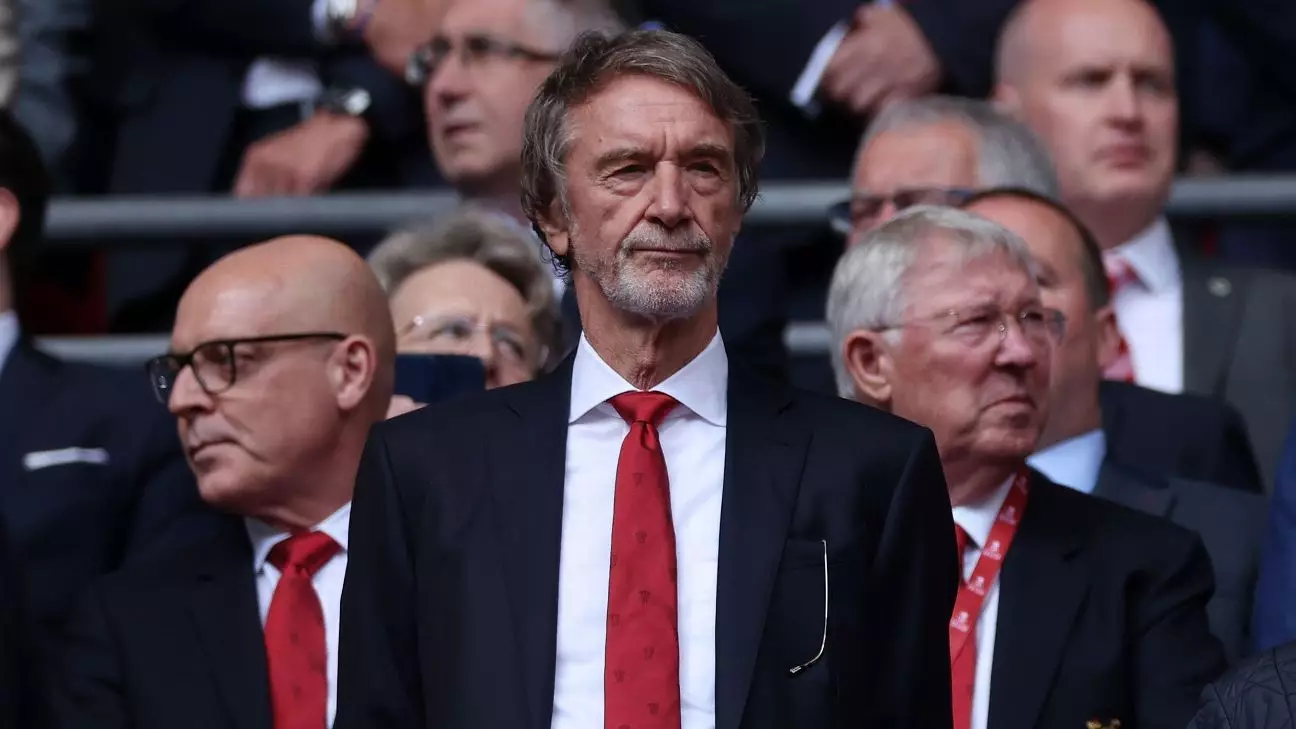
In a pivotal moment for Manchester United, Sir Jim Ratcliffe has emphasized the necessity for the club to undertake “difficult and unpopular decisions” to reclaim its position among the elite in football. Following his acquisition of a 27.7% stake in the club, Ratcliffe is determined to challenge the dominance of rivals like Manchester City and Liverpool. However, the journey has been fraught with challenges, particularly with the departure of manager Erik ten Hag amid a disappointing performance trajectory.
Manchester United’s current predicament can best be described as stagnation, a stark contrast to the glory days of past decades. Ratcliffe candidly labeled the team’s status as “mediocre,” which is a sentiment echoed by many fans and critics alike. The club is not just floundering in league positions; it is grappling with a broader identity crisis that threatens to dilute its historic prestige. Despite a slight resurgence under new head coach Ruben Amorim, United remains positioned in the lower half of the Premier League table, creating an urgent need for transformation.
In his discussions with the fanzine United We Stand, Ratcliffe asserted that mere incremental changes wouldn’t suffice. He believes that to facilitate genuine progress, leadership must confront tough choices head-on. It’s a perspective that resonates deeply in the sports world, where legacy clubs often struggle to balance tradition with the evolving landscape of modern football. Ratcliffe’s statement has sparked debates about the potential shifts in club culture and structure that might follow.
One of the first moves reflecting these challenging decisions came during the summer when the club executed layoffs affecting nearly a quarter of its workforce. Though this decision was undoubtedly a hard one, the goal was framed as a necessary step toward reallocating resources to improve the footballing operations. Additionally, the controversial ending of Sir Alex Ferguson’s ambassadorial role—a position he held with distinction since retiring as manager—marks an end to an era that many still consider synonymous with Manchester United’s identity.
The significant changes occurring within the club not only highlight Ratcliffe’s intention to usher in deep structural reforms but also signal a shift in post-retirement narratives about how a football club should be managed in this highly competitive environment. To navigate this transition successfully, it will require both decisive leadership and a steadfast commitment to a long-term vision for success. Fans will undoubtedly keep a watchful eye on whether these changes lead to tangible improvements in performance and, fundamentally, a restoration of a storied club back to its rightful place in football hierarchy.
Manchester United is at a critical crossroads. The potential for greatness still exists, yet the road to reclaiming that prestige is fraught with challenges. Sir Jim Ratcliffe’s willingness to face difficult decisions is indicative of a broader strategy to rekindle the club’s former glory. How the club navigates this transformation will significantly impact not only its immediate future but also its legacy, reverberating through the history of English football for years to come.