
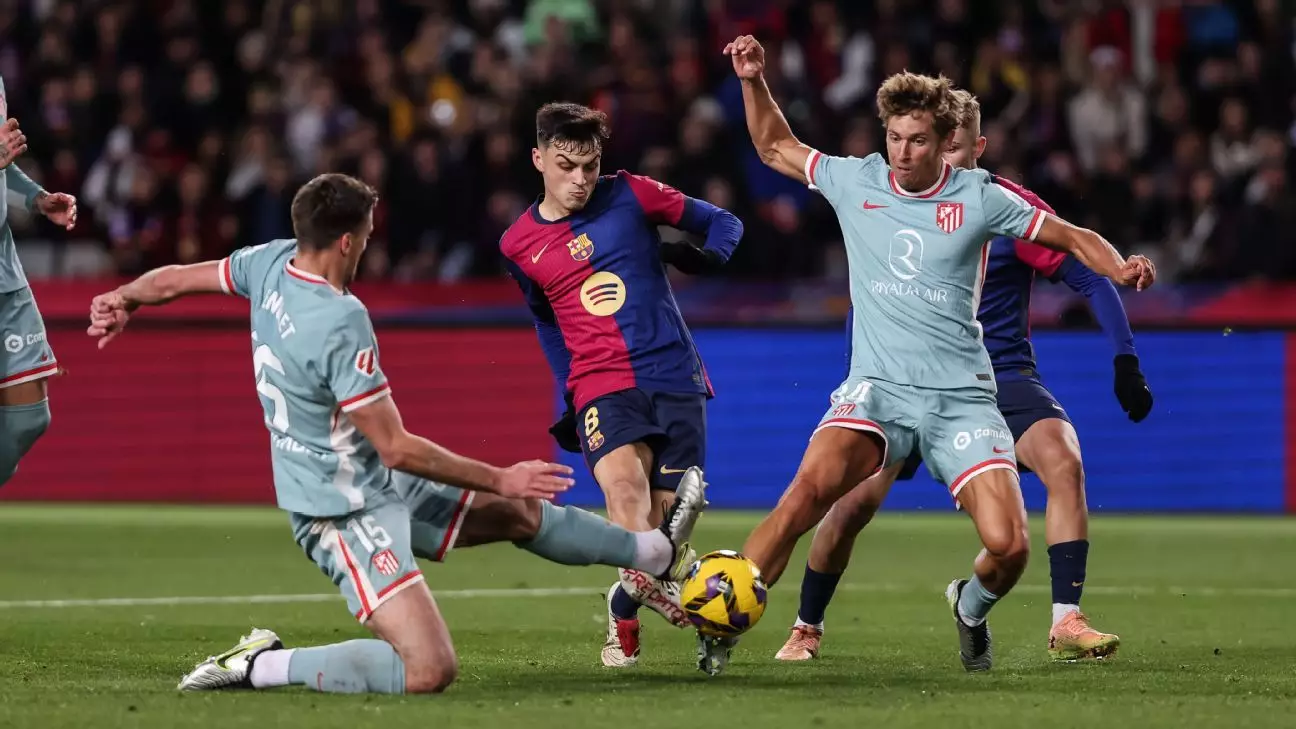
In a somber atmosphere at the Olympic Stadium, FC Barcelona faced a disheartening defeat at the hands of Atlético Madrid, marking their third consecutive home league loss. This defeat not only signifies a disappointing turn in their season, but it has also seen Barcelona fall from a promising position at the top of LaLiga, now trailing Atlético by three points. The match, settled by Alexander Sørloth’s dramatic late goal, underscores the contrasting trajectories of these two historical teams. Barcelona, once a dominant force and a contender for the title, now finds itself grappling with inconsistency and dwindling confidence as they approach the winter break.
Head coach Hansi Flick highlighted the need for a pause, stating, “Now it’s a break and I think everyone needs this break.” The significance of a break in the footballing calendar extends beyond mere physical rest; it provides a necessary window for reflection and adjustment. The recent string of poor performances, which includes only one win in the last seven league matches, suggests deeper issues within the team’s dynamics and strategy. It is apparent that Flick recognizes the toll this period of hardship has taken on both players and supporters alike.
Despite the bitter taste of loss, Flick’s comments reveal a glimmer of hope for the future. He acknowledged that Barcelona’s performance against Atlético showed improvement, particularly compared to their more lackluster outings against teams like Real Sociedad and Las Palmas. “It was really unbelievable how we played,” he remarked, emphasizing the quality of their performance. While the scoreline was disappointing, the spirited display illuminated a foundation upon which they can build.
Barcelona’s struggles in front of goal have been particularly telling. While they took an early lead through Pedri—who has begun to emerge as a key player—the inability to convert chances into goals ultimately proved costly. Jan Oblak’s outstanding goalkeeping thwarted their efforts, a reminder that success in football is often dictated by both skill and fortune. Flick’s insistence on the need for “more intelligence” in their play points toward a crucial area for development; recognizing the game’s tactical demands is essential for any aspiring title contender.
The path forward for Barcelona requires not only hard work but also smart strategic planning. Players must absorb the lessons from their recent performances and cultivate a mentality that thrives under pressure. The mention of Atlético’s experience serves as a stark reminder that resilience is as crucial as skill in the beautiful game. Flick’s continual reference to Barcelona’s desired style indicates that the club is still in search of an identity that aligns with its storied past, emphasizing dominance and creative flair.
Flick also applauded the young talent Pedri, whose performance exemplified promise despite the overall result. His ability to create opportunities and lead peers on the pitch highlights a key aspect of Barcelona’s future: the cultivation of young players who not only possess technical prowess but also the vision to influence the game positively. Pedri’s growth could potentially be pivotal for Barcelona, bridging the gap between a troubled present and a hopeful future.
As the winter break approaches, Barcelona stands at a crossroads. The disappointment of recent results must fuel their desire to rise again. Flick’s confidence in the team’s capabilities must translate into tangible outcomes in the second half of the season. With the right adjustments and a focus on fostering talent, Barcelona can reclaim their status among Europe’s elite clubs. The road ahead may be challenging, but if history is any guide, resilience has always been at the heart of FC Barcelona’s legacy. It is time for the team to harness the lessons learned and channel them into a concerted push for glory.