
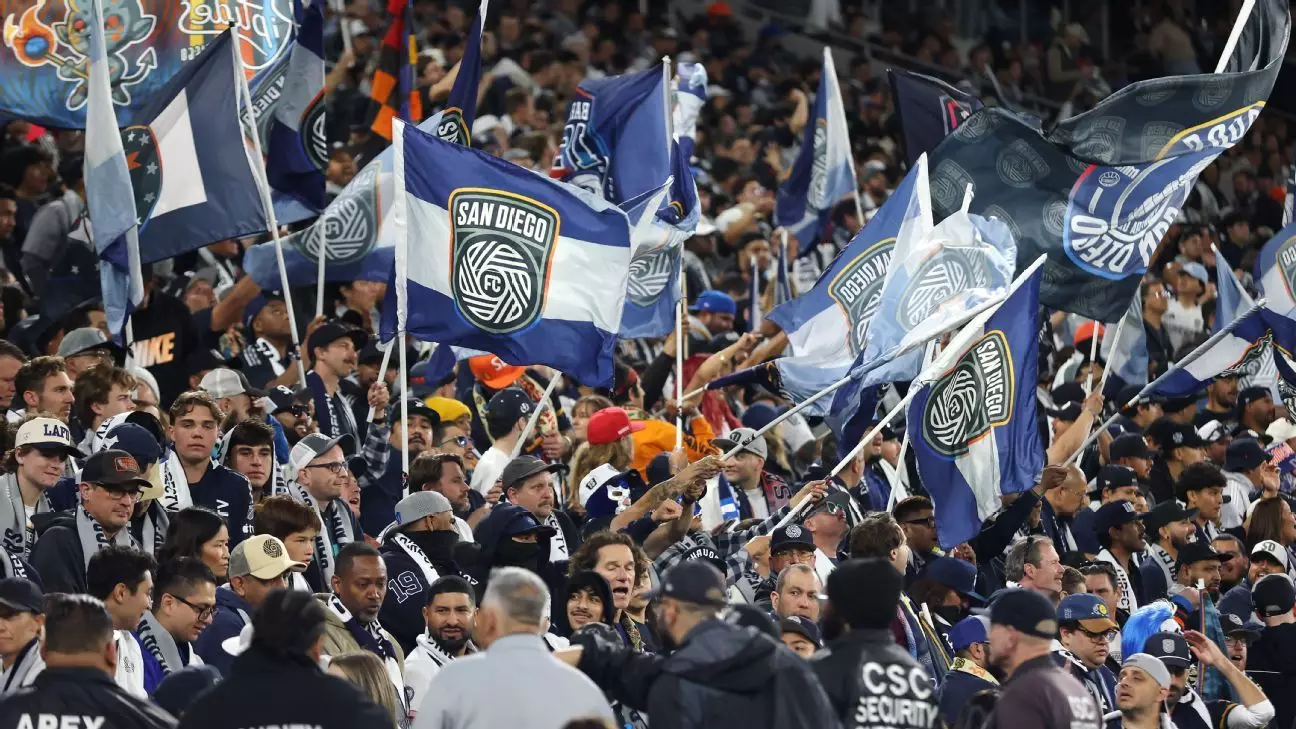
San Diego FC’s inaugural home match at Snapdragon Stadium was officially a milestone moment, marking the team’s entry into Major League Soccer (MLS) before a vibrant crowd of over 34,000 fans. Yet, the celebration was overshadowed by a regrettable incident that unfolded during the second half. The atmosphere, initially filled with excitement and camaraderie, was tainted by the emergence of a homophobic chant—a distressing phenomenon that has dogged soccer matches, particularly those involving the Mexican national team, for far too long.
The team’s coach, Mikey Varas, and sporting director, Tyler Heaps, did not shy away from expressing their frustration and disappointment regarding the chant, which clashed sharply with the inclusive ethos they aspire to promote. Instead of basking in the glory of their first home game, both Varas and Heaps found themselves addressing a pressing social issue that demanded acknowledgment and action.
In the wake of the match, Varas took to the postgame press conference, underscoring the disconnect between the chant and the values of San Diego FC. His condemnation was strong, delivered in both Spanish and English to ensure the message resonated across the diverse fan base. “The chant that was heard tonight is unacceptable,” Varas stated firmly. He positioned the chant as not simply an isolated fan behavior but a direct affront to the club’s core values, emphasizing the team’s commitment to fostering an inclusive and welcoming environment.
Far from being characteristic of the club’s identity, Varas was quick to clarify that this behavior did not originate from La Frontera, San Diego FC’s passionate supporter group. His insight underlined the distinction between the actions of a vocal minority and the collective spirit of the majority who come to celebrate the beautiful game together. The coach’s assertion that such behavior has “no place here” set a definitive tone, signaling that tolerance for hate would not be part of the organization’s culture.
The chant has a well-documented history, often surfacing during games where a rival goalkeeper is poised to take a goal kick. It has become so synonymous with Mexican soccer that it elicits a mix of anger and disappointment among many who wish to see the sport evolve beyond such discriminatory practices. Indeed, FIFA has repeatedly penalized the Mexican national team due to this issue, emphasizing a broad concern that permeates the fabric of soccer culture not just in Mexico, but across North America.
As the global soccer community anticipates the upcoming 2026 World Cup, the potential for this chant to re-emerge represents an alarming possibility. While the spotlight is on thrilling matches and competitive camaraderie, the specter of discrimination threatens to overshadow the positive narratives surrounding the event. This disconnect between sporting excellence and societal values presents an urgent call to action for clubs, fans, and governing bodies alike.
What sets San Diego FC apart, however, is their proactive stance against such behavior. Tyler Heaps echoed Varas in his commitment to the club’s values, noting, “One of our core values is to be a good person.” This willingness to confront homophobia head-on is essential not just for the team but for the broader sports community. By firmly stating that discriminatory chants are totally against their values, San Diego FC shows that sports can serve as a platform for social change.
Ultimately, it is imperative for social issues like homophobia to be addressed not just as isolated incidents but as part of a collective responsibility among fans and clubs. The reactions from Varas and Heaps highlight a growing recognition within the sport that creates a pathway toward lasting change. True progress will require sustained commitment from all stakeholders, transforming stadiums into safe havens where love and respect reign supreme, rather than being overshadowed by hate.
As San Diego FC moves forward, the challenge remains to ensure that their home games serve as a celebration of diversity and respect, embodying the values they profess. In doing so, they not only honor their own principles but contribute to a larger movement within sports that champions inclusivity and equality for all.