
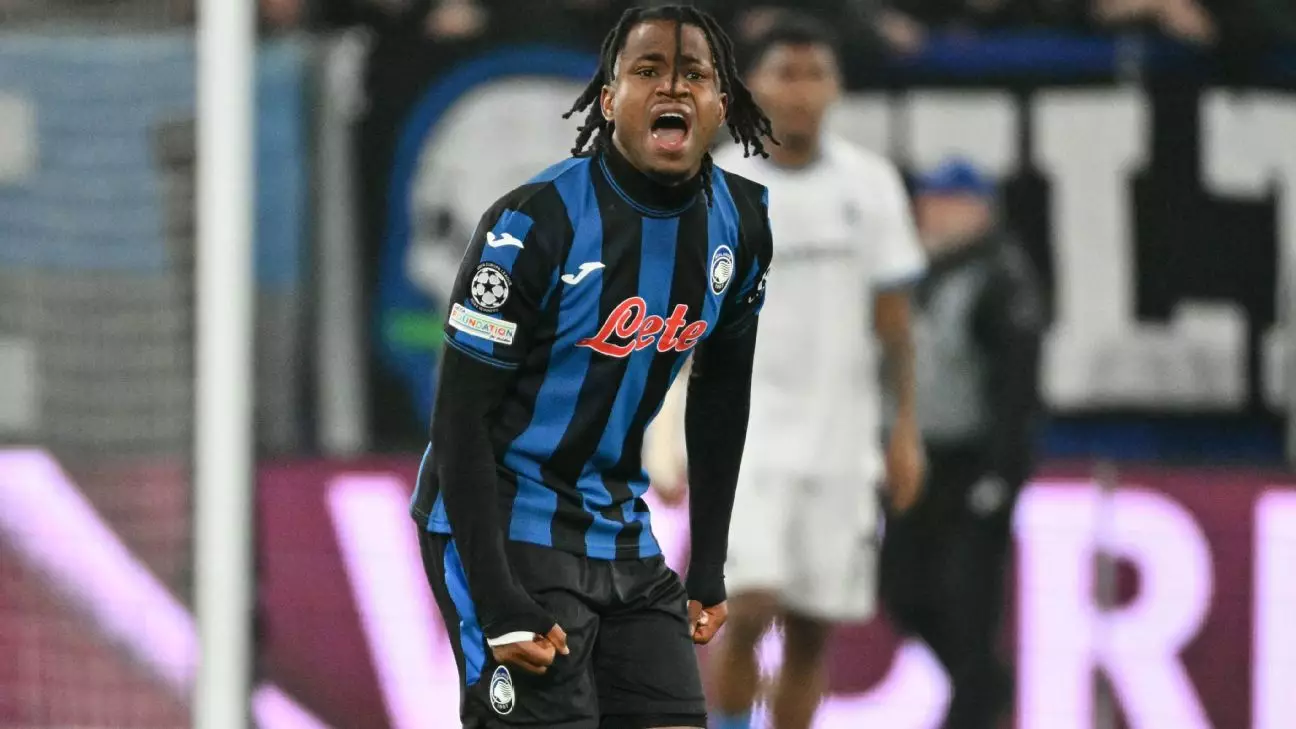
Ademola Lookman’s public declaration of his transfer request marks a rare moment of transparency and courage in professional football. Too often, players are silenced or dismissed when they voice frustrations, but Lookman chose to speak out openly, highlighting issues that go beyond individual contracts. His statement underscores a broader critique of the often opaque mechanisms governing transfers and treatment within clubs. Far from being merely a personal grievance, this act raises questions about player rights, accountability, and the integrity of club management.
What makes Lookman’s stance compelling is not just the fact that he wants to leave Atalanta but that he directly links his departure to feelings of neglect and broken promises. His words reflect a deep sense of betrayal—an acknowledgment that a professional environment should respect the human dignity and the aspirations of its players. By choosing to go public, Lookman asserts that athletes are not just commodities; they are individuals with ambitions, emotions, and rights to fair treatment.
Player Power in the Contemporary Game

Lookman’s case exemplifies a seismic shift in how players view their roles within clubs. For decades, the hierarchy in football heavily favored management and ownership, with players often feeling powerless against decisions made behind closed doors. However, recent years have seen players increasingly take charge of their own narratives, using public platforms to demand transparency and fairness.
While some might argue that such transparency can destabilize club environments, it also forces clubs to reevaluate their treatment of athletes. Lookman’s openly expressed dissatisfaction could serve as a catalyst for broader conversations about player agency, especially when contractual disagreements or personal grievances are involved. His willingness to take this stand suggests a desire for a more equitable dynamic that recognizes athletes as vital stakeholders rather than disposable assets.
A Call for Ethical Leadership and Respect

The heart of Lookman’s frustrations appears rooted in what he perceives as a failure of the club’s leadership to honor their commitments. He claims that a mutually agreed-upon transfer was being blocked without justifiable explanation, which points to a lack of transparency at the decision-making level. Such behavior undermines trust and can be damaging not only to the individual’s morale but also to the overall club culture.
This incident serves as a reminder that effective leadership should be built on respect, honesty, and clear communication. When clubs hide behind contractual formalities or ambiguous motives, it erodes the foundation of professional sport. Ultimately, leadership in football should prioritize human values as much as competitive success, otherwise, it risks fostering a toxic environment where fair treatment is sidelined.
By publicly challenging these dynamics, Lookman emphasizes that players are increasingly unwilling to accept exploitative or dismissive practices. His stand advocates for systemic change—one where players are heard, respected, and treated as genuine partners in the sport. Personal grievances aside, his actions could encourage other players to stand up for their rights, potentially transforming the culture of professional football into one rooted in fairness and mutual respect.