
The highly anticipated Clásico at the Santiago Bernabéu delivered an unexpected outcome as Barcelona handed Real Madrid a shocking 4-0 defeat, marking a critical juncture in the LaLiga season. With this match, Barcelona triumphed not only on the scoreboard but also in delivering a psychological blow to their arch-rivals, ending Madrid’s remarkable 42-game undefeated streak. For the Blues, this victory solidifies their position at the top of the league table, pulling six points ahead of Madrid.
The game saw Robert Lewandowski take the spotlight with two goals that emphasized his striking prowess. He was joined on the scoresheet by Lamine Yamal, a standout of the match who, at just 17 years old, became the youngest scorer in Clásico history, and Raphinha, who also bagged a goal to complete the rout. For Madrid, coach Carlo Ancelotti’s side struggled to find their rhythm, particularly in the second half, where they capitulated defensively, revealing cracks in their usually robust image.
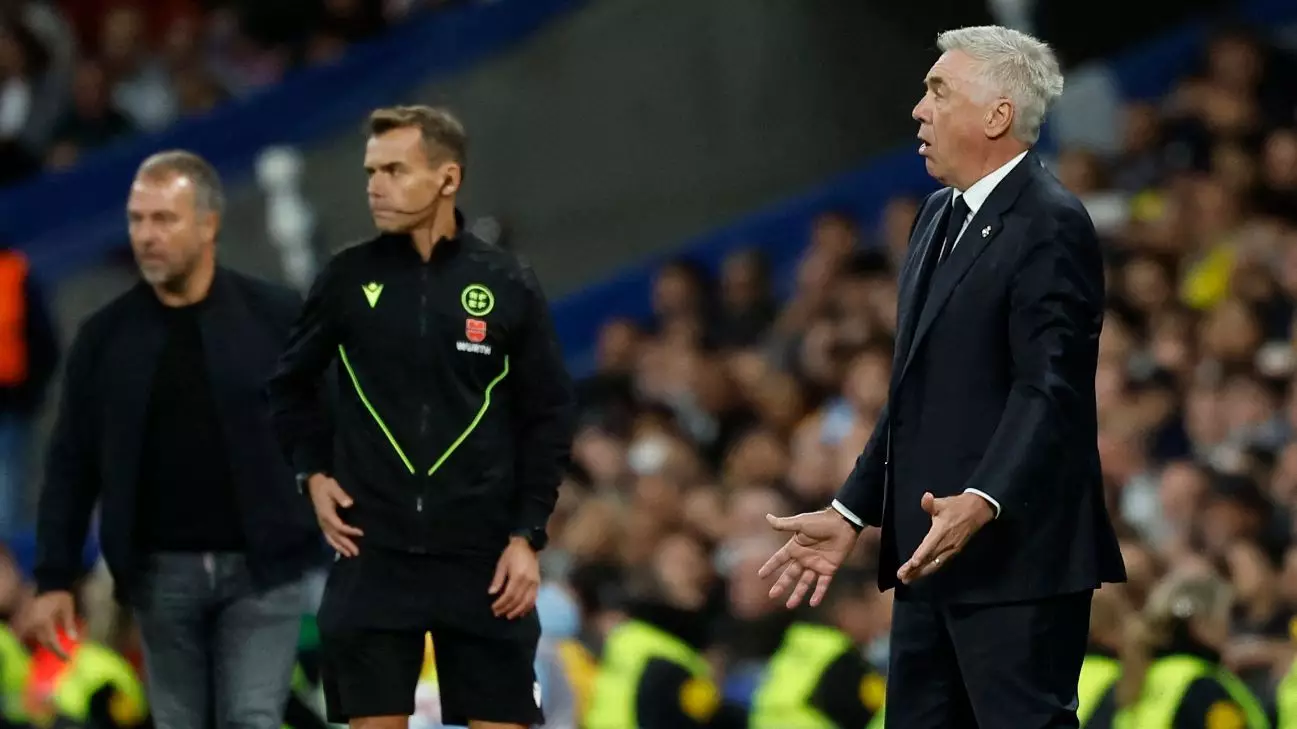
The emotional weight of a catastrophic loss became evident on the pitch as Ancelotti confronted Barcelona’s head coach Hansi Flick over the exuberant celebrations of one of Flick’s assistants after Raphinha’s goal. Ancelotti’s displeasure was palpable, indicating that the loss stung deeper than just the scoreline. His comments post-match reflected a mixture of dissatisfaction and disappointment. “The problem was with the assistant, not with Flick. The assistant was not a gentleman with the way he celebrated in front of our bench,” he remarked, advocating for sportsmanship even amid fierce competition.
This confrontation illustrated that, although football is a game defined by skill and tactics, emotions often take center stage, particularly in confrontations of this magnitude. It almost felt as if the celebrations wove themselves into the fabric of the match, marking a transition from pure athletic exertion to a celebration of triumph that left their opponents struggling to cope.
Ancelotti’s analysis of the game offered him the opportunity to reflect on his team’s performance. Emphasizing the importance of the first half where Madrid ostensibly held their ground, he noted, “Until the goal, it was an even game.” However, as the match progressed, frustration replaced hope as the scoreboard began to tilt dramatically against Los Blancos. The coach acknowledged that his players could have executed their chances more clinically, but it remained painfully clear that once Barcelona found the net, Madrid’s morale took a significant hit.
The acknowledgment of not giving up in subsequent matches demonstrated Ancelotti’s leadership and understanding of the psychological aspects of football. His mention of previous defeats, specifically against Atlético Madrid, served as a reminder that resilience is critical in high-stakes situations. He encouraged his team to learn from the loss, underscoring the importance of bouncing back and maintaining the fight throughout the season.
The match also served as a sobering experience for Kylian Mbappé, who had two goals disallowed for offside—a glaring indictment of the narrow margins that often define games at the highest level. With a staggering total of eight times caught offside, Mbappé illustrated the difficulty of breaking through Barcelona’s impressive high defensive line. His performance, albeit filled with promise, showcased the thin line between success and failure for talented players trying to forge plans in a tightly contested match.
Ancelotti’s assessment of Mbappé’s game reflects the complexities of offense—where blinking at the wrong moment can result in wasted opportunities. “We took risks with his position,” Ancelotti noted, hinting that while ambition on the pitch is essential, it can lead to moments of frustration when the execution fails to meet the plan.
While Real Madrid wrestled with their demons, Barcelona emerged buoyantly after a stellar week, having previously thrashed Bayern Munich 4-1 in the Champions League. Coach Hansi Flick, seemingly grounded despite the ongoing winning streak, emphasized the necessity for sustained improvement over complacency. “We start the journey and we’re doing really well,” he reiterated, channeling confidence without soaring into over-exuberant celebration.
Flick’s approach exemplified a balanced perspective. While the victory over a traditional rival bodes well for morale and team dynamics, his commitment to continuous improvement highlights the inherent challenges of maintaining form in football. Celebrations in the dressing rooms signify a well-deserved respite, but Flick’s acknowledgment of future demands serves as a reminder that the season is long and rife with potential pitfalls.
As the dust settles on this latest chapter of the storied rivalry, both teams must navigate the immediate fallout. For Real Madrid, introspection and adaptation will be key as they seek to recover from this humbling defeat. For Barcelona, the challenge lies not only in riding the momentum of victory but also in sustaining their focus to catch the potential snags that can befall even the most formidable teams. As the drama of LaLiga unfolds, one can only anticipate the twists and turns that lie ahead for both giants of Spanish football.