
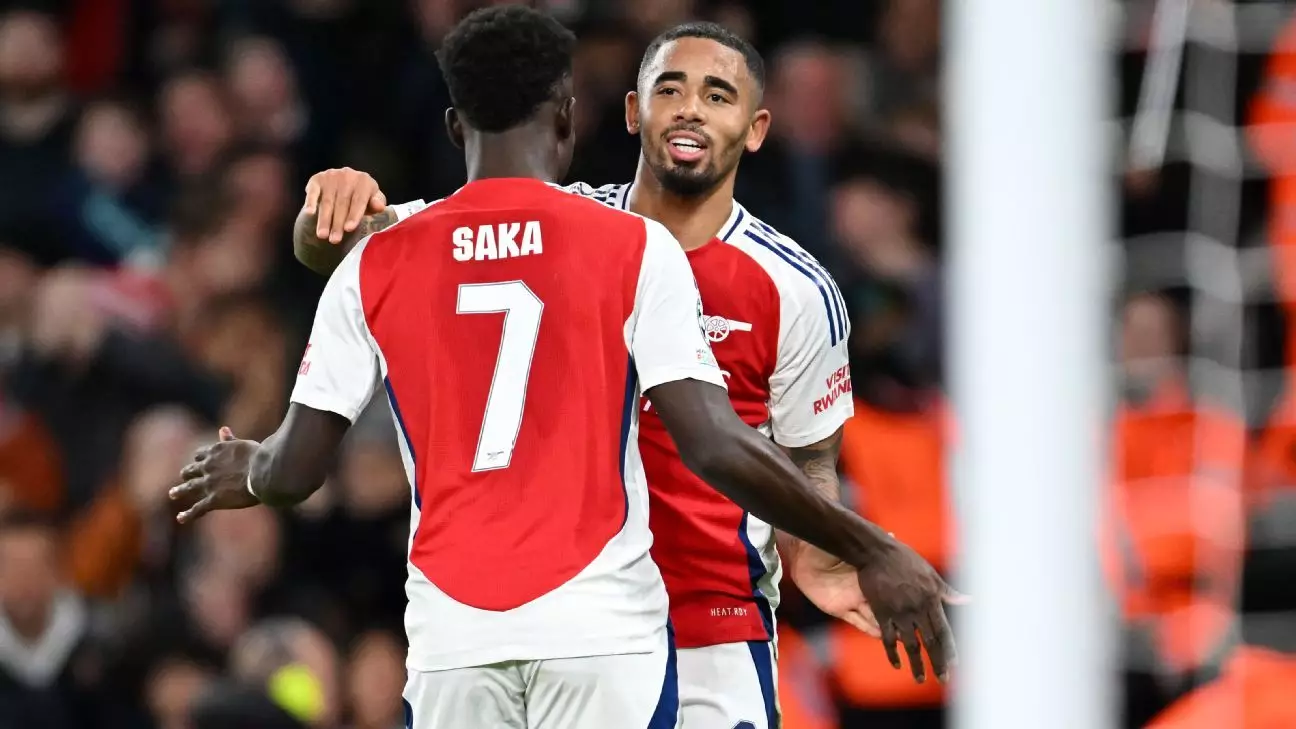
When Arsenal FC completed the signings of Gabriel Jesus and Oleksandr Zinchenko from Manchester City during the summer of 2022, it was seen as a pivotal turning point for a team brimming with youthful promise. Both players brought a wealth of experience and a winning mentality that could elevate the younger squad. Fast forward to the present, and as Arsenal triumphed 3-0 against AS Monaco in the UEFA Champions League, it became clear that the team’s resurgence is no longer reliant on the older acquisitions. Instead, a new generation, highlighted by the exceptional performance of Bukayo Saka, is stepping into the limelight, raising questions about the roles of Jesus and Zinchenko within the squad.
Saka’s contribution on the pitch cannot be overstated. His brace against Monaco underscored not only his goal-scoring prowess but also his ability to be the deciding factor in crucial matches. Despite a lingering sense of uncertainty during the game, it was Saka who broke the deadlock, demonstrating poise and determination that seemed to be missing in others, particularly from Jesus, who had squandered chances at pivotal moments. The night allowed Saka to emerge as not just a key player but a symbol of Arsenal’s evolving ambition and readiness to compete at the highest level.
While Jesus assisted Saka’s first goal with a clever run and cross, he left the pitch without a personal tally and a disappointing record of merely one goal in his last 32 outings. This raises pertinent questions about his form and role within the team structure. Instead of leading the line with authority, Jesus’s contributions have waxed and waned, shifting focus onto younger teammates who are emerging as primary influencers in the squad.
Arsenal’s tactical approach appears to be evolving, shedding the reliance on established stars like Jesus and Zinchenko. Mikel Arteta’s strategic decisions, showcased through the use of young players like Myles Lewis-Skelly, reflect a shift towards building a team that prioritizes vigor and adaptability over mere experience. In the early stages of the match against Monaco, while Zinchenko was sidelined, Lewis-Skelly’s performance hinted at an unforeseen depth in the squad. His maturity on the ball and ability to make the right plays at critical junctures offered a glimpse into the promising future of Arsenal’s young talents.
Arteta’s faith in younger players suggests a recalibration of expectations surrounding this team. The impressive performances from Saka and Lewis-Skelly might result in the coaching staff reconsidering the balance of experience and youth in their starting eleven going forward, which bodes well for the team’s long-term goals.
Despite a commanding victory, Arsenal’s inconsistency in front of goal remained a concern. It was clear that the home side could have buried the game well before the final whistle but struggled with finishing. The likes of Gabriel Martinelli and Martin Ødegaard joined Jesus in missing clear-cut opportunities that could have changed the game’s course. Arteta’s comments post-match reflected a realistic assessment of their current situation, meriting an examination of decision-making processes that must accompany their natural talent. Developing the psychological resilience to capitalize on scoring chances is an area that needs urgent attention if Arsenal desires sustained success.
As Arsenal plans for the future, the status of Jesus and Zinchenko is increasingly precarious. The team may entertain the option of selling Zinchenko, particularly if a fitting offer arises. In contrast, Arteta has publicly stated that Jesus will remain part of the squad for the foreseeable future, but this does not shield him from scrutiny. Arsenal is likely to pursue new attacking options in the forthcoming transfer windows, prompting Jesus to reclaim a stake in the starting eleven sooner rather than later.
For both players, the upcoming months will be critical in defining their futures at Arsenal. They will need to find ways to elevate their game and contribute meaningfully to a squad that is increasingly confident and talented—a team that, albeit under their leadership, clearly indicates that the next era of Arsenal football is upon us. The blend of youth and seasoned players is vital for constructing a formidable force, yet the most pressing question remains: Can Jesus and Zinchenko adapt swiftly enough to remain integral parts of this awakening team? Their forthcoming performances will provide the answers.