
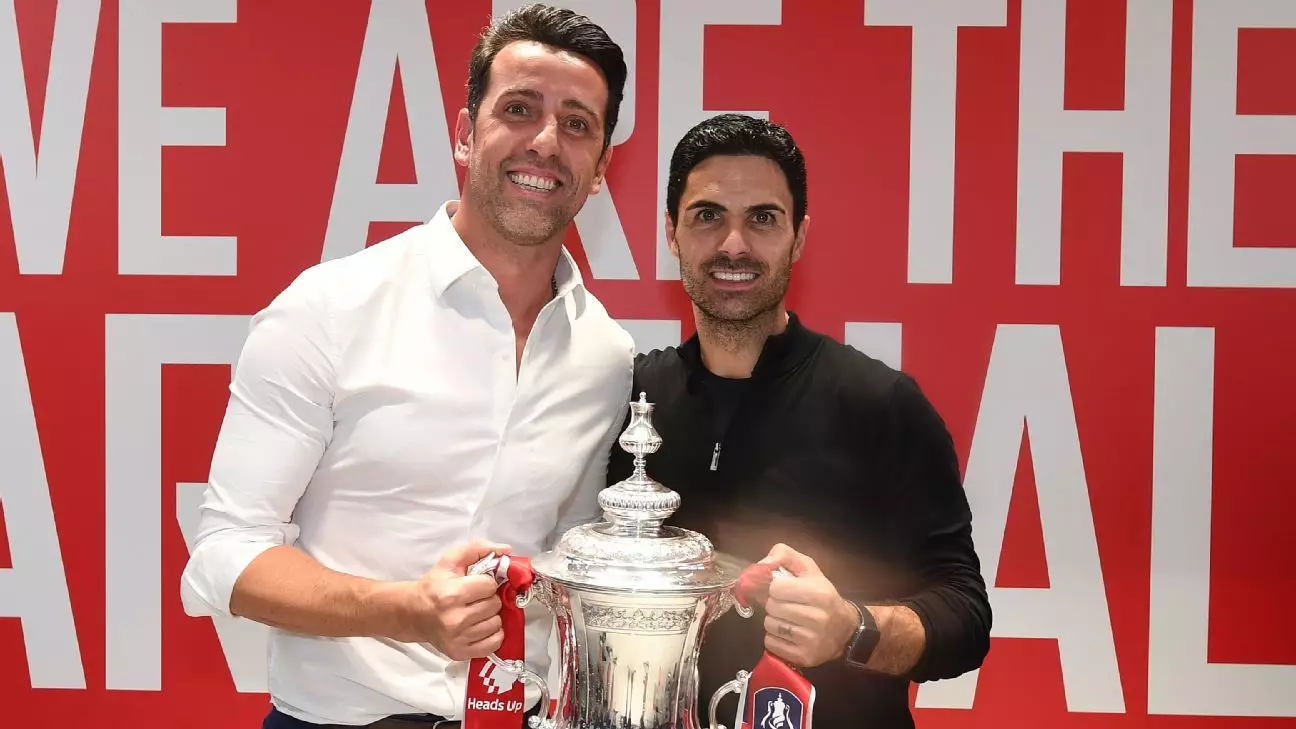
In the world of professional football, the January transfer window serves as a pivotal juncture for clubs looking to bolster their squads for the second half of the season. Arsenal, under the management of Mikel Arteta, finds itself navigating this window in a unique context following the abrupt exit of former sporting director Edu Gaspar. Edu’s departure, apparently a shockwave echoing through the club’s training facility, raises questions regarding Arsenal’s strategic outlook amidst leadership changes.
Edu Gaspar’s resignation after five years resulted in the appointment of Jason Ayto as interim sporting director. This decision underscores the urgency and necessity of leadership continuity during a crucial transfer period. Arteta has publicly backed Ayto, asserting that he possesses the ability and support needed to manage current operations effectively. The inclusion of Ayto indicates an inclination towards internal solutions during this transitional phase, which can stabilize the club’s framework while they search for a permanent successor.
However, having an interim sporting director could also present challenges. Stability in decision-making is paramount during transfer negotiations, and the lack of a permanent figure might create a climate of uncertainty. Arteta’s comments about the ongoing search for a capable permanent director indicate a balancing act—securing immediate needs while keeping an eye towards longer-term strategic alignment.
Arteta’s approach to the upcoming transfer window suggests an air of caution rather than exuberant activity. He mentioned that January typically isn’t a time of frenetic movement and hinted that the club’s actions would largely depend on unforeseen circumstances such as injuries or unique opportunities. This perspective fosters a mindset of patience and prudence, aiming to ensure that any acquisitions align with Arsenal’s overarching vision and current squad dynamics.
The potential return of players like Gabriel Magalhães, alongside concerns about others such as Riccardo Calafiori, illustrates the necessity for Arsenal to remain flexible. While injuries could necessitate a proactive approach in the market, maintaining a well-balanced squad is equally vital. A transfer strategy that prioritizes readiness rather than reaction could prove beneficial, keeping Arsenal competitive without overextending resources.
The Future: Evaluating Candidates
As Arsenal embarks on its search for a permanent sporting director, candidates such as Dan Ashworth and Roberto Olabe are reportedly under consideration. This reflects an evolving mindset where the club actively seeks innovative leadership capable of elevating its operational ethos. Arteta’s support for internal candidates also highlights the potential advantages of promoting from within, which can further enhanceteam cohesion and adaptability in management.
Ultimately, the reflection on Arsenal’s January transfer strategies amidst these changes reveals a complex interplay between immediate needs and long-term goals. By fostering a culture of open-mindedness and preparedness within the squad, Arsenal seems poised to tackle the upcoming transfer window with a strategic calm, irrespective of the current leadership shifts. As Arteta and his team prepare to navigate these waters, success may hinge on their ability to adapt and seize unforeseen opportunities while maintaining focus on their broader ambitions.