
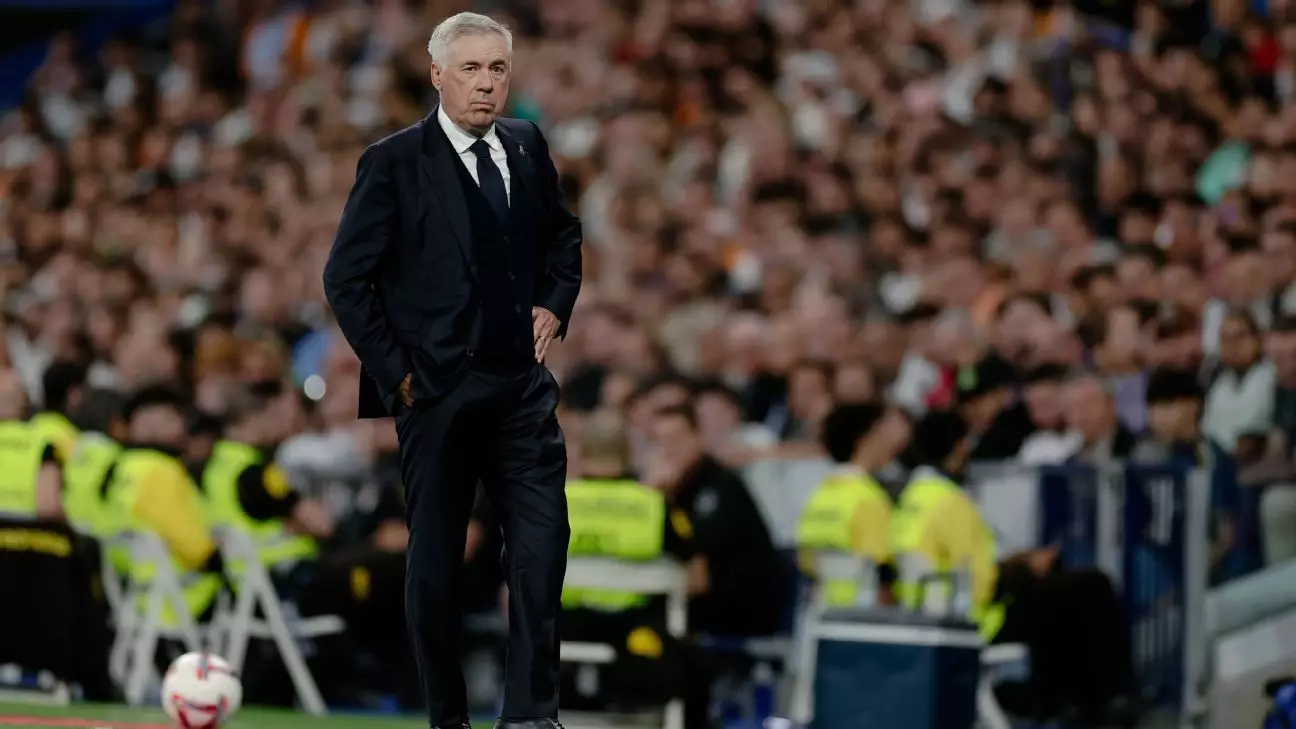
The recent flash floods in Valencia that resulted in a heartbreaking loss of over 200 lives have cast a somber shadow over the vibrant landscape of Spanish football. Amidst this deep national sorrow, Real Madrid’s coach Carlo Ancelotti has articulated the sentiments of many in the footballing community, emphasizing that under such grave circumstances, the games should pause. The decision by LaLiga to carry on with the majority of its fixtures, despite the severe implications of the natural disaster, has sparked an intense debate about the role and responsibilities of sports in society.
While the postponement of matches like Real Madrid’s clash with Valencia and Villarreal’s encounter with Rayo Vallecano shows some sensitivity, the continuation of the remaining top-flight matches raises ethical questions. Ancelotti voiced these concerns in a recent news conference, noting the difficulties players face in remaining focused and committed to their craft when the nation is in mourning. His candid statement, “When people are not OK, you don’t have to party,” encapsulates the discomfort many feel about celebrating sport during such difficult times.
Ancelotti’s reflections prompt a profound inquiry into the priorities of football clubs and leagues in a broader social context. The notion that football is merely entertainment becomes glaringly apparent in times of crisis. As critical figures in the sport, coaches and players possess a unique platform to influence public sentiment; hence, their voices carry significant weight in advocating for compassion and solidarity over competition during national tragedies.
Moreover, Atlético Madrid’s Diego Simeone echoed Ancelotti’s reservations, arguing that continuing with the matches “makes no sense.” This collective sentiment among coaches indicates a growing awareness in the football community about the need for context in the face of calamity. When local communities are grappling with devastation and loss, the glitz of football often seems trivial. Yet, the decision-making powers often lie far from the coaches on the ground, reflecting a disconnect that speaks volumes about the governance of sports leagues.
Football, much like any other form of entertainment, has the power to reflect the state of society. The juxtaposition of a celebratory sporting event against the backdrop of tragedy reveals a dissonance that many players and coaches are uncomfortable with. Addressing this, Lucas Vázquez, a player for Real Madrid, candidly acknowledged that their voices in these matters can sometimes feel powerless. “Our opinion is zero, our strength is zero,” he stated, reinforcing the idea that incidental decisions are often made by those distant from the impact of disaster.
This scenario underscores the need for leagues like LaLiga to reconsider their priorities. The essence of football—the joy, the celebration—should not overshadow the need for empathy and responsible decision-making in the wake of community suffering. The international audience that tunes in for LaLiga matches also represents an opportunity to reflect on the values conveyed; prioritizing compassion over competition can serve as a powerful message to a global audience.
As LaLiga collaborates with the Red Cross to aid those affected by the devastating floods, it becomes evident that sport can play a positive role in healing. The decision to pause or continue with matches must be informed by a collective understanding of the situation’s gravity. Moments like these call for enhanced dialogue between management, players, and communities to ensure that decisions resonate with the broader emotional landscape.
In the wake of tragedy, the role of sport should transcend entertainment and instead foster unity and resilience. Reflecting on the words of Ancelotti, it is clear that when a nation grieves, football should stand by to show its solidarity rather than to parade in a festival of competition. The forthcoming days will reveal how LaLiga and its clubs prioritize humanity in their decisions and actions.
As football remains an indelible part of Spanish culture, its leaders must navigate the complex interplay between the sport and society with sensitivity and foresight. True leadership in sports requires acknowledging the human experience above all else—something that, in light of recent events, should not be overlooked.