
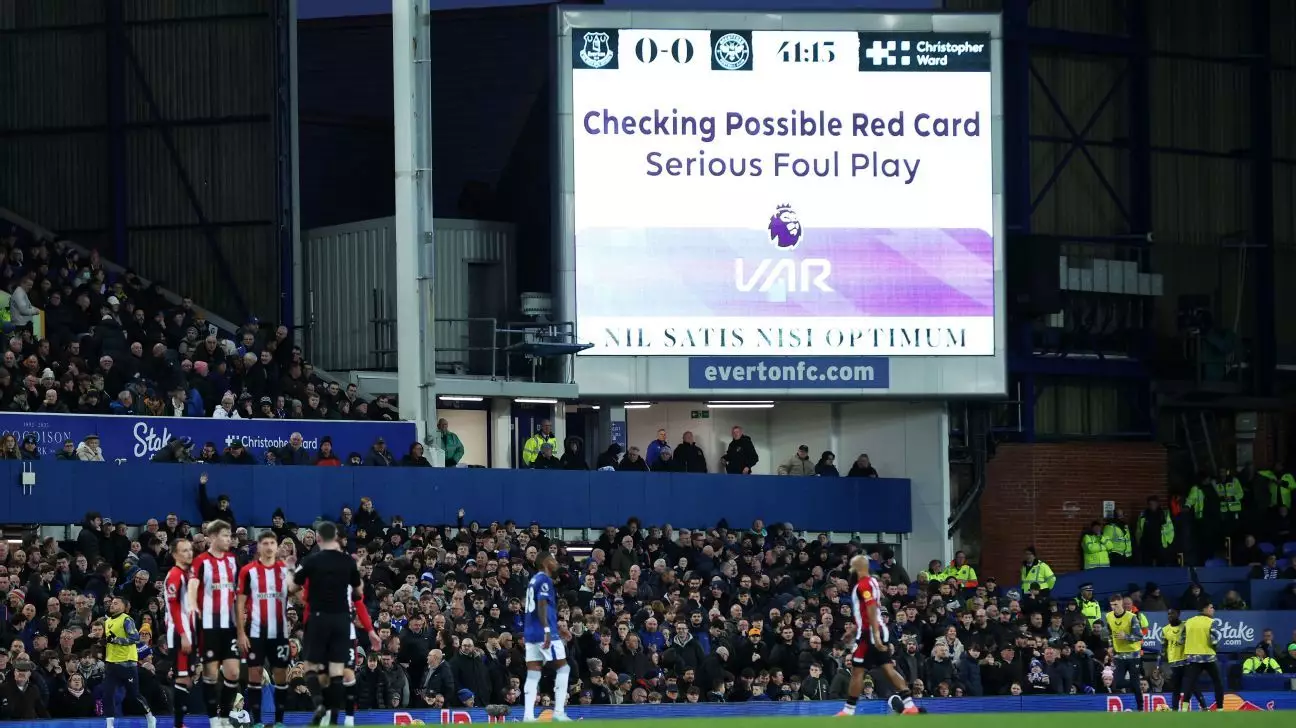
In a tightly contested match that culminated in a 0-0 stalemate between Brentford and Everton, a significant moment of contention arose during the 39th minute when Brentford captain Christian Nørgaard was shown a red card. This card was issued following a Video Assistant Referee (VAR) intervention that deemed Nørgaard’s tackle dangerous. Controversy ensued as many, including Brentford’s manager Thomas Frank, voiced strong opinions on the decision, arguing that the ruling did not align with the spirit of the game.
As the heart of the debate, the intervention of VAR ignited widespread discussion. When the initial foul went unpunished by referee Chris Kavanagh, the decision to overturn that call sparked outrage. The idea of a video assistant, who had only recently joined the Premier League officiating ranks, stepping in to alter the course of a game raised eyebrows. Underlying Kavanagh’s original decision was a clear judgment of intent, which Frank argued was lacking in the ref’s final call influenced by VAR. He remarked, “For me it is not a red card,” underscoring the essential question of whether VAR enhances or hinders the accuracy of officiating.
Frank’s response highlighted a manager’s protective role over his players and emphasized the unpredictability of penalties handed down by VAR. His post-match statement captured his disbelief, advocating for the necessity of common sense within the enforcement of laws. He pointed out that had the card not been successfully appealed, Nørgaard would have faced a suspension that could have jeopardized Brentford’s upcoming match strategies against Leicester City, Aston Villa, and Newcastle. Frank’s frustration illustrates a broader concern among managers regarding the application of technology in sports; they often find themselves caught between the integrity of the game and rigid adherence to evolving laws.
This incident embodies the ongoing discourse about VAR’s role and effectiveness in football. While the technology aims to reduce errors in officiating, cases like Nørgaard’s call raise questions about its practical application and implications for the emotional and competitive nature of the sport. Critics argue that the reliance on technology can overshadow a referee’s decision-making abilities, leading to a game that lacks the intuitive understanding of context and intent.
Brentford’s successful appeal serves not just as a reprieve for Nørgaard but it also signifies the potential need for a reassessment of how VAR is integrated into Premier League protocols. Ensuring clarity between on-field judgment and video review could be crucial in maintaining the game’s integrity. As fans, players, and managers alike continue to critique the overlordship of technology, the English Premier League must navigate these waters carefully to uphold not only the rules but the essence of football itself.