
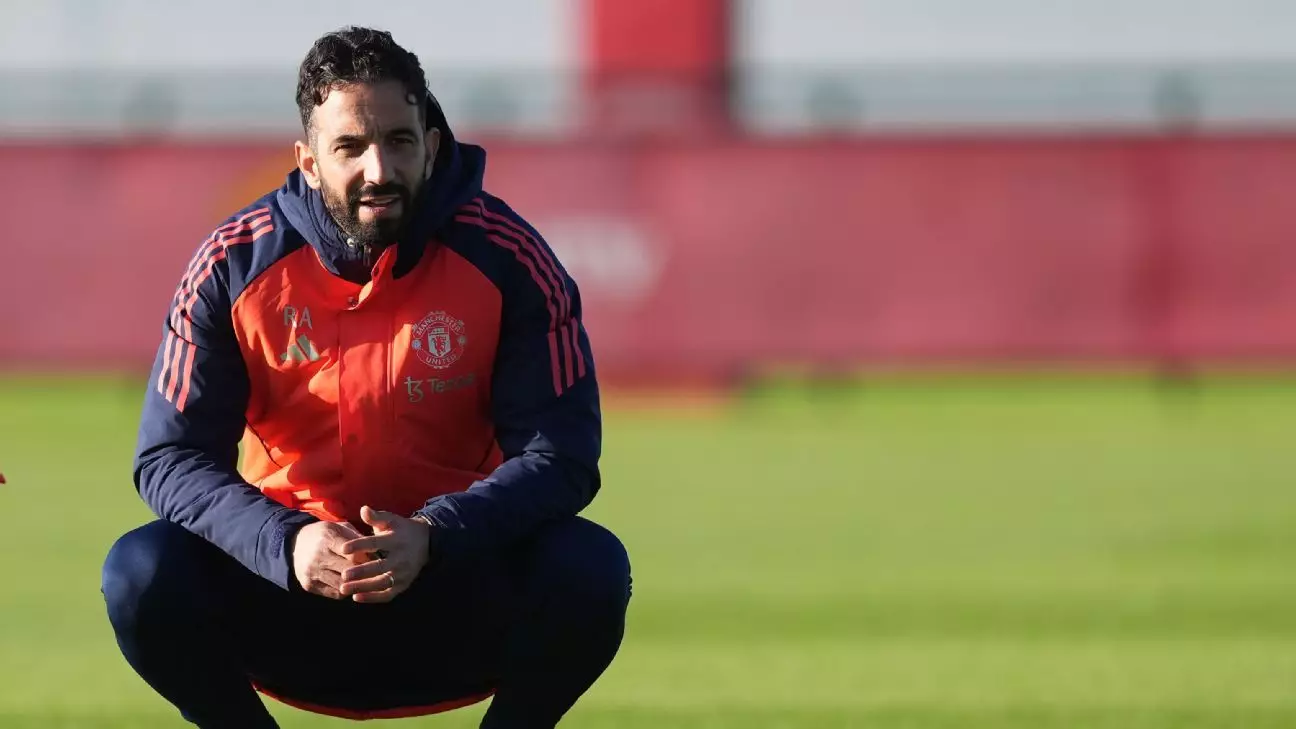
In the bustling football scene of Manchester, Ruben Amorim, the newly appointed head coach of Manchester United, finds himself grappling with a pressing dilemma: the team’s goal-scoring woes. With a history of cultivating talent and fostering successful squads, Amorim’s concerns resonate deeply within the hearts of fans and players alike. His acknowledgment of the team’s failure to convert possession into goals points to a larger systemic hurdle that must be addressed if the Red Devils are to reclaim their former glory.
Amorim’s strategic approach leans heavily on the transformation of the existing squad rather than relying solely on new signings to remedy the situation. This stance is both commendable and challenging. It emphasizes personal accountability and collective responsibility among the players. “We can score so many goals,” Amorim stated, suggesting that the potential lies within the current roster. Notably, key players like Rasmus Hojlund, Marcus Rashford, and Bruno Fernandes are pivotal to this vision. Their ability to step up and deliver will determine the team’s success as they navigate a competitive landscape.
Rashford’s journey under Amorim is particularly noteworthy. After a quick goal against Ipswich, expectations soared, but subsequent performances left much to be desired. Fans and critics alike have scrutinized his form over the last eighteen months, and this reflects a broader sentiment regarding individual performances in high-pressure environments. Amorim’s recognition of Rashford’s struggles and his insistence that the forward must take initiative to return to form underscores a critical facet of professional sports: mental resilience. Rashford’s path back to effectiveness hinges not merely on tactical shifts but on a profound internal drive to succeed.
Team Dynamics and External Influences
The dynamics within a football club extend beyond the pitch, as evidenced by the recent, albeit humorous, incident involving musician Ed Sheeran. Sheeran, a known Ipswich supporter, inadvertently disrupted Amorim’s post-match interview. Such light-hearted moments can contribute to team morale, but Amorim also understands that professionalism must remain at the forefront. Balancing these interactions while keeping the team’s focus is a critical challenge for any coach.
As Ruben Amorim embarks on his journey with Manchester United, the road ahead is fraught with challenges but also filled with potential. With a clear vision emphasizing improvement from within, he aims to awaken the dormant talent lurking in his squad. His blend of expectations, accountability, and humor may just provide the perfect recipe for success, provided the players rise to the occasion. Ultimately, the future hinges on their collective ability to adapt, endure, and perform against the odds, restoring Manchester United to its rightful place among the football elite.