
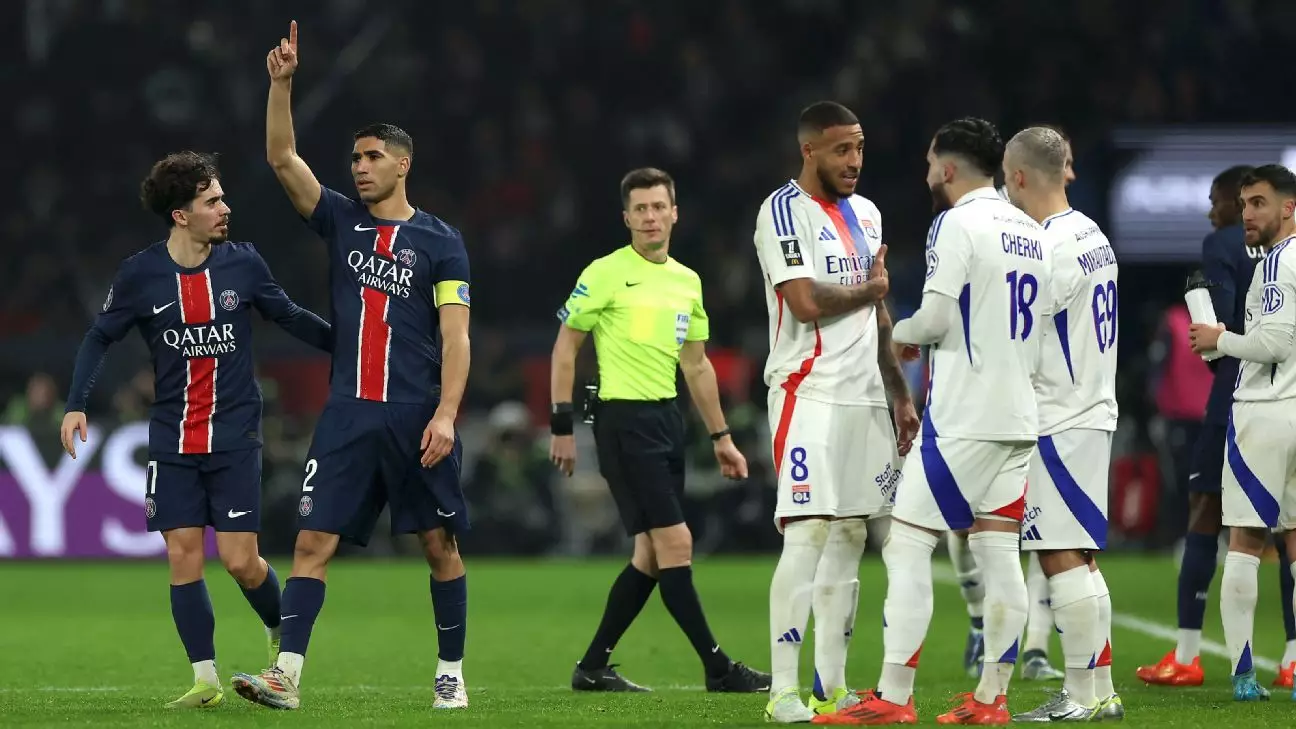
The atmosphere at Ligue 1 matches, particularly those involving Paris Saint-Germain (PSG) and Lyon, took a troubling turn on a recent Sunday as the game faced interruptions due to anti-gay chanting from PSG fans. This disruption, taking place in the 53rd minute while PSG held a narrow lead of 2-1, underscores a persistent problem that has plagued French soccer for years. Referee Benoît Bastien was compelled to halt the match as the discriminatory shouts echoed throughout the Parc des Princes, prompting an intervention by PSG captain Achraf Hakimi who directly addressed the fans in an attempt to put an end to the offensive behavior.
Subsequently, the match organizers illuminated the stadium’s giant screens with a clear message emphasizing that such discriminatory chants are not permissible. This action was accompanied by a stark warning indicating that the match could be forfeited as a consequence of such behavior. Despite the brief pause and messages of caution, the recurrence of such incidents points to a deeper issue within the sport and its fan culture.
The Broader Context of Discrimination in Soccer
The anti-gay chants are not isolated events but part of a larger, troubling pattern, showcasing the difficulty French soccer authorities face in addressing the menace of homophobia among fans. Recently, France’s Interior Minister Bruno Retailleau suggested more stringent measures, including the halting of matches in response to such chants. This idea, however, is fraught with challenges as it calls into question the balance between maintaining order and promoting inclusivity in a sport that should be emblematic of unity.
In light of these ongoing challenges, advocacy groups have ramped up pressure on officials, urging them to take decisive action against the rampant anti-gay rhetoric. Recent statements from such groups highlight how certain clubs, including Marseille, have allowed this unacceptable behavior to persist with little consequence. Despite measures initiated by the French football league in previous years aimed at encouraging spectators to report incidents of homophobic, sexist, or racist activity, a significant gap remains between policy and practice.
Consequences and the Need for Change
The response from soccer authorities has included fines and the temporary closure of stands in response to repeated offenses. However, many argue that these penalties lack the severity needed to effectuate real change or deter future incidents. In a striking example, last season the league’s disciplinary committee handed down a one-match suspended sentence to several PSG players for their participation in anti-gay chants during celebrations. While these players later issued apologies, the question remains whether such measures are enough to result in meaningful cultural shifts.
As societal attitudes towards LGBTQ+ rights continue to advance, sports like soccer must evolve accordingly. Allowing homophobic chants to go unpunished only serves to endorse a culture of intolerance that has no place in the game. Stakeholders at all levels – from clubs to national federations – must confront this issue with resolve, recognizing the urgent need for collective action to foster an environment where all fans feel safe to express themselves free from discrimination.
The recent incident highlights a troubling reality in French soccer that needs an urgent and robust response. Only through concrete actions can the sport hope to dismantle the toxic legacy of homophobia and foster a community rooted in respect and inclusivity for all.