
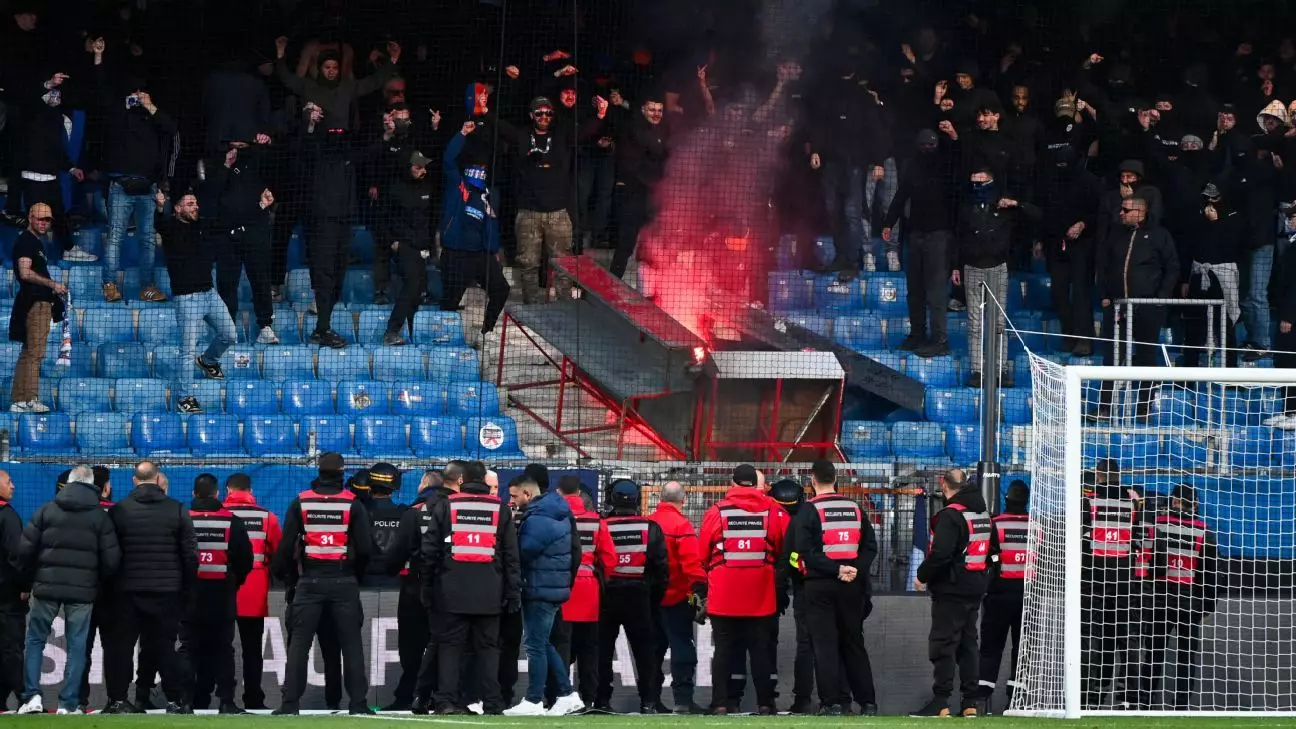
The atmosphere at Stade de la Mosson turned from anticipation to chaos in a matter of moments during a Ligue 1 encounter on Sunday. As Montpellier faced off against fellow strugglers Saint-Etienne, the match was abruptly halted in the 63rd minute due to a fire ignited by a flare thrown into the stands by unruly fans. With Montpellier trailing 2-0—thanks to two goals from Saint-Etienne’s Lucas Stassin—the grim reality of fan violence reared its ugly head once again in French football. The referee, Francois Letexier, had no other choice but to suspend the game, highlighting an ongoing issue that continues to plague the sport.
The Aftermath of Fan Violence
Television footage revealed an alarming scene as black smoke billowed from the stands, leading to an emergency evacuation of individuals in peril. Reports indicate that one person required immediate medical attention, further underscoring the severity of the incident. As both teams retreated to their locker rooms amid the turmoil, Montpellier fans displayed a regrettable response by vandalizing seats—a stark reminder of how quickly passion can morph into violence. It’s not just a game when these eruptions occur; they symbolize a growing culture of recklessness that threatens the integrity of football events.
Government Crackdown on Hooliganism
In light of rampant violence associated with fan groups like Montpellier’s and Saint-Etienne’s, authorities had previously banned away supporters from traveling for this high-risk match. This decision was fueled by a history of confrontations, including a notorious brawl last November that left numerous fans injured. The French government has proposed disbanding key supporter groups such as the Magic Fans and the Green Angels to combat hooliganism, a move that has been met with fierce resistance from those very communities. Saint-Etienne’s administration took a bold stance, claiming that the government’s proposals are politically motivated and ineffective in addressing the root issues of violence within stadiums.
Institutional and Historical Implications
This incident signifies more than just a moment of chaos; it reflects the ongoing turbulence within French football. Saint-Etienne, once a powerhouse in the 1960s and 70s, finds itself in a precarious situation alongside its rival. Both teams are struggling significantly in the league, with Montpellier sitting second from the bottom and facing the grim prospect of relegation. The abandonment of this match could lead to severe repercussions for Montpellier, potentially resulting in heavy fines or other penalties that could jeopardize their future in Ligue 1.
Such incidents expose the fragility of professional sports, as their cultural significance is marred by violence. Football should be a celebration of community and rivalry, not a breeding ground for aggression and chaos. The stakes are high, both on and off the pitch, and it is evident that immediate measures are needed to restore order and safety in the beautiful game.