
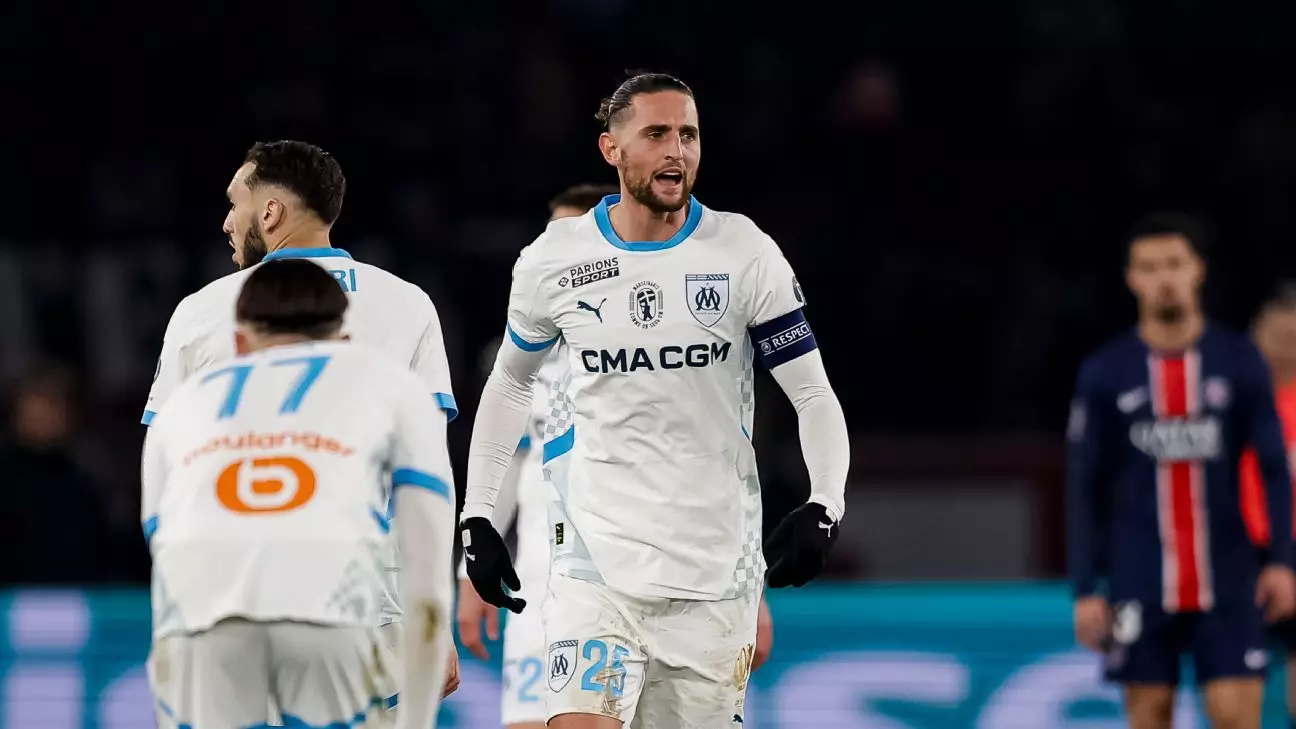
The recent clash between Paris Saint-Germain (PSG) and Olympique de Marseille highlighted not only a fierce rivalry on the football pitch but also the profound cultural issues that plague French football today. Following PSG’s 3-1 victory over Marseille, Adrien Rabiot, a midfielder now plying his trade for Marseille, openly criticized PSG’s president, Nasser Al-Khelaifi, via social media. His statement, “You can’t buy class,” resonates beyond the realm of football and delves into the broader conversation surrounding civility, respect, and the role of money in sports.
Rabiot’s social media outburst was sparked by a series of offensive remarks directed at him, coming particularly from the PSG fanbase, which were not only insulting but laced with racial undertones and homophobic content. Such an environment raises questions about the morality of fandom and the culture surrounding professional football in France. Rabiot’s transition from PSG to Marseille drew ire from dedicated PSG fans, many of whom view his move as a betrayal, creating a toxic brew of animosity that boiled over during this encounter.
Toxicity in the Stands
The game was marred by chants that many deemed unacceptable— vile comments aimed at Rabiot included not just taunts but also personal attacks regarding his family. Rabiot’s mother, Véronique, has expressed outrage at the situation, signaling a need for a serious examination of the discrimination prevalent in football culture. She rightfully questioned why the match wasn’t halted when such travesties were occurring openly in the crowd. This highlights a troubling pattern; the inconsistent responses to hate-filled chants reflect a double standard that undermines the integrity of the sport.
French league officials have the authority to pause games in light of racist or homophobic chanting, yet such interventions appear sporadic at best. The seeming allowance for such behavior prompts an urgent call for reform, shedding light on an environment that too often tolerates abhorrent conduct under the guise of rivalry.
A Call to Action
In step with Rabiot’s sentiments, a French advocacy group, Rouge Direct, has rallied for accountability, urging government officials and sports authorities to take a stand against the rampant discrimination in stadiums. Their demand for the enforcement of existing laws demonstrates the growing dissatisfaction with how football bodies address, or often ignore, these toxic incidences. The issue is not merely one of individual clubs but speaks to a systemic neglect stretching across the league.
PSG’s history of fan misconduct is well-documented, and this game added another chapter to a narrative steeped in controversy. From anti-gay chants to racial slurs aimed at rival fans, the behaviors displayed fail to represent the sport’s ideals of inclusivity and respect. Criticism of PSG fans is only part of the story; Marseille supporters have similarly faced allegations of inappropriate conduct, complicating the issue further. Both clubs must address their own fan cultures decisively if they are to cut through the layers of hatred clouding the games.
Class in the Game
Returning to Rabiot’s assertion about class, it raises an intriguing conversation about the cultural capital in sports. Money can lead to the acquisition of exceptional talent and even victory but cannot instill respect and dignity within fan behavior. The wealth amassed by clubs like PSG has not translated into a supportive environment but has instead created a hyper-competitive culture where insults and discrimination thrive. This divorce between financial dominance and ethical responsibility places French football at a crossroads, demanding immediate cultural introspection.
What is operating within football’s public perception is a stark contrast between the wealthy elite and the working-class roots of many clubs. The historical significance of clubs like Marseille, steeped in community tradition, clashes with PSG’s recent rise powered by Qatari investment. As football continues to evolve, the fans’ behavior and the culture surrounding them must also shift towards a more respectful narrative.
The onus falls not only on players and managers but also on fans and organizations dedicated to fostering a more sportsmanlike experience. Class, as Rabiot points out, cannot be bought; it must be cultivated and cherished across all tiers of involvement in the sport. Whether through policy, education, or active opposition to discrimination, the time for change is now. The beautiful game should stand as a powerful symbol of unity rather than division.