
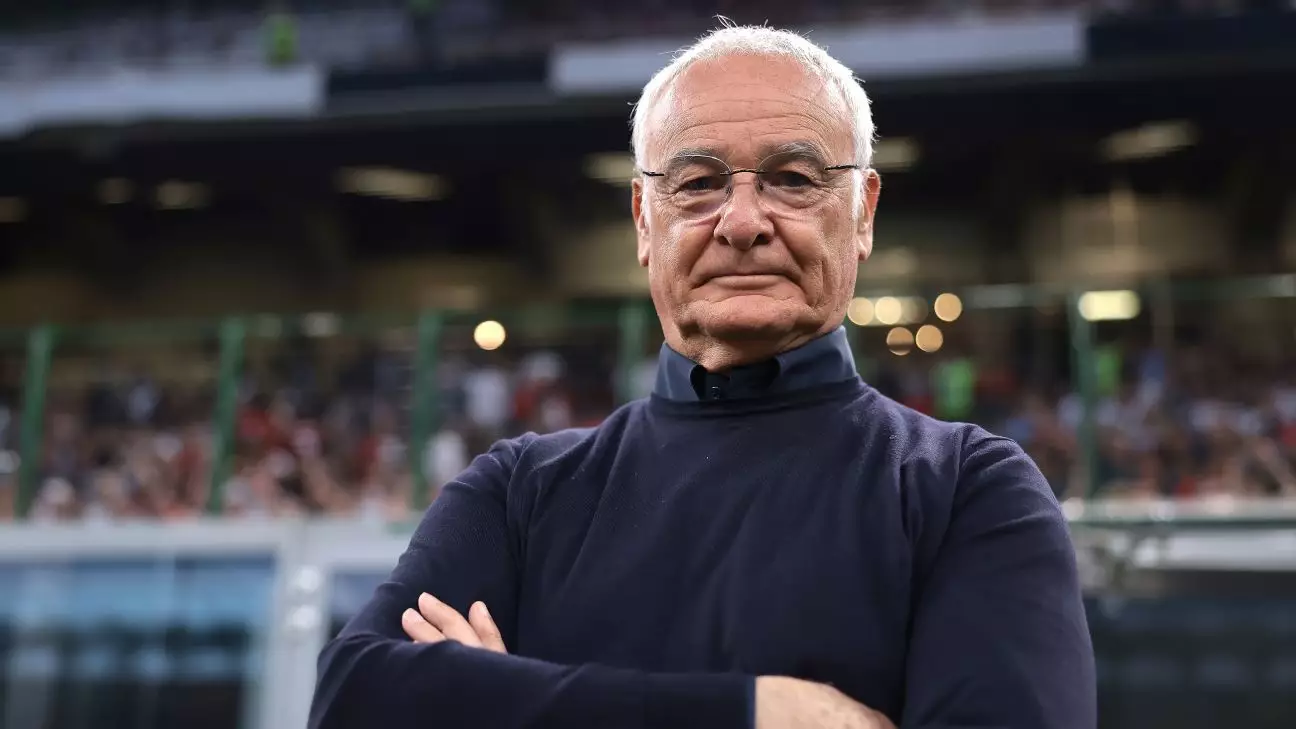
Claudio Ranieri has been reinstated as the head coach of AS Roma, marking his third tenure at the club and a significant moment in his long-standing association with the Giallorossi. Announced on Thursday, this move comes amid a challenging season that has seen instability in the coaching position, with Ranieri stepping in for the likes of Daniele De Rossi and Ivan Juric who saw an abrupt end to their managerial stints. Given Ranieri’s deep-seated connections to Roma—as a former player and previous coach—his return brings both nostalgia and a sense of urgency to a club grappling with underperformance.
With Roma languishing in 12th place in Serie A, having won only three out of 12 games this season, the time for action was imperative. Ranieri’s appointment comes during a chaotic phase, providing a pivotal opportunity for the 73-year-old to implement his tactical strategies and stabilize the squad. Historically, Ranieri has demonstrated resilience during challenging times, as evidenced by his stunning achievement of leading Leicester City to a Premier League title in 2016. Yet, navigating the current squad dynamics at Roma, which are marked by inconsistency and low morale, poses a formidable challenge even for a manager of Ranieri’s experience.
While Ranieri will initially assume the role of head coach until the end of the current season, the club has indicated that he will also serve as the Technical Director of the First Team. This dual function highlights Roma’s strategy of integrating experienced guidance in both immediate coaching and long-term decision-making processes. In this advisory capacity, Ranieri will help guide the ownership in the search for a permanent head coach, ensuring that the club’s vision aligns with any successor’s management philosophy and operational strategies.
Although Ranieri has yet to secure a Serie A title—a missing accolade that haunts his otherwise illustrious career—his return to Roma is not without precedent. His previous spells at the club brought passion and commitment, two qualities that can reignite a spark in a team desperate for results. Fans may remember Ranieri’s tenure fondly, as his leadership during his earlier runs brought Roma to competitive heights, instilling hope amidst struggles. However, a key question remains: Can he replicate that success in a markedly different football landscape?
As Roma navigates this transitional phase, the expectations for Ranieri are undeniably high. With his rich heritage tied to the club, the onus is on him to channel that affinity into tangible results on the pitch. He must harness the potential within the squad while simultaneously addressing the apparent shortcomings that have plagued the team in recent months. While the club continues its search for a long-term solution, the next few months under Ranieri could very well define not only his legacy but also the future trajectory of AS Roma as they strive for a return to the upper echelons of Italian football.